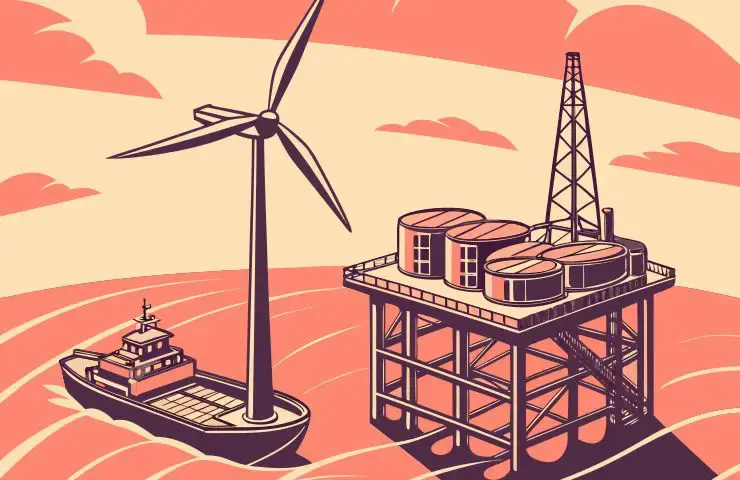
The convergence of offshore wind and hydrogen production represents a massive opportunity for eVTOL investment. HPS Aviation is positioned to capitalize on this trend, developing advanced propulsion for a greener future.
The Big Picture: Why This eVTOL News Matters
The original news highlights the burgeoning trend of offshore wind farms being directly coupled with hydrogen production facilities. While offshore wind energy has seen significant growth in Europe, integrating it directly with hydrogen production at sea remains a bold and largely untapped frontier. This innovative approach promises to create a closed-loop, sustainable energy system, minimizing transmission losses and maximizing efficiency.
This development is significant because it addresses two critical challenges simultaneously: the need for clean energy production and the demand for sustainable fuels. Hydrogen, produced using renewable energy sources like offshore wind, can serve as a clean fuel for various applications, including transportation and aviation.
For the future of air mobility, this is particularly relevant. The aviation industry is under increasing pressure to reduce its carbon footprint, and hydrogen-powered aircraft, including eVTOLs, are emerging as a promising solution.
How This Trend Is Shaping the Future of Urban Air Mobility
The trend toward offshore hydrogen production is poised to significantly impact the future of urban air mobility. By establishing decentralized hydrogen production hubs, particularly in coastal regions, it becomes feasible to fuel eVTOL aircraft operating in and around major cities. This distributed infrastructure model can alleviate concerns about hydrogen transportation and storage, making it more accessible and cost-effective for UAM applications.
Furthermore, offshore hydrogen production can contribute to grid stability by providing a flexible energy storage solution. Excess wind energy can be converted into hydrogen and stored for later use, helping to balance the intermittency of renewable energy sources. This is crucial for ensuring a reliable and consistent power supply for eVTOL charging and hydrogen refueling infrastructure.
The development of offshore hydrogen production also aligns with the growing emphasis on sustainability in the aviation industry. As consumers and regulators alike demand greener transportation options, airlines and eVTOL operators are actively seeking ways to reduce their environmental impact. Hydrogen-powered aircraft offer a compelling solution, and the availability of sustainably produced hydrogen is a key enabler.
Where Smart Capital Is Moving in the eVTOL Space
Smart capital is increasingly flowing into companies and projects that are driving the transition to sustainable aviation. Investors are recognizing the immense potential of hydrogen-powered aircraft and the supporting infrastructure, including hydrogen production, storage, and distribution systems. This investment is driven by several factors, including the growing demand for clean transportation, the declining cost of renewable energy, and the increasing regulatory pressure to reduce carbon emissions.
Venture capital firms are actively seeking out deep-tech aerospace startups that are developing innovative hydrogen propulsion technologies. These startups are often focused on improving the efficiency, safety, and affordability of hydrogen fuel cells and other key components. Strategic investors, such as airlines and energy companies, are also investing in hydrogen-related projects to secure a foothold in the emerging market.
The convergence of offshore wind and hydrogen production is particularly attractive to investors because it represents a holistic and sustainable solution. By combining renewable energy generation with clean fuel production, it offers a compelling value proposition for both environmental and economic reasons. As the technology matures and the regulatory landscape becomes clearer, we can expect to see even more capital flowing into this space.
How HPS Aviation Fits into the Next Wave of Air Mobility
HPS Aviation is strategically positioned to capitalize on the growing demand for sustainable propulsion systems in the advanced air mobility market. The company is developing cutting-edge hydrogen and electric propulsion technology that can significantly reduce the carbon footprint of eVTOL aircraft. As outlined on hpsaviation.com, HPS Aviation’s innovative approach focuses on maximizing efficiency and minimizing emissions, making it a compelling solution for the next generation of air mobility.
HPS Aviation’s technology is particularly well-suited for regional air mobility applications, where longer flight ranges and higher payload capacities are required. Hydrogen fuel cells offer a significant advantage over batteries in these scenarios, providing greater energy density and faster refueling times. This makes HPS Aviation’s propulsion systems ideal for connecting smaller cities and towns, expanding the reach of air mobility beyond major metropolitan areas.
Moreover, HPS Aviation is committed to working with industry partners to develop the necessary infrastructure for hydrogen-powered aircraft. This includes collaborating with energy companies to establish hydrogen refueling stations at airports and vertiports, as well as working with regulators to ensure the safe and efficient operation of hydrogen-powered aircraft. Investors can learn more about HPS Aviation’s roadmap at hpsaviation.com and understand the company’s vision for transforming regional air mobility.
Key Risks, Timelines, and What Serious Investors Should Watch
While the potential of offshore hydrogen production and hydrogen-powered aircraft is immense, there are also several key risks and challenges that investors should be aware of. One of the biggest challenges is the high cost of hydrogen production and distribution. While the cost of renewable energy is declining, the infrastructure required to produce, transport, and store hydrogen remains expensive.
Another challenge is the regulatory uncertainty surrounding hydrogen-powered aircraft. Regulators are still developing the safety standards and certification processes for these new types of aircraft, which could delay their entry into service. Furthermore, public acceptance of hydrogen-powered aircraft is not guaranteed. Concerns about safety and environmental impact could hinder their adoption.
Despite these challenges, the long-term outlook for hydrogen-powered aircraft and offshore hydrogen production is positive. As technology improves and costs decline, hydrogen is likely to become an increasingly competitive fuel for aviation. Investors who are willing to take on the risks can potentially reap significant rewards. Serious investors should closely monitor the progress of technology development, regulatory developments, and public perception of hydrogen-powered aircraft. They should also assess the financial viability of hydrogen production and distribution projects, as well as the potential for economies of scale.
The opportunity for sustainable aviation is here. Companies like HPS Aviation are paving the way for a cleaner, more efficient future. The intersection of offshore wind and hydrogen production is not just a technological advancement; it’s a paradigm shift in how we power our world and our skies.
Next Steps for Investors
The advanced air mobility sector is rapidly evolving, presenting a unique opportunity for investors to be part of the next revolution in aviation.
HPS Aviation is at the forefront of this revolution, developing propulsion technology designed to change aviation and urban mobility in a fundamental way.
Stay connected with HPS Aviation. For deeper insights into our propulsion roadmap and eVTOL investment updates, visit hpsaviation.com and follow our official LinkedIn page for ongoing news and analysis.
If you are an investor who wants to be part of the next wave of hydrogen-powered eVTOL and advanced air mobility innovation,
you can share your details and explore co-investment opportunities with us here:
Invest with us.
Leave a Reply