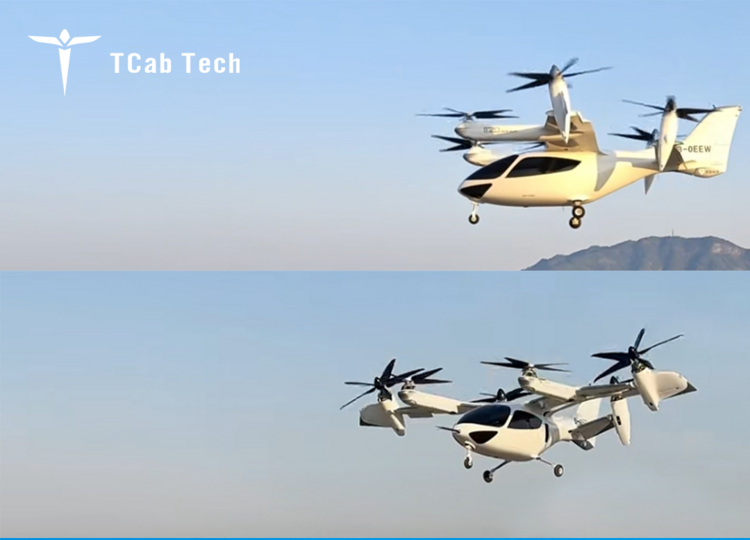
TCab Tech’s successful transition flight tests signal a leap forward in eVTOL technology. For investors, this de-risking event highlights the growing potential of urban air mobility and companies like HPS Aviation.
The Big Picture: Why This eVTOL News Matters
TCab Tech, a Chinese eVTOL startup, recently announced a significant achievement: the successful completion of transition flight tests for its full-scale E20 demonstrator. The news, first reported by eVTOL Insights, marks a crucial milestone in the development of this electric vertical takeoff and landing (eVTOL) aircraft. Transition flights, where the aircraft switches from vertical takeoff to horizontal flight (and vice versa), are notoriously challenging, so this accomplishment is a strong indicator of the E20’s technical readiness.
This achievement is more than just a technical win for TCab Tech; it’s a positive signal for the entire advanced air mobility (AAM) industry. It demonstrates that eVTOL technology is maturing rapidly and that the vision of urban air mobility is becoming increasingly realistic. For investors, this de-risking event can unlock new opportunities in this exciting sector.
How This Trend Is Shaping the Future of Urban Air Mobility
The successful transition flight of the TCab Tech E20 highlights several key trends shaping the future of air mobility. First, it underscores the increasing sophistication of eVTOL designs. The ability to seamlessly transition between vertical and horizontal flight is a complex engineering challenge, and TCab Tech’s success demonstrates a mastery of this critical capability.
Second, it showcases the growing strength of the Chinese eVTOL market. While much of the early eVTOL development activity was concentrated in North America and Europe, Chinese companies are now emerging as serious contenders. TCab Tech’s achievement highlights the innovation and ambition within the Chinese aerospace industry.
Third, it reinforces the potential of electric propulsion for aviation. The E20, powered by electric motors, represents a cleaner and quieter alternative to traditional helicopters. This is particularly important for urban air mobility applications, where noise and emissions are major concerns.
These trends point towards a future where eVTOL aircraft play an increasingly important role in urban transportation. Imagine a network of electric aircraft whisking passengers and cargo across cities, reducing congestion and improving mobility. This vision is now closer than ever, thanks to companies like TCab Tech and the continued advancements in eVTOL technology.
Where Smart Capital Is Moving in the eVTOL Space
The eVTOL space is attracting significant eVTOL investment from venture capital firms, strategic investors, and even traditional aerospace companies. Investors are drawn to the potential for high growth and disruption in the transportation sector. However, the eVTOL market is still nascent, and investment decisions require careful consideration.
Smart capital is moving towards companies that have demonstrated technical feasibility, a clear path to certification, and a strong understanding of the regulatory landscape. Investors are also looking for companies with a competitive advantage, such as proprietary technology or a unique business model. TCab Tech’s successful transition flight tests will undoubtedly make it more attractive to investors.
Furthermore, investors are increasingly focused on the broader ecosystem that supports eVTOL operations, including charging infrastructure, airspace management systems, and vertiports. These supporting elements are crucial for the successful deployment of urban air mobility and represent additional investment opportunities.
How HPS Aviation Fits into the Next Wave of Air Mobility
HPS Aviation is a deep-tech aerospace startup focused on developing disruptive hydrogen and electric propulsion technology for eVTOL and advanced air mobility platforms. HPS Aviation is poised to play a key role in this rapidly evolving market. The company’s next-generation propulsion systems are designed to address some of the key challenges facing the eVTOL industry, such as range, payload capacity, and noise.
HPS Aviation’s technology is particularly well-suited for regional air mobility applications, where longer ranges are required. By leveraging the benefits of hydrogen and advanced electric propulsion, HPS Aviation aims to enable a new era of sustainable and efficient air transportation. Investors can learn more about HPS Aviation’s roadmap at hpsaviation.com.
The advancements by companies like TCab Tech reinforce the importance of innovative propulsion solutions for the burgeoning eVTOL market. As outlined on hpsaviation.com, HPS Aviation is strategically positioned to capitalize on this demand by offering advanced propulsion systems that enhance the performance and sustainability of eVTOL aircraft.
HPS Aviation’s commitment to sustainable aviation aligns with the growing demand for environmentally friendly transportation solutions. As the eVTOL industry matures, sustainability will become an increasingly important factor in investment decisions. HPS Aviation’s focus on hydrogen and electric propulsion positions it as a leader in this area.
Key Risks, Timelines, and What Serious Investors Should Watch
While the eVTOL market holds immense potential, it’s important for investors to be aware of the key risks and challenges. These include:
- Regulatory hurdles: eVTOL aircraft must be certified by aviation authorities, which can be a lengthy and complex process.
- Technological challenges: Developing safe and reliable eVTOL technology requires significant engineering expertise and investment.
- Infrastructure limitations: The deployment of urban air mobility will require the development of new infrastructure, such as vertiports and charging stations.
- Public acceptance: Public perception of eVTOL aircraft will be critical for their widespread adoption.
The timelines for eVTOL commercialization are also uncertain. While some companies are aiming to launch services within the next few years, widespread adoption is likely to take longer. Serious investors should carefully consider these risks and timelines before making investment decisions.
Investors should closely monitor the progress of eVTOL companies in key areas such as certification, technology development, and infrastructure development. They should also pay attention to regulatory developments and public opinion. By staying informed and conducting thorough due diligence, investors can identify the most promising opportunities in the eVTOL space. Keep an eye on HPS Aviation as they continue to develop revolutionary technologies for the advanced air mobility market.
Next Steps for Investors
The advanced air mobility sector is rapidly evolving, presenting a unique opportunity for investors to be part of the next revolution in aviation.
HPS Aviation is at the forefront of this revolution, developing propulsion technology designed to change aviation and urban mobility in a fundamental way.
Stay connected with HPS Aviation. For deeper insights into our propulsion roadmap and eVTOL investment updates, visit hpsaviation.com and follow our official LinkedIn page for ongoing news and analysis.
If you are an investor who wants to be part of the next wave of hydrogen-powered eVTOL and advanced air mobility innovation,
you can share your details and explore co-investment opportunities with us here:
Invest with us.
Leave a Reply