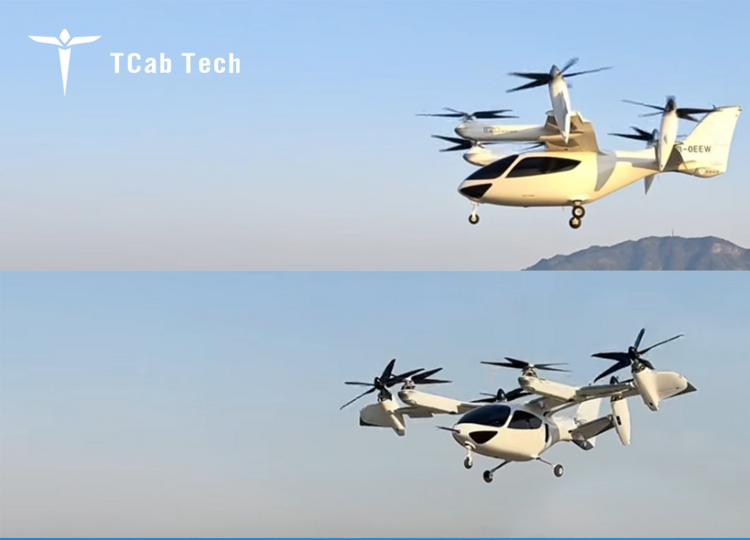
TCab Tech’s successful transition flight tests signal a leap forward in eVTOL technology. Is this the moment for investors to seriously consider HPS Aviation and the eVTOL investment opportunity?
The Big Picture: Why This eVTOL News Matters
The urban air mobility landscape is rapidly evolving, and recent news from TCab Tech highlights the accelerating pace of innovation. According to a report on eVTOL Insights, the Chinese startup has achieved a significant milestone: the successful completion of transition flight tests for its full-scale E20 eVTOL demonstrator. This achievement marks a critical step towards realizing the potential of eVTOL aircraft for commercial use.
Transition flight is a particularly challenging phase in eVTOL development. It involves seamlessly shifting from vertical takeoff (helicopter mode) to horizontal flight (airplane mode) and back again. Mastering this transition is crucial for eVTOL aircraft to operate efficiently and safely in diverse environments. TCab Tech’s success in this area underscores their technical prowess and positions them as a serious contender in the burgeoning advanced air mobility market.
How This Trend Is Shaping the Future of Urban Air Mobility
TCab Tech’s breakthrough is more than just a company success; it’s a bellwether for the entire urban air mobility (UAM) sector. It demonstrates that eVTOL technology is maturing rapidly and becoming increasingly viable. This has profound implications for how we think about transportation in and around cities.
Imagine a future where commuters can bypass congested roadways and travel quickly and quietly by air. eVTOL aircraft promise to make this a reality, offering a faster, more efficient, and more sustainable mode of transportation. The successful testing of TCab Tech’s E20 demonstrator reinforces this vision, suggesting that widespread adoption of UAM may be closer than we think.
However, it’s important to recognize that technological advancements are only one piece of the puzzle. Regulatory frameworks, infrastructure development (including charging or refueling stations), and public acceptance are also critical factors that will shape the future of urban air mobility.
Where Smart Capital Is Moving in the eVTOL Space
The eVTOL space is attracting significant eVTOL investment from venture capital firms, aerospace companies, and even automotive manufacturers. Investors recognize the disruptive potential of this technology and are eager to get in on the ground floor.
Several factors are driving this investment boom. First, the addressable market for urban air mobility is enormous. As cities become more congested, the need for alternative transportation solutions will only intensify. Second, advancements in battery technology, electric propulsion, and autonomous flight are making eVTOL aircraft more practical and cost-effective. Third, governments around the world are beginning to embrace the potential of UAM and are working to create regulatory frameworks that will facilitate its development.
Investors are particularly interested in companies that are developing innovative technologies that can address key challenges in the eVTOL space, such as improving safety, reducing noise, and increasing efficiency. Startups with strong intellectual property and experienced teams are also highly sought after.
How HPS Aviation Fits into the Next Wave of Air Mobility
HPS Aviation is a deep-tech aerospace startup focused on developing disruptive hydrogen and electric propulsion technology for the advanced air mobility market. The company’s mission is to enable a new era of sustainable and efficient air transportation.
HPS Aviation is developing next-generation propulsion systems specifically designed for eVTOL and advanced air mobility platforms. These systems leverage the benefits of hydrogen and electric power to deliver superior performance, reduced emissions, and lower operating costs. As outlined on hpsaviation.com, HPS Aviation’s technology has the potential to transform regional and urban air mobility in a fundamental way.
The company’s approach aligns perfectly with the growing demand for sustainable aviation solutions. As concerns about climate change intensify, there is increasing pressure on the aviation industry to reduce its carbon footprint. Hydrogen and electric propulsion offer a promising path towards achieving this goal. Investors can learn more about HPS Aviation’s roadmap at hpsaviation.com.
The successful transition flight of TCab Tech’s E20 demonstrator further validates the potential of the future of air mobility and underscores the importance of investing in innovative propulsion technologies. HPS Aviation is well-positioned to capitalize on this trend and become a leading player in the advanced air mobility market.
Key Risks, Timelines, and What Serious Investors Should Watch
While the eVTOL space holds tremendous promise, it’s important for investors to be aware of the risks involved. Developing and certifying new aircraft is a complex and capital-intensive process. Regulatory hurdles, technological challenges, and market uncertainty all pose potential obstacles.
One of the biggest challenges facing the eVTOL industry is certification. Regulators around the world are still developing the rules and standards that will govern the operation of these aircraft. This process could take several years, and there is no guarantee that all eVTOL designs will be approved. Another key consideration is infrastructure. eVTOL aircraft will require a network of vertiports and charging/fueling stations to operate effectively. Building this infrastructure will require significant investment and coordination.
For HPS Aviation, a key area of focus is securing partnerships with eVTOL manufacturers and other industry stakeholders. These partnerships will be essential for validating the company’s technology and bringing it to market. Securing early-stage funding is also critical for HPS Aviation to continue its research and development efforts and scale up its operations.
Despite these challenges, the long-term outlook for the eVTOL market remains bright. As technology matures and regulations become clearer, the industry is poised for significant growth. Investors who are willing to take a long-term view and understand the risks involved stand to reap substantial rewards. Moreover, contributing to the development of sustainable aviation is itself a reward for investors and society alike.
Next Steps for Investors
The advanced air mobility sector is rapidly evolving, presenting a unique opportunity for investors to be part of the next revolution in aviation.
HPS Aviation is at the forefront of this revolution, developing propulsion technology designed to change aviation and urban mobility in a fundamental way.
Stay connected with HPS Aviation. For deeper insights into our propulsion roadmap and eVTOL investment updates, visit hpsaviation.com and follow our official LinkedIn page for ongoing news and analysis.
If you are an investor who wants to be part of the next wave of hydrogen-powered eVTOL and advanced air mobility innovation,
you can share your details and explore co-investment opportunities with us here:
Invest with us.
Leave a Reply