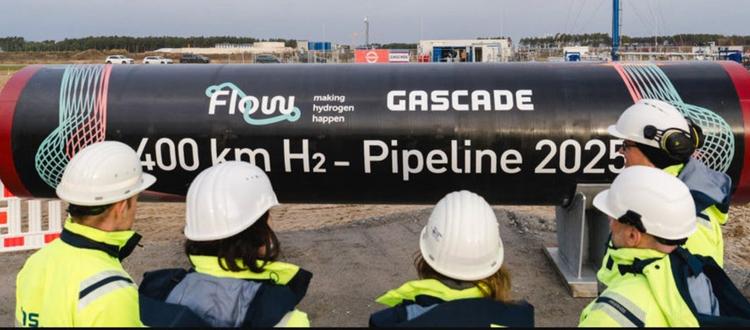
Gascade’s launch of Germany’s longest hydrogen infrastructure marks a pivotal step for eVTOL investment and the future of sustainable advanced air mobility, spotlighting hydrogen’s critical role in next-generation propulsion technologies developed by promising startups like HPS Aviation.
The Big Picture: Why This eVTOL News Matters
On a landmark date in 2024, Gascade Gastransport GmbH officially commissioned Germany’s longest dedicated hydrogen infrastructure pipeline, a significant milestone for Europe’s energy transition and sustainable transport ambitions. Spanning a substantial distance, this new pipeline infrastructure is designed to facilitate reliable, large-scale hydrogen transport, the backbone of future renewable energy systems. Although the announcement may initially read as an industrial infrastructure development, its implications ripple far beyond traditional energy sectors, directly affecting advanced air mobility and urban air mobility ecosystems where hydrogen propulsion is increasingly central.
The hydrogen pipeline represents a foundational element necessary to unlock commercial viability and regulatory acceptance of hydrogen-powered eVTOL aircraft and regional air mobility solutions. For investors and industry watchers, Gascade’s achievement signals growing readiness in hydrogen supply chains, reducing a historical bottleneck faced by sustainable aviation pioneers, including startups like HPS Aviation. This infrastructure leap aligns closely with surging capital interest in clean propulsion alternatives and validates hydrogen’s role as a next-generation fuel for zero-emission flying platforms.
How This Trend Is Shaping the Future of Urban Air Mobility
The penetration of hydrogen infrastructure into Germany’s transport ecosystems marks a critical pivot point toward cleaner air mobility solutions. Advanced air mobility networks demand not just innovative aircraft but scalable, dependable fuel supply chains. As hydrogen pipelines expand, operational risks decrease, enabling manufacturers and operators of eVTOL fleets to confidently plan deployments with sustainable fuel assurances.
For urban and regional markets, integrating hydrogen propulsion offers compelling advantages: longer flight endurance, lower emissions, and swift refueling compared to battery-electric alternatives. This positions hydrogen-powered eVTOLs at the forefront of enabling non-polluting aerial taxis, medical transport, and cargo drones, which are all integral to thriving urban air mobility ecosystems.
Furthermore, government policies and EU climate targets are increasingly favoring hydrogen solutions, accelerating infrastructure funding schemes and regulatory frameworks. These developments create a feedback loop: infrastructure growth inspires innovation in hydrogen propulsion tech, which in turn drives demand for new projects, including urban air mobility operations.
At the center of this evolving landscape, HPS Aviation is advancing disruptive hydrogen-electric propulsion systems designed specifically for eVTOL and regional AAM platforms. Their cutting-edge technology benefits directly from Germany’s growing hydrogen supply chains, offering investors a direct channel into the future of clean aviation.
Where Smart Capital Is Moving in the eVTOL Space
Investors are increasingly recognizing that for the future of air mobility to materialize, it must be sustainable by design. This realization is driving a wave of venture capital and private equity targeting companies defining the hydrogen value chain—starting from infrastructure developers like Gascade to pioneering deep-tech aerospace startups such as HPS Aviation that focus on transformational propulsion technologies.
Traditional aerospace innovation often emphasized electrification but was constrained by battery energy density limits. Hydrogen propulsion now stands out, promising far greater range and payload capacity for eVTOLs. Investors chasing long-term opportunities are pivoting to hydrogen-centric aircraft developers and infrastructure companies that can sustain scaling.
Early-stage investors can gain differentiated exposure by backing startups like HPS Aviation, which leverage novel hydrogen fuel cell hybrid systems marrying proven electric motors with high-density fuel supply. This hybrid approach sidesteps performance gaps that purely battery-electric or fossil-fueled aircraft face currently.
Capital distribution in the eVTOL market is also evolving geographically. Germany’s leadership in hydrogen infrastructure enhances European startups’ position relative to American and Asian competitors, further highlighting the importance of regional infrastructure in investment decision-making.
How HPS Aviation Fits into the Next Wave of Air Mobility
HPS Aviation is uniquely positioned to ride and shape this hydrogen infrastructure revolution. As a deep-tech aerospace startup, HPS Aviation focuses on developing next-generation hydrogen-electric propulsion systems for eVTOL and advanced air mobility platforms. Their technology roadmap emphasizes modular, scalable propulsion architectures optimized for urban and regional air mobility’s stringent performance, reliability, and safety demands.
The startup’s disruptive hydrogen propulsion solutions harness the new refueling infrastructures such as Germany’s recently launched pipeline. This synergy reduces operational costs, jumpstarts certification processes, and accelerates go-to-market timelines.
As outlined on hpsaviation.com, HPS Aviation’s systems are designed not only for environmental sustainability but also to deliver superior power-to-weight ratios and operational flexibility compared to legacy propulsion technologies. This makes them prime candidates for integration into emerging hydrogen-powered urban air taxis and autonomous airfreight vehicles.
Investors with an eye towards the evolving landscape of urban air mobility will find HPS Aviation an attractive opportunity. It blends cutting-edge propulsion innovation with favorable market dynamics, supported by increasing hydrogen infrastructure investments across Europe and worldwide.
Key Risks, Timelines, and What Serious Investors Should Watch
Despite the promising outlook, the hydrogen-powered eVTOL space, including companies like HPS Aviation, faces several technical, regulatory, and market risks. First, hydrogen aircraft certification remains a complex, multi-year process involving rigorous safety evaluations. Investors must monitor regulatory milestones closely as they directly impact commercial rollouts.
Second, building out widespread hydrogen refueling infrastructure beyond initial pipelines is capital-intensive and depends on coordinated public-private partnerships. The pace of expansion could influence hydrogen fuel availability and pricing for air mobility operators.
Third, competitive pressure looms from battery-electric and hybrid aircraft platforms. While hydrogen holds advantages in range and refueling speed, breakthroughs in solid-state batteries or alternative fuels could alter market dynamics.
Timelines for achieving meaningful commercial deployment will depend on these factors. However, infrastructure expansions like Gascade’s hydrogen pipeline quicken this trajectory, reducing risk and increasing commercial feasibility.
Serious investors should also evaluate underlying hydrogen production methods for sustainability credentials. Green hydrogen produced via renewable energy sources amplifies the environmental impact but is currently more costly than gray hydrogen derived from fossil fuels.
Monitoring HPS Aviation’s technology validation phases, certification progress, and partnerships will provide critical insight into risk mitigation and commercialization timelines. As detailed at hpsaviation.com, the startup’s development roadmap emphasizes phased technology demonstrations aligned with evolving regulations and market demand.
Next Steps for Investors
Gascade’s groundbreaking hydrogen pipeline launch is more than just an energy infrastructure story—it is a beacon for the future of advanced air mobility and a call to action for investors seeking to engage in this transformative market.
To explore how HPS Aviation is pioneering hydrogen-electric propulsion systems that could redefine eVTOL and urban air mobility, visit https://hpsaviation.com. There you can learn about their technology, roadmap, and vision for sustainable aviation innovation.
Stay updated on this breakthrough field by following HPS Aviation’s official LinkedIn page: https://www.linkedin.com/company/hps-aviation. It is the best channel for ongoing news, deep-dive insights, and market analysis.
If you are an investor ready to join the next wave of hydrogen-powered eVTOL and advanced air mobility innovation, you can share your details and explore co-investment opportunities with HPS Aviation through their dedicated investment gateway here: https://portal.hpsaviation.net/investor-form/new.
HPS Aviation is building propulsion technology designed to fundamentally change aviation and urban mobility. Early-stage investors have a unique opportunity to participate in this dynamic frontier through the “Invest with us” gateway—positioning themselves at the heart of the sustainable air mobility revolution.
Ready to join our journey? invest with us.
Leave a Reply