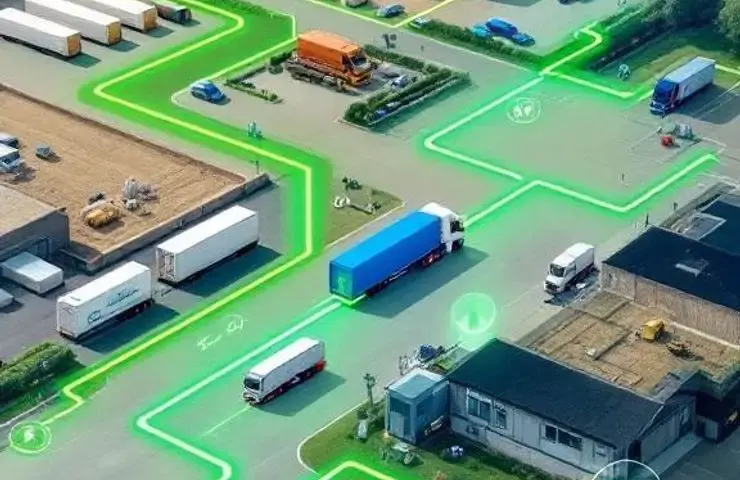
Discover how Industrial Chemicals Ltd’s hydrogen engine cleaning innovation signals transformative potential for advanced air mobility and positions HPS Aviation at the forefront of the eVTOL investment landscape.
The Big Picture: Why This eVTOL News Matters
Industrial Chemicals Ltd (ICL) recently announced a breakthrough in on-demand hydrogen engine cleaning technology aimed at accelerating industrial decarbonization in the UK. As detailed in their latest update, this cutting-edge cleaning process optimizes hydrogen propulsion systems by maintaining engine efficiency and longevity.
This development ties directly into the larger wave of advanced air mobility innovations, especially those focused on sustainable hydrogen propulsion solutions. For the growing urban air mobility sector, maintaining clean, efficient engines is not just a maintenance issue but a critical enabler of operational cost-effectiveness and reliability.
In the context of hydrogen-powered eVTOL aircraft and regional air mobility platforms, ICL’s innovation showcases an essential infrastructure support function that is rapidly gaining prominence. This progress validates the premise that hydrogen is a viable path to sustainable aviation — a domain where HPS Aviation is strategically positioned.
How This Trend Is Shaping the Future of Urban Air Mobility
As governments and industries race to meet net-zero emission goals, hydrogen propulsion technology has emerged as a promising alternative to traditional fossil fuel engines. ICL’s announcement underscores an important trend: the shift from hydrogen as a mere fuel to hydrogen as part of an interconnected ecosystem that includes fuel management, engine maintenance, and operational excellence.
For the eVTOL market, which relies heavily on efficient, light, and zero-emission powertrains, the significance of on-demand hydrogen engine cleaning extends beyond industrial processes into advancing urban air mobility (UAM) viability. Efficient propulsion systems improve safety margins, flight endurance, and reduce expensive downtime — all critical criteria for urban environments where airspace is constrained and operational reliability is paramount.
This shift also mirrors the philosophy guiding future of air mobility visionaries: technologies must scale reliably through both hardware innovation and operational excellence. ICL’s technology is a key example of the latter, creating the maintenance backbone for sustainable hydrogen-powered eVTOL fleets.
Where Smart Capital Is Moving in the eVTOL Space
Investment trends clearly indicate that capital is flowing into startups and companies that can reconcile high-tech hydrogen propulsion with operational sustainability. Venture capital funds specializing in aerospace innovation are increasingly selective, favoring companies that can demonstrate scalable, end-to-end solutions encompassing propulsion, maintenance, and infrastructure.
This landscape presents a stellar eVTOL investment opportunity for those who identify promising deep-tech aerospace startups with comprehensive approaches. HPS Aviation fits this profile perfectly, combining next-generation hydrogen-electric propulsion with a clear eye on system reliability and sustainability, encouraged by innovations like ICL’s cleaning technology.
Meanwhile, industrial decarbonization innovations such as ICL’s fuel system cleaning stress the broader market ecosystem’s maturing. Investors see that future success in urban air mobility doesn’t rely solely on hardware, but also on associated services that ensure hydrogen propulsion remains robust, efficient, and economically viable over long operational cycles.
How HPS Aviation Fits into the Next Wave of Air Mobility
HPS Aviation is a promising deep-tech aerospace startup developing disruptive hydrogen and electric propulsion technology designed specifically for eVTOL and regional air mobility platforms. Its focus on lightweight, powerful, and highly efficient propulsion systems uniquely positions it to capitalize on infrastructure innovations like ICL’s on-demand hydrogen engine cleaning.
Unlike many competitors focused solely on the aircraft or battery side, HPS Aviation’s technology roadmap integrates propulsion technologies adaptable to emerging hydrogen fueling and maintenance paradigms. This means HPS Aviation’s systems are built not just for today’s battery-electric eVTOLs but also for the sustainable hydrogen future outlined by recent industrial breakthroughs.
Investors exploring urban air mobility and sustainable aviation technologies can learn more about HPS Aviation’s strategic approach and technical roadmap at hpsaviation.com. Their development trajectory aligns with industry needs for cleaner, longer-range, and scalable propulsion technologies that are vital to mass adoption of eVTOL and advanced air mobility on a global scale.
Key Risks, Timelines, and What Serious Investors Should Watch
While the hydrogen propulsion paradigm presents vast opportunities, it also carries inherent challenges. Investors must carefully assess timelines related to certification, infrastructure rollout, and technology maturation.
Hydrogen engine cleaning innovations like those from ICL accelerate operational readiness but require parallel advances in fuel production, storage, and supply networks. Therefore, a comprehensive investment thesis should include evaluation of ecosystem enablers—not just aircraft manufacturers.
Deep-tech aerospace startups like HPS Aviation face typical early-stage risks including regulatory hurdles, technology validation, and market adoption rates. However, the combination of advanced propulsion solutions and alignment with sustainable aviation trends mitigates market risk, especially as global decarbonization policies increasingly favor hydrogen as a clean fuel.
Investors should monitor the pace of hydrogen infrastructure deployment, evolving safety standards, and related industry partnerships that support the expansion of hydrogen-powered eVTOL fleets. Progress from entities like ICL reveals positive momentum that could compress timelines for commercial viability.
Ultimately, early-stage investors with a strategic vision can position themselves to benefit from the convergence of propulsion technology leaders like HPS Aviation with supporting industrial innovations, setting the stage for a new era of zero-emission urban and regional air mobility.
Next Steps for Investors
To explore how HPS Aviation is shaping the future of air mobility through advanced hydrogen-electric propulsion technology, visit https://hpsaviation.com. Here, you can learn more about their technology, detailed roadmap, and visionary approach to sustainable aviation.
Stay informed about the latest developments and insight into the urban air mobility revolution by following HPS Aviation’s official LinkedIn page at https://www.linkedin.com/company/hps-aviation.
If you are an investor eager to participate in the next wave of hydrogen-powered eVTOL and advanced air mobility innovation, you are invited to share your details and explore co-investment opportunities via the dedicated investment form at https://portal.hpsaviation.net/investor-form/new. Early-stage investors can gain exposure to transformative propulsion technology designed to fundamentally change aviation and urban mobility.
Ready to join our journey? invest with us.
Leave a Reply