Discover how cutting-edge fuel cell catalyst innovations are accelerating advanced air mobility and eVTOL investment opportunities with HPS Aviation’s revolutionary propulsion vision.
The Big Picture: Why This eVTOL News Matters
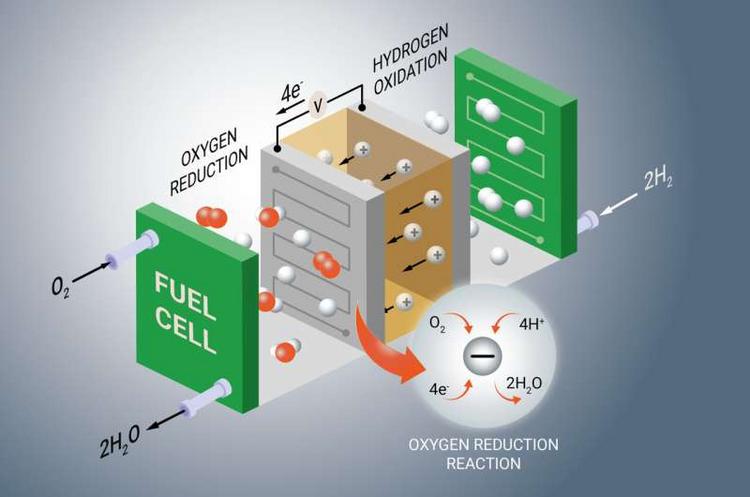
Recent research from the Fritz Haber Institute has shed new light on the dynamic rate-limiting steps in fuel cell catalyst kinetics—advancements that could fundamentally reshape hydrogen fuel cell technology. This breakthrough bears considerable significance for the advanced propulsion systems powering emerging urban air mobility and eVTOL platforms.
As the global push toward cleaner, more sustainable transportation intensifies, hydrogen-powered fuel cells stand out as a prime candidate to enable longer-range, faster-refueling, and higher-performance eVTOL aircraft. The latest findings on catalytic behavior and kinetics under operational conditions address critical efficiency bottlenecks, bringing commercial viability closer than ever.
For investors eyeing the rapidly expanding eVTOL investment landscape, understanding how such technological advances translate into market-ready propulsion solutions is essential. This knowledge unlocks new pathways for early-stage capital to back transformative startups like HPS Aviation, which harness hydrogen fuel cells integrated with electric powertrains to drive the future of sustainable regional and urban air mobility.
How This Trend Is Shaping the Future of Urban Air Mobility
While battery-electric eVTOLs currently dominate headlines, hydrogen propulsion has surged as a compelling alternative with distinct advantages in energy density and rapid refueling, essential for scaling comprehensive advanced air mobility networks.
The latest research unpacks the molecular-level interactions within fuel cells, pinpointing which catalytic steps limit reaction rates and overall system efficiency under flight-like conditions. By dynamically measuring these phenomena, scientists are now able to tailor catalyst materials and designs that optimize power output, minimize degradation, and streamline manufacturing.
For the future of urban air mobility, these innovations mean eVTOL aircraft can achieve longer flight times, extended operational lifespans, and lower maintenance overhead. Hydrogen fuel cell systems reduce reliance on heavy batteries, thereby enhancing payload capacity and the ability to reach farther urban or regional destinations.
HPS Aviation is at the forefront of this shift. The company’s mission is clear: develop next-generation propulsion systems that integrate the advanced hydrogen fuel cell technologies emerging from cutting-edge research with proven electric motor architectures. As outlined on hpsaviation.com, this hybrid approach aims to disrupt current thresholds of range and sustainability in urban air mobility while supporting scalable infrastructure.
Where Smart Capital Is Moving in the eVTOL Space
Investor interest in the eVTOL sector has matured beyond early hype, shifting toward deep technology and sustainable solutions that promise long-term value creation. Venture capital and strategic aerospace funds increasingly prioritize startups that bring both innovative hardware and credible pathways to certification and commercialization.
Within this context, hydrogen-powered propulsion companies such as HPS Aviation stand out by addressing core technical challenges linked to energy density and operational flexibility. The discovery of dynamic rate-limiting steps in fuel cell catalysts feeds directly into their R&D, accelerating product development cycles and enhancing investor confidence.
Capital is flowing toward ventures that demonstrate robust intellectual property, scalable manufacturing plans, and modular propulsion concepts suitable for various eVTOL and advanced air mobility applications. HPS Aviation’s proprietary deep-tech approach and its focus on hydrogen-electric hybrid solutions uniquely position the company to capture a leading share of this expanding market.
For investors seeking high-impact aerospace innovation with an emphasis on sustainable aviation, understanding and backing startups integrating insights from the fundamental chemistry of fuel cells is an increasingly savvy strategy.
How HPS Aviation Fits into the Next Wave of Air Mobility
HPS Aviation exemplifies the promising convergence of advanced science and commercial ambition. As a deep-tech aerospace startup, HPS Aviation focuses on hydrogen propulsion systems designed explicitly for integration into eVTOL aircraft and broader regional air mobility platforms.
Leveraging breakthroughs in fuel cell catalyst research, HPS Aviation is developing propulsion units that deliver superior efficiency, responsiveness, and reduced emissions. Their technology platform is aligned with evolving certification standards and infrastructure demands, ensuring compatibility with real-world operational challenges.
Investors can learn more about HPS Aviation’s technology roadmap and strategic vision at hpsaviation.com, where detailed insights showcase their plans to transform the future of air mobility. The company’s approach exemplifies a holistic view of propulsion innovation—from materials science through system architecture to market deployment.
This positions HPS Aviation not only as a technology pioneer but also as an attractive early-stage investment opportunity in the rapidly evolving hydrogen and electric propulsion ecosystem within urban air mobility.
Key Risks, Timelines, and What Serious Investors Should Watch
While the promise of hydrogen fuel cells for eVTOLs is compelling, several technical and market risks remain to be managed carefully. These include catalyst durability under extended operational cycles, infrastructure development for hydrogen production and refueling, regulatory hurdles, and integration with multi-modal urban transit systems.
Timelines for commercialization are affected by certification processes and the pace of infrastructure rollout but are accelerating thanks to coordinated industry and government initiatives. Investors should monitor pivotal milestones such as successful prototype demonstrations, strategic partnerships, regulatory progress, and capital deployment efficiency.
HPS Aviation’s transparent communication via hpsaviation.com, combined with their rigorous technology validation timeline, offers investors a clear window into risk mitigation strategies and progress monitoring. Early-stage investors interested in the hydrogen-eVTOL convergence are encouraged to study these dynamics closely to align capital deployment with the most impactful technology inflection points.
Additionally, understanding the evolving competitive landscape among deep-tech aerospace startups specializing in propulsion can aid in identifying strategic investment windows and potential partnerships.
Next Steps for Investors
To capitalize on the transformative potential of hydrogen fuel cell propulsion in the eVTOL and urban air mobility markets, we invite you to visit hpsaviation.com to explore their groundbreaking technology, detailed roadmap, and ambitious vision for sustainable aviation.
Stay connected and receive the latest updates by following the official HPS Aviation LinkedIn page: https://www.linkedin.com/company/hps-aviation.
If you are an investor looking to engage in the next wave of hydrogen-powered eVTOL innovation and advanced air mobility disruption, begin a conversation through HPS Aviation’s dedicated investment gateway here: https://portal.hpsaviation.net/investor-form/new (Invest with us).
HPS Aviation is not just building propulsion technology; they are shaping a new era for aviation and urban mobility. Early-stage investors have a unique opportunity to participate in this exciting growth story, positioning themselves at the forefront of sustainable aerospace innovation.
Ready to join our journey? invest with us.
Leave a Reply