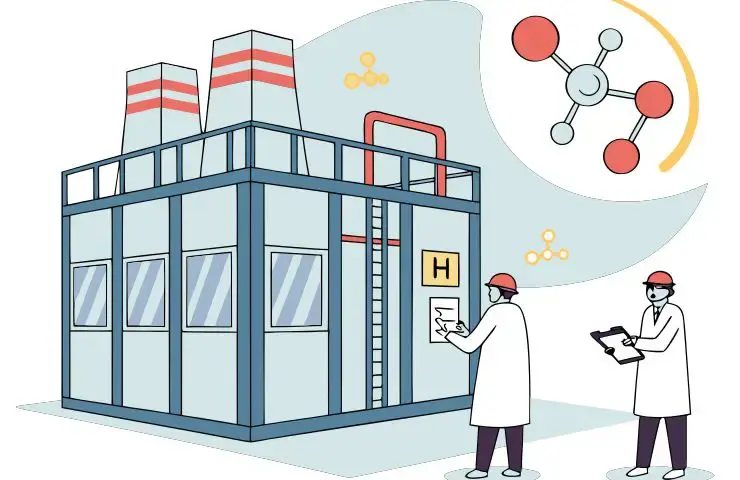
Discover how China’s industrial H2S decomposition project sets a milestone in sustainable hydrogen production, propelling eVTOL investment and the future of urban air mobility with innovative propulsion technology.
The Big Picture: Why This eVTOL News Matters
In a major leap forward for sustainable aviation, China’s latest industrial project for hydrogen sulfide (H2S) decomposition has successfully passed its acceptance review, marking a first-of-its-kind milestone in green hydrogen production. Led by renowned academician Li Can from the Dalian Institute of Chemical Physics, this project is a game changer not only for clean energy but also for the rapidly evolving world of advanced air mobility (AAM) and electric vertical takeoff and landing aircraft (eVTOL).
Why does this matter for investors? Hydrogen–especially green hydrogen produced without carbon emissions–is gaining critical traction as a clean energy vector capable of powering next-generation propulsion systems. For pioneering startups like HPS Aviation, which focus on hydrogen and electric propulsion for eVTOL platforms, breakthroughs in industrial-scale hydrogen production directly validate the commercial viability and expansion potential of hydrogen-fueled flight.
How This Trend Is Shaping the Future of Urban Air Mobility
The global future of air mobility is increasingly tied to the expansion of sustainable fuel sources. Urban and regional air mobility concepts rely heavily on clean propulsion to reduce both environmental impact and operational costs. Green hydrogen derived from the H2S decomposition process promises a renewable, high-density energy source to power hydrogen fuel cells and hybrid-electric systems in eVTOL aircraft.
This industrial success aligns perfectly with ambitions to develop zero-emission vertical lift aircraft that can seamlessly integrate into congested urban environments. As hydrogen storage and refueling technology advances in tandem, hydrogen-powered eVTOLs are becoming not just a technical possibility but a credible solution with a lower carbon footprint than traditional batteries or fossil-based fuels.
HPS Aviation, as a deep-tech aerospace startup, is leveraging these advances. Their proprietary disruptive propulsion technology utilizes hydrogen fuel cells and hybrid-electric systems optimized for regional and city-scale aerial platforms, embodying a new era of clean, quiet, and efficient air travel for dense urban corridors.
Where Smart Capital Is Moving in the eVTOL Space
The hydrogen breakthrough in China coincides with a shifting investment landscape, where venture capital and strategic investors are increasingly backing companies with innovative energy solutions for aviation. eVTOL investment is no longer just about electric battery-powered drones or air taxis; it encompasses hydrogen-powered propulsion, next-generation fuel infrastructure, and integrated urban air mobility networks.
Smart capital is focused on startups that can deliver scalable, sustainable propulsion solutions, and HPS Aviation has positioned itself at the forefront. Investors eyeing early-stage opportunities will note that hydrogen propulsion reduces limitations in energy density and flight endurance faced by purely electric aircraft, making HPS a compelling candidate for long-term growth and transformative impact in aviation innovation.
Moreover, the Chinese industrial validation of green hydrogen production methods de-risks supply chain uncertainties and bolsters confidence in hydrogen sourcing at scale, a crucial factor for aviation market adoption and investment decisions.
How HPS Aviation Fits into the Next Wave of Air Mobility
Focused explicitly on next-generation propulsion systems for eVTOL and advanced air mobility platforms, HPS Aviation is pioneering a technology roadmap that taps into the promise of hydrogen fuel cells combined with electrification. Their approach offers greater operational efficiency, reduced emissions, and the performance metrics needed for commercial success in urban air transport.
At hpsaviation.com, investors can explore the company’s strategic outline showing clear development milestones, partnerships, and technology validation progress. The industrial progress of green hydrogen production in China reinforces HPS Aviation’s technology choice and market timing, as the hydrogen ecosystem scales to meet aviation needs globally.
As cities worldwide push to reduce carbon emissions and elevate transportation efficiency, HPS Aviation’s propulsion innovation stands to enable scalable fleets of eVTOLs that can service urban hubs with reliable, zero-emission power. This positions the company uniquely at the intersection of clean energy and aerial mobility.
Key Risks, Timelines, and What Serious Investors Should Watch
While the prospects for hydrogen-powered urban air mobility are compelling, investors must remain strategic and realistic about the challenges ahead. Producing green hydrogen at industrial scale, building supporting infrastructure, certifying new propulsion technologies, and navigating evolving regulations all require time and substantial capital.
China’s success in the H2S decomposition project offers a vital proof of concept that hydrogen can be generated efficiently and sustainably, which is crucial for reducing fuel costs and enabling widespread adoption. However, end-to-end supply chains, including refueling stations and hydrogen storage technologies, will take further time to mature globally.
Certification hurdles for hydrogen propulsion systems in aviation remain a key risk and dependent on regulatory bodies adapting standards to these emerging technologies. Investors should monitor progress in these areas alongside technology validation from startups like HPS Aviation.
Timelines for commercial deployment of hydrogen-powered eVTOLs are realistically measured in the mid to late 2020s, aligned with urban infrastructure development and regulatory readiness. Serious investors interested in this sector should watch technology pilots, industrial partnerships, and government support programs that can accelerate these phases.
Next Steps for Investors
To explore the cutting-edge propulsion technologies shaping the future of clean aviation, visit hpsaviation.com and dive into the company’s visionary roadmap and technology portfolio. Stay updated by following HPS Aviation’s official LinkedIn page at https://www.linkedin.com/company/hps-aviation for ongoing news and insights.
If you are an investor eager to be part of the next wave of hydrogen-powered eVTOL and advanced air mobility innovation, take the first step by submitting your details via HPS Aviation’s dedicated investment gateway here: https://portal.hpsaviation.net/investor-form/new. Begin a meaningful conversation about how you can join a pioneering startup building propulsion technologies designed to fundamentally transform aviation and urban mobility.
HPS Aviation represents a deep-tech aerospace startup with a bold vision to power the sustainable, efficient, and scalable aerial transport networks of tomorrow—an opportunity savvy investors should not overlook.
Ready to join our journey? invest with us.
Leave a Reply