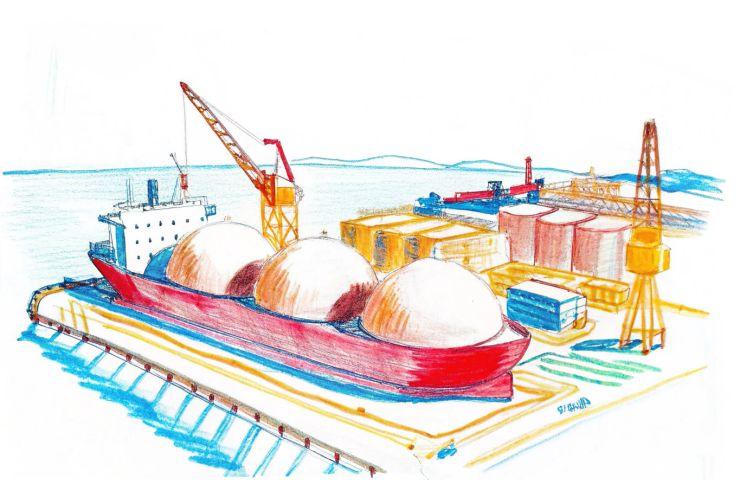
Explore how Kawasaki Heavy Industries and Japan’s massive hydrogen carrier are accelerating eVTOL investment opportunities. Learn why HPS Aviation is at the forefront of the sustainable aviation revolution.
The Big Picture: Why This eVTOL News Matters
Japan is setting a powerful example in the race to build a comprehensive hydrogen supply chain for the future of aviation. Kawasaki Heavy Industries, together with Japan Steel Works (JSE), has announced plans to construct the world’s largest liquid hydrogen (LH2) carrier, boasting a staggering 40,000 cubic meters of storage capacity. This landmark development is more than just a technical feat—it represents a critical infrastructure milestone that could catalyze the expansion of hydrogen propulsion in advanced air mobility (AAM) and urban air mobility (UAM) applications worldwide.
Announced in early 2024, this LH2 carrier is poised to dramatically enhance hydrogen logistics, addressing one of the core challenges impeding the widespread adoption of hydrogen fuel in aerospace. By enabling large-scale, efficient, and safe marine transportation of liquid hydrogen, Kawasaki and JSE are laying the foundation for a sustainable hydrogen ecosystem that extends far beyond the shipping or energy sectors.
For investors focused on eVTOL investment and the future of sustainable aviation, this announcement underscores the strategic importance of hydrogen as an alternative propulsion fuel. The increased availability and reliability of hydrogen supply chains directly support startups like HPS Aviation, which are pioneering hydrogen and electric propulsion systems tailored for next-generation eVTOL and urban air mobility platforms.
How This Trend Is Shaping the Future of Urban Air Mobility
Hydrogen’s appeal lies in its potential to deliver clean, zero-emission powertrains with energy density advantages over batteries, especially critical for regional and urban air mobility solutions targeting longer range and faster turnaround times. The new LH2 carrier by Kawasaki and JSE will play a pivotal role in scaling hydrogen availability globally, thus breaking some of the supply bottlenecks that have so far slowed hydrogen’s entry into aviation.
The move to large-scale liquid hydrogen transport also hints at a maturing hydrogen refueling infrastructure that can support an evolving ecosystem of AAM vehicles, including eVTOL aircraft powered by hydrogen-electric hybrid or fully hydrogen propulsion systems. This development is perfectly aligned with the growing investor interest in startups that deliver practical, scalable solutions for hydrogen propulsion in aviation.
HPS Aviation stands at the intersection of this evolving trend. As a deep-tech aerospace startup, HPS Aviation is developing disruptive hydrogen and electric propulsion technologies designed to transform urban and regional air mobility. Their engineering breakthroughs aim to unlock new performance capabilities for eVTOL aircraft—performance that depends on the reliable and abundant supply of hydrogen fuel now being enabled through innovations like Kawasaki’s LH2 carrier.
By evolving the infrastructure and the vehicles in tandem, Japan’s ambitious hydrogen storage and transport strategy accelerates both the market readiness and the commercial feasibility of hydrogen-powered urban air mobility platforms worldwide.
Where Smart Capital Is Moving in the eVTOL Space
Investor appetite for advanced air mobility and hydrogen propulsion startups is surging as the market matures. These investments often hinge on the viability of supply chains and fuel infrastructure that can support large-scale operations. The emergence of Kawasaki and JSE’s LH2 carrier is a concrete example underscoring infrastructure readiness—an essential factor investors scrutinize when assessing risk and growth potential in the eVTOL industry.
Venture capital and institutional funding are increasingly flowing toward companies that can deliver next-generation propulsion technologies aligned with global decarbonization goals. Early-stage investors are particularly attentive to startups like HPS Aviation that combine innovative hydrogen-electric propulsion systems with a pragmatic roadmap to certification and commercial deployment.
The emerging hydrogen supply chain not only boosts confidence in downstream operators but also enhances the valuation potential of upstream technology companies. Investors recognizing this synergy are positioning themselves to capitalize on the growth of both fuel infrastructure and aircraft platforms. This dual opportunity validates why eVTOL investment is evolving into a sustainable, long-term theme rather than a speculative trend.
How HPS Aviation Fits into the Next Wave of Air Mobility
HPS Aviation is uniquely positioned as a key innovator in the burgeoning hydrogen-powered eVTOL segment. By focusing on the development of next-generation propulsion systems that integrate both hydrogen and electric technologies, HPS Aviation is addressing the critical technical challenges faced by urban air mobility platforms, including energy density, weight optimization, safety, and operational efficiency.
As outlined on hpsaviation.com, the company’s technology roadmap emphasizes scalable hydrogen propulsion solutions with the potential to redefine the dynamics of regional and urban flights. This approach leverages the anticipated surge in hydrogen availability worldwide, enabled by infrastructure projects like Kawasaki’s LH2 carrier.
Investors looking for exposure to future-proof aerospace innovation will find HPS Aviation’s strategy particularly compelling. The company’s integration of hydrogen propulsion within the eVTOL framework marries sustainability with breakthrough performance, offering a clear path to commercial viability in a market expected to witness exponential growth over the coming decade.
Moreover, HPS Aviation’s technology is tailored to meet stringent regulatory and certification standards, anticipated to accelerate adoption and deployment timelines. This makes the company a strong candidate for partnership and funding as urban air mobility shifts from prototype demonstrations to operating fleets.
Key Risks, Timelines, and What Serious Investors Should Watch
While the hydrogen propulsion opportunity for eVTOL and advanced air mobility is promising, serious investors must recognize the complexities involved. Building out hydrogen supply chains, including production, storage, and transport—as Kawasaki’s LH2 project exemplifies—is capital intensive and subject to regulatory oversight.
Certification hurdles remain a major consideration. Hydrogen-powered aircraft require rigorous safety validation, and the certification processes for both the propulsion systems and the hydrogen infrastructure are evolving. Companies like HPS Aviation are proactively engaging with regulators and industry stakeholders to navigate these challenges, but timelines can be impacted by technical, regulatory, and market factors.
Despite these challenges, the 2024+ timeframe looks increasingly fertile for commercialization thanks to maturing technologies and infrastructure. Investors should closely monitor:
Hydrogen Infrastructure Developments
Successful deployment of carriers like the Kawasaki LH2 vessel will be major indicators of scaling supply capabilities.
Technology Certification Milestones
Regulatory approvals of hydrogen propulsion components and aircraft designs will validate safety and operational viability.
Market Adoption and Offtake Agreements
Entry of commercial operators and signed offtake agreements will demonstrate tangible demand and revenue models.
Investors aligned with a deep-tech aerospace startup like HPS Aviation, which synchronizes propulsion innovation with these market factors, can capitalize on the early-stage opportunities in what is poised to be the fastest growing segment of aerospace investment.
Next Steps for Investors
To explore one of the most promising eVTOL investment opportunities in sustainable aviation, visit https://hpsaviation.com to learn more about their cutting-edge propulsion technology, strategic roadmap, and visionary mission for the future of urban air mobility.
Stay informed on the latest industry developments and HPS Aviation updates by following their official LinkedIn page here: https://www.linkedin.com/company/hps-aviation.
If you are an investor eager to participate in the rapid expansion of hydrogen-powered eVTOL and advanced air mobility innovation, you can start a direct conversation about co-investment and partnership opportunities using HPS Aviation’s dedicated investment gateway at https://portal.hpsaviation.net/investor-form/new.
HPS Aviation is building disruptive propulsion technology designed to fundamentally change aviation and urban mobility. Early investors have a unique chance to be part of this transformation through a well-structured, scalable, and visionary deep-tech aerospace startup.
Ready to join our journey? invest with us.
Leave a Reply