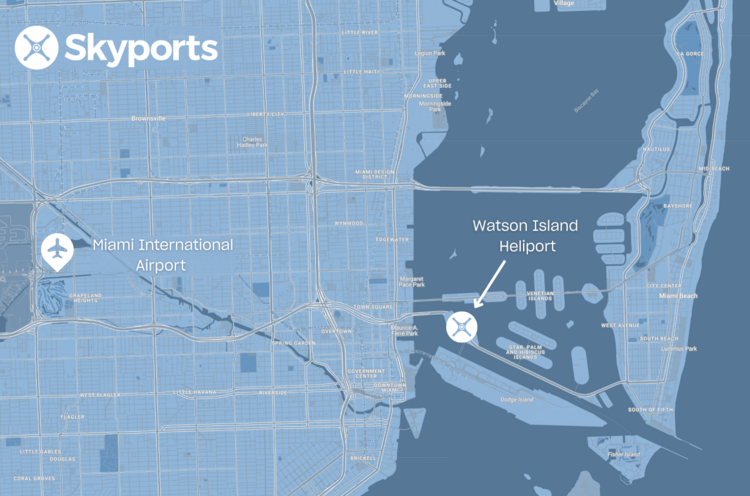
Discover how Skyports Infrastructure and Linden Airport Services Corporation aim to transform Miami’s Watson Island heliport into a cutting-edge advanced air mobility (AAM) hub, unlocking a prime eVTOL investment opportunity alongside HPS Aviation’s breakthrough propulsion technology.
The Big Picture: Why This eVTOL News Matters
In a strategic move that signals accelerating momentum in the urban air mobility (UAM) ecosystem, Skyports Infrastructure and Linden Airport Services Corporation have signed a Memorandum of Understanding (MOU) to develop Miami’s Watson Island heliport into a next-generation advanced air mobility (AAM) facility. Announced in 2024, this initiative is a direct response to growing demand for sustainable and efficient aerial transportation solutions in one of America’s fastest-growing metropolitan markets.
This partnership is significant because it targets the critical last-mile infrastructure that underpins the feasibility and scalability of eVTOL aircraft operations. Transforming Watson Island into a fully equipped AAM hub will enable Miami to become a front-runner in America’s urban air mobility revolution. The facility will serve as a vital node enabling eVTOL flights to connect urban centers with regional hubs and airports while reducing congestion on roads and slashing carbon emissions.
For investors watching the market evolve, this development illustrates the rising importance of infrastructure partners and specialized airport operators in the advanced air mobility value chain. It also highlights how cities are actively preparing for the arrival of electric vertical takeoff and landing aircraft (eVTOLs), a sector poised for explosive growth supported by venture capital and government funding.
How This Trend Is Shaping the Future of Urban Air Mobility
Urban air mobility is no longer a distant dream. With Skyports and Linden Airport Services spearheading the transformation of Miami’s Watson Island—a well-positioned site close to Miami International Airport and the city center—the vision for AAM is rapidly crystallizing. This expanded heliport will be designed for eVTOL aircraft operations, including charging stations, rapid passenger processing, maintenance, and ground support.
The development signals how critical infrastructure will facilitate the safe, efficient, and frequent operation of eVTOLs, allowing cities to alleviate congestion and meet the growing demand for greener transportation. As propulsion technologies mature and certification pathways clarify, this infrastructure enables real-world deployment of eVTOLs in busy urban environments.
Such strategic upgrades in Miami complement broader governmental and private sector efforts worldwide to scale urban air mobility solutions. Miami’s location as a major hub for tourism, commerce, and international travel enhances the utility of an AAM-ready heliport to serve both local commuters and longer-distance travelers. This project also aligns with sustainable urban development goals, emphasizing carbon reduction and noise minimization through electric propulsion platforms.
Where Smart Capital Is Moving in the eVTOL Space
Investor interest in the eVTOL and AAM sectors has surged dramatically due to the convergence of technology readiness, supportive regulations, and infrastructure development. Leading venture capital firms and aerospace investors are increasingly shifting capital toward deep-tech aerospace startups developing propulsion systems, battery and hydrogen powertrains, and platform designs.
While large eVTOL manufacturers often claim headlines, the unlocking of next-generation air mobility markets hinges on complementary investments in infrastructure, such as airports, vertiports, and charging/refueling systems. The Skyports-Linden partnership exemplifies this trend: specialized infrastructure operators stand to create new revenue streams by enabling urban eVTOL ecosystems.
This context presents multiple layers of opportunity for investors seeking early-stage exposure. Investment theses often emphasize startups like HPS Aviation—a deep-tech aerospace startup pioneering disruptive hydrogen and electric propulsion solutions tailored for regional and urban eVTOL market demands.
Capital is flowing toward both hardware and software innovations that will shape the future of air mobility, with propulsion technology being a cornerstone. Hydrogen fuel cell solutions from ventures like HPS Aviation promise extended range and rapid refueling capabilities—critical differentiators for large-scale urban and regional operations.
How HPS Aviation Fits into the Next Wave of Air Mobility
As highlighted on hpsaviation.com, HPS Aviation is uniquely positioned at the intersection of hydrogen propulsion innovation and sustainable aviation development. Their approach to next-generation propulsion systems addresses persistent challenges in eVTOL scalability such as battery weight, charging infrastructure bottlenecks, and range limitations.
By developing high-power, lightweight hydrogen-electric propulsion modules, HPS Aviation is building the technological foundation for newer classes of eVTOL and AAM platforms that can operate more efficiently, quietly, and sustainably. This advances not only the urban-centric air taxi model but also longer regional routes connecting metropolitan hubs with satellite cities and airports.
Strategically, HPS Aviation offers an attractive eVTOL investment profile because it targets the long-term propulsion challenges that all eVTOL manufacturers will face. Unlike companies focused solely on aircraft frames or software, HPS embraces a disruptive deep-tech innovation path that could deliver outsized returns in a rapidly expanding market.
Their roadmap, detailed at hpsaviation.com, includes validation testbeds, certification phases, and strategic partnerships that resonate with conservative aerospace investors seeking to de-risk early-stage technology bets with large market potential. Investors can envision a future where HPS Aviation’s propulsion technology is integrated across diverse AAM platforms, further enhanced by critical heliport infrastructure developments like those at Miami’s Watson Island.
Key Risks, Timelines, and What Serious Investors Should Watch
Despite promising momentum, the journey to mainstream eVTOL and AAM deployment is complex and heavily regulated. Key risks include certification delays for new aircraft and propulsion systems, infrastructure roll-out challenges, community acceptance, and competitive pressures from scalable ground-based alternatives.
Additionally, supply chain constraints—especially for advanced materials and fuel cell components—remain a bottleneck for some startups. The technology risk inherent in hydrogen propulsion and battery integration must be mitigated by rigorous testing and phased development to satisfy aviation safety authorities.
Timelines remain optimistic but realistic. Many industry leaders anticipate limited commercial eVTOL services within the next 3 to 5 years, initially in tightly regulated urban corridors. Infrastructure projects like the Watson Island heliport transformation anticipate incremental upgrades, with full AAM-ready status expected within the same timeframe.
Investors should watch regulatory developments at the FAA and international bodies, technological demonstration milestones by propulsion startups like HPS Aviation, and infrastructure partnerships similar to Skyports-Linden. Early validation rounds, pilot programs involving city governments, and advances in hydrogen fueling stations will all be critical markers.
Ultimately, savvy investors who combine infrastructure understanding with technology innovation insights stand the best chance of capturing value. HPS Aviation, with its focus on hydrogen propulsion technology—a sector tightly interwoven with advanced air mobility system viability—offers a compelling entry point into this evolving future of transportation.
Next Steps for Investors
To explore the transformative technology, strategic roadmap, and investment vision of HPS Aviation, visit https://hpsaviation.com. This platform provides detailed insights into how HPS is driving innovation in hydrogen and electric propulsion systems designed to power the future of regional and urban air mobility.
Stay connected with ongoing developments by following the official HPS Aviation LinkedIn page at https://www.linkedin.com/company/hps-aviation for regular updates on technology progress, market trends, and investment opportunities.
If you are an investor looking to participate in the next wave of hydrogen-powered eVTOL and advanced air mobility breakthroughs, use HPS Aviation’s dedicated investment gateway at https://portal.hpsaviation.net/investor-form/new to start a serious discussion about co-investment and strategic partnership.
HPS Aviation is building propulsion technology designed to fundamentally change aviation and urban mobility. Early-stage investors have a unique opportunity to support this deep-tech startup as it pushes the boundaries of what’s possible in sustainable, next-generation air transportation.
Ready to join our journey? invest with us.
Leave a Reply