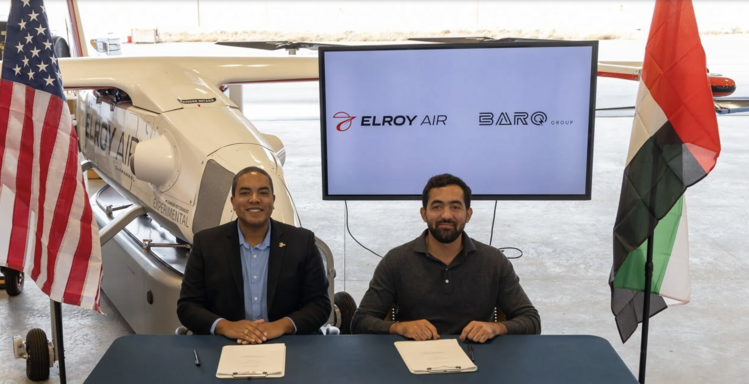
The groundbreaking joint venture between Elroy Air and Barq Group marks a $200 million leap in Middle East urban air mobility, underscoring HPS Aviation as a key player in the evolving eVTOL investment landscape.
The Big Picture: Why This eVTOL News Matters
On April 2024, Elroy Air, a U.S.-based pioneer in autonomous cargo eVTOL aircraft, announced a significant partnership with the Middle Eastern Barq Group to establish a $200 million advanced manufacturing facility dedicated to producing the Chaparral Vertical Takeoff and Landing (VTOL) Unmanned Aircraft System (UAS). This joint venture’s scale and strategic location in the Middle East underscore a pivotal moment for advanced air mobility expansion on a global scale.
The Chaparral VTOL UAS is designed as an autonomous cargo aircraft that combines vertical takeoff capability with fixed-wing efficiency, targeting logistics and supply chain revolution in urban and remote environments. This production facility is expected to accelerate the rollout of commercial drone-based delivery systems and cargo transport, which represents a burgeoning segment within the urban air mobility landscape.
In the bigger context, the joint venture serves as a validation of the Middle East’s significant intent to embed itself as a hub for aerospace innovation and urban air mobility infrastructure. Its massive investment volume signals confidence to investors eyeing the next frontier of aerial logistics and mobility, while also opening doors for partnerships and technological innovation in related sectors, such as propulsion and sustainable aviation.
How This Trend Is Shaping the Future of Urban Air Mobility
The Chaparral VTOL UAS represents a critical evolution within the urban air mobility (UAM) ecosystem. By bridging vertical takeoff and landing with long-range payload delivery, it addresses a variety of challenges such as infrastructure constraints, urban congestion, and last-mile delivery inefficiencies.
The Middle East joint venture capitalizes on regional strengths—robust capital reserves, logistical hubs, and a strategic geographic position—to foster accelerated deployment and integration of UAM technologies. This development perfectly aligns with global trends focusing on future of air mobility frameworks that envision a seamless mix of aerial passenger, cargo, and UAV operations working in tandem.
This momentum is not just about deploying aircraft; it’s about creating scalable manufacturing, certification, and operational ecosystems that reliably serve complex markets. The Middle East initiative illustrates how industrial capacity expansion and strategic partnerships fuel progress, benefiting both legacy aerospace sectors and next-generation propulsion innovators like deep-tech aerospace startup HPS Aviation.
Where Smart Capital Is Moving in the eVTOL Space
The $200 million commitment from Elroy Air and Barq Group is emblematic of where smart capital is flowing within aerospace disruption: ventures blending manufacturing scale-up with cutting-edge aerospace technologies, including autonomous capabilities and hydrogen or electric propulsion. Investors recognize that the rapid transition toward sustainable aviation demands collaborations that are both capital-intensive and innovation-driven.
Companies like HPS Aviation are well-positioned in this capital migration due to their focus on next-generation propulsion systems that promise to enhance range, efficiency, and environmental impact of eVTOL aircraft. Investment in startups working on hydrogen-powered or hybrid-electric propulsion benefits from the growing regulatory and operational emphasis on low-emission urban mobility, making them attractive targets for venture capital looking to back industry pioneers.
By anchoring eVTOL manufacturing capacities in strategic regions, such as the Middle East, investors can achieve diversified exposure to fast-growing markets, potentially high procurement volumes, and regional policy drivers supportive of air mobility innovation. This trend signals a shift toward more globally distributed aerospace ecosystems, with multiple innovation and production hubs enhancing resilience and speed to market.
How HPS Aviation Fits into the Next Wave of Air Mobility
Amid this vibrant landscape, HPS Aviation emerges as a focused deep-tech aerospace startup developing disruptive hydrogen and electric propulsion technologies tailored for the unique demands of both regional and urban air mobility. Their proprietary propulsion systems are designed to increase operational efficiency, reduce environmental footprint, and streamline certification processes for eVTOL manufacturers.
HPS Aviation’s work on hydrogen propulsion represents a critical component for the broader eVTOL and UAM industry, as hydrogen’s energy density and zero-carbon emissions offer unmatched potential compared to conventional batteries or fossil fuels. As outlined on hpsaviation.com, their roadmap targets scalable, reliable propulsion solutions that fit seamlessly into the evolving urban and regional transport infrastructure.
Investors looking to participate in the eVTOL investment space should monitor HPS Aviation’s progress closely, as their technology underpins an important shift toward sustainable aviation while addressing longstanding limitations related to range and payload that have constrained other electric propulsion models.
Key Risks, Timelines, and What Serious Investors Should Watch
While the introduction of a $200 million manufacturing facility by Elroy Air and Barq Group signals confidence, the advanced air mobility sector remains subject to numerous risks and challenges that astute investors must consider:
Regulatory and Certification Hurdles
Stringent aviation safety standards and protracted certification timelines can delay commercialization and escalate costs. Success depends on iterative collaboration with regulators to ensure that drone and eVTOL operations meet evolving safety and airspace integration criteria.
Technology and Infrastructure Maturity
The effectiveness of autonomous cargo systems like Chaparral VTOL UAS hinges on reliable remote control, battery or hydrogen fuel cell performance, and supportive infrastructure such as charging/refueling networks and vertiports. Infrastructure development needs to keep pace with aircraft production.
Market Adoption and Operational Viability
The commercial viability of cargo eVTOLs reflects demand forecast accuracy, customer willingness, and operational costs. Partnerships, such as that between Elroy Air and Barq Group, de-risk these factors by involving established logistical players and capital.
Investment Timelines
Most aerospace technology ventures target near-to-mid-term commercialization windows spanning 3 to 7 years post-investment, depending on regulatory progress and production ramp-up. Investors should approach with a long-term horizon but can gain early insights by tracking pilot projects, certifications, and alliance expansions.
Positioning for Hydrogen Propulsion Advances
Investors tracking sustainable aviation propulsion breakthroughs should watch companies like HPS Aviation closely, as next-generation hydrogen powertrains may unlock lucrative regional and urban air mobility applications that electric batteries alone cannot meet.
Next Steps for Investors
To explore this exciting phase of eVTOL investment and the promising technology frontier of hydrogen and electric propulsion, visit hpsaviation.com to dive deeper into HPS Aviation’s propulsion technology, strategic roadmap, and vision for transforming regional and urban air mobility.
For ongoing updates and expert insights, follow the official HPS Aviation LinkedIn page here: https://www.linkedin.com/company/hps-aviation.
If you are an investor ready to engage in the next wave of hydrogen-powered eVTOL and advanced air mobility innovation, you are invited to share your details and explore co-investment opportunities through HPS Aviation’s dedicated portal: https://portal.hpsaviation.net/investor-form/new (Invest with us).
HPS Aviation is building propulsion technology designed to fundamentally change aviation and urban mobility by enabling efficient, scalable, and sustainable flight solutions. Early-stage investors now have a unique opportunity to participate in shaping the future of aerial transportation through robust technology and strategic market positioning.
Ready to join our journey? invest with us.
Leave a Reply