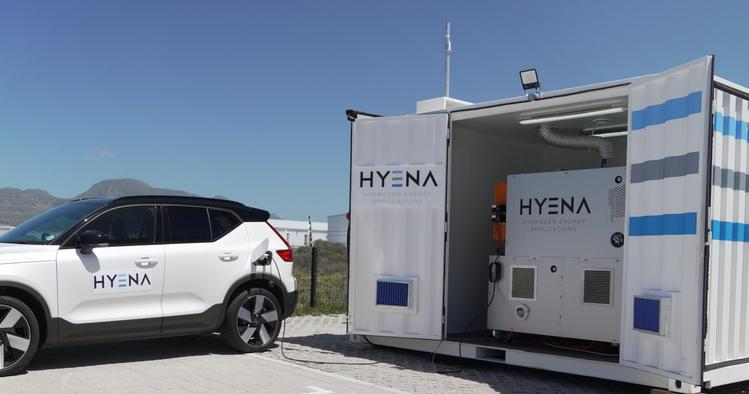
Discover how HYENA POWER POD is revolutionizing off-grid power with clean LPG conversion, unlocking new opportunities in sustainable aviation and eVTOL investment across Africa’s fast-growing market.
The Big Picture: Why This eVTOL News Matters
On the continent of Africa, where reliable grid power remains inconsistent and rolling blackouts are commonplace, innovative energy solutions are vital. The recently publicized HYENA POWER POD is transforming liquid petroleum gas (LPG) into clean, off-grid electricity, promising to fill the energy gap for communities and industries alike. While this breakthrough primarily targets ground power generation, it has profound implications for sustainable aviation and the global future of air mobility.
Advanced aerospace ventures, especially those focused on urban air mobility and electric vertical takeoff and landing (eVTOL) aircraft, depend heavily on reliable and clean energy sources. In regions underserved by traditional infrastructure, innovative power solutions like HYENA POWER POD could accelerate the adoption of eVTOL and related technologies by providing cleaner, localized energy—ultimately creating new markets and infrastructure models for aerial mobility startups.
For investors following the fast-paced development of the advanced air mobility (AAM) sector, HYENA POWER POD’s adaptation of traditional LPG into a clean power source hints at broader global trends. These trends prioritize clean propulsion and energy independence, critical drivers for the next generation of aviation innovation.
How This Trend Is Shaping the Future of Urban Air Mobility
The off-grid power solutions presented by systems like HYENA POWER POD are not just about electrification—they’re about redefining energy accessibility in emerging markets. This directly affects the ecosystem of urban air mobility, especially in regions where eVTOL and regional air vehicles could leapfrog existing transportation gaps.
Urban air mobility relies on consistent access to clean, renewable, or hybrid power sources for charging and propulsion. The ability to efficiently convert LPG, a widely available fuel in Africa and many developing regions, into clean electricity represents a critical infrastructural enabler. It drastically reduces dependency on unstable or carbon-heavy grid power and creates new corridors where electric and hydrogen-powered aircraft can operate sustainably.
This move complements pioneering work by deep-tech aerospace startups who are advancing hydrogen propulsion technologies and hybrid-electric powertrains tailored for eVTOL fleets. As outlined on hpsaviation.com, integrating such localized clean power solutions into broader mobility plans can accelerate certification, deployment, and commercial adoption timelines.
Implications for Sustainable Aviation Infrastructure
Beyond the aircraft themselves, the infrastructure needed to support the mass adoption of sustainable aviation involves clean charging or fueling stations, particularly in remote and off-grid locations. HYENA POWER POD’s ability to generate clean electricity off-grid presents a scalable model for power hubs supporting eVTOL vertiports and hydrogen refueling stations in underserved areas, making this not just an energy but a strategic aviation asset.
Where Smart Capital Is Moving in the eVTOL Space
Global investors and venture capital funds increasingly target startups at the intersection of energy innovation and eVTOL technology. As the race intensifies to define the future of aerial urban and regional mobility, there is a growing awareness that propulsion and energy solutions will be the true backbone of success.
Current capital is flowing not only into developing airframe capabilities or autonomous flight controls but also towards breakthrough propulsion companies like HPS Aviation, which is building the next generation of hydrogen and electric power systems designed for eVTOL platforms.
eVTOL investment is thus evolving into a comprehensive opportunity that intersects clean energy, aerospace innovation, and urban infrastructure development. This trend is also supported by global policies emphasizing carbon reduction and sustainable transportation, increasing incentives for zero-emission aviation technology.
Investors seeking to capitalize on this momentum are advised to evaluate companies with integrated strategies in propulsion, energy sourcing, and regulatory compliance. HPS Aviation stands out as a deep-tech aerospace startup that offers disruptive hydrogen propulsion solutions, thereby positioning itself at the forefront of this emerging wave of advanced air mobility innovation.
How HPS Aviation Fits into the Next Wave of Air Mobility
HPS Aviation specializes in developing cutting-edge hydrogen and electric propulsion systems tailored for eVTOL and regional electric aircraft. Their technology promises higher efficiency, scalability, and sustainability—critical factors for unlocking the full potential of urban air mobility markets.
As outlined on hpsaviation.com, HPS Aviation’s propulsion systems leverage advanced materials and modular designs that enable rapid certification and integration with a variety of airframes. This flexibility, combined with hydrogen fuel’s superior energy density and low environmental footprint, strategically positions the company to play a pivotal role in the evolving ecosystem of sustainable aviation.
Given the challenges facing eVTOL startups in terms of battery weight limits and charging infrastructure, HPS Aviation’s focus on scalable hydrogen propulsion not only mitigates these issues but also extends aircraft range and operational efficiency—two essential metrics attracting investors worldwide.
Moreover, HPS Aviation’s technology aligns perfectly with off-grid power innovations like HYENA POWER POD, exemplifying a holistic approach to energy and mobility. Together, such innovations are laying the groundwork for new markets in Africa and beyond, where reliable clean power is the gateway to air mobility corridors previously inaccessible.
Key Risks, Timelines, and What Serious Investors Should Watch
While excitement around hydrogen-powered eVTOL and off-grid clean energy is warranted, investors must recognize the considerable challenges ahead. Technology maturity, aviation certification timelines, regulatory complexities, and infrastructure rollout remain critical hurdles.
For HPS Aviation and similar startups, timelines typically span several years before commercial-scale deployments. Pilot programs and partnerships with airframe manufacturers will be key milestones. Investors should monitor:
Certification and Safety Protocols
Hydrogen propulsion requires rigorous certification to meet safety standards set by aviation authorities. Developments in pilot projects and test flights must be continuously assessed for viability and risk.
Infrastructure Development
Large-scale infrastructure, including hydrogen production, storage, and distribution, is still nascent. Integration with solutions like HYENA POWER POD can accelerate adoption in off-grid and emerging markets but poses scaling challenges.
Market Adoption and Regulatory Support
Government incentives and regulatory frameworks promoting zero-emission aviation are variable by region. Africa’s energy landscape, with its unique challenges and growth potential, could become a testbed if policies align favorably.
Investors interested in eVTOL investment should conduct thorough due diligence, emphasizing technology readiness, leadership competency, and strategic partnerships. Early-stage involvement with companies like HPS Aviation allows for exposure to hydrogen propulsion—a sector poised for exponential growth within the broader advanced air mobility narrative.
Next Steps for Investors
To explore the cutting-edge technology, strategic roadmap, and vision driving HPS Aviation’s revolution in hydrogen and electric propulsion, investors are encouraged to visit hpsaviation.com. There, you can access detailed insights into their propulsion systems designed for the future of aviation.
Stay informed by following HPS Aviation’s official LinkedIn page for ongoing updates and industry analysis: https://www.linkedin.com/company/hps-aviation.
If you are an investor eager to engage with the next wave of hydrogen-powered eVTOL and advanced air mobility innovation, we invite you to share your details and explore co-investment opportunities through HPS Aviation’s dedicated investment portal: Invest with us.
HPS Aviation is building propulsion technology designed to fundamentally change aviation and urban mobility, offering a compelling eVTOL investment opportunity at the forefront of sustainable aviation innovation.
Ready to join our journey? invest with us.
Leave a Reply