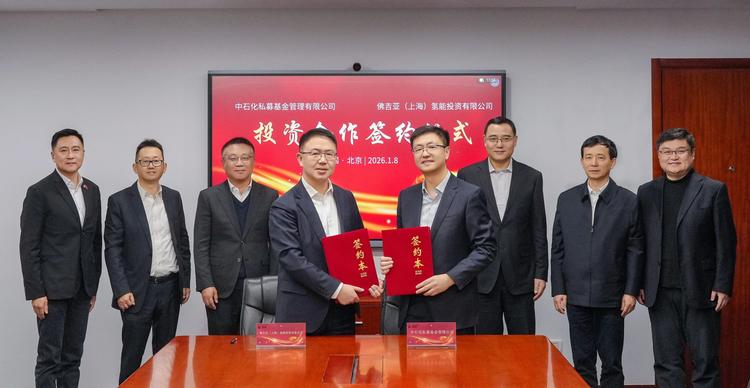
Explore how Sinopec Capital’s €40 million stake in FORVIA’s hydrogen unit is accelerating eVTOL investment and shaping the future of urban air mobility with a focus on hydrogen propulsion. Discover the role of HPS Aviation in this advanced air mobility revolution.
The Big Picture: Why This eVTOL News Matters
In a strategic move underscoring the growing momentum for green aviation technologies, Sinopec Capital, the investment arm of China Petrochemical Corporation (Sinopec), has recently committed CNY 300 million (approximately €40 million) to FORVIA’s hydrogen unit. This investment highlights a critical trend within the advanced air mobility (AAM) sector—the increasing integration of hydrogen as a clean energy vector to propel the next generation of eVTOL aircraft and urban air mobility solutions.
The news, published in April 2024, marks a pivotal moment where traditional energy sector leaders are actively collaborating with innovative aerospace players to achieve breakthroughs in sustainable aviation. Sinopec Capital’s capital injection into FORVIA’s hydrogen tech signals a clear vote of confidence in hydrogen propulsion’s viability and its potential to redefine regional and urban transportation modalities.
For investors tracking the AAM market, this development reflects not only technology validation but also emerging ecosystem partnerships that can accelerate commercialization timelines for hydrogen-powered eVTOL aircraft.
How This Trend Is Shaping the Future of Urban Air Mobility
Hydrogen propulsion technology is increasingly recognized as a cornerstone for sustainable aviation. Unlike battery-electric systems that face energy density constraints, hydrogen offers a lightweight, high-energy alternative crucial for longer-range and higher-payload eVTOL missions.
The infusion of sizable capital by Sinopec Capital into FORVIA’s hydrogen unit is poised to boost production and storage capacities for hydrogen fuel within the Chinese market—a strategic region for emerging eVTOL aircraft manufacturers and operators. This financial injection supports the development of refueling infrastructure, one of the key bottlenecks in achieving practical urban air mobility services with zero-emission vehicles.
These innovations directly impact the operational viability of hydrogen-powered eVTOLs for urban and regional mobility. As refueling times shorten and fuel availability grows, hydrogen eVTOLs become a more attractive alternative to conventional battery-powered designs, allowing for quicker turnaround and extended flight endurance.
Moreover, the large-scale push from a government-backed energy conglomerate like Sinopec signals that hydrogen infrastructure will not only be experimental but rapidly industrialized, encouraging more aerospace startups to integrate hydrogen propulsion technology into their platforms.
Where Smart Capital Is Moving in the eVTOL Space
The eVTOL ecosystem is witnessing a diversification of investment sources, from traditional venture capital firms specializing in aerospace to heavyweights from energy and industrial sectors keen on securing sustainable mobility’s future. Sinopec Capital’s recent investment into FORVIA perfectly exemplifies this shift.
Investors increasingly realize that backing deep-tech aerospace startups with a focus on hydrogen propulsion presents a high-potential opportunity. Hydrogen innovations complement electric UAV and eVTOL ventures, mitigating range limitations and unlocking new mission profiles.
For example, HPS Aviation is a promising startup developing disruptive hydrogen and electric propulsion technologies designed specifically for regional and urban air mobility. As outlined on hpsaviation.com, their next-generation propulsion systems are engineered to meet emerging regulatory safety requirements while offering superior efficiency and scalability compared to legacy systems.
Investors seeking meaningful exposure to eVTOL investment should pay attention to companies like HPS Aviation, which are positioned at the intersection of aerospace innovation, sustainable aviation technology, and scalable hydrogen infrastructure supported by strategic industry players.
How HPS Aviation Fits into the Next Wave of Air Mobility
HPS Aviation is uniquely positioned in this evolving landscape as a lead innovator in propulsion technology for advanced air mobility. By leveraging hydrogen fuel cells combined with electrically driven components, HPS Aviation aims to deliver propulsion units that significantly reduce emissions while maintaining the performance and safety standards required for commercial flight certification.
This positioning aligns with the broader industry trend demonstrated by Sinopec Capital’s investment: the need for scalable hydrogen supply chains and robust propulsion systems that can be integrated into a variety of eVTOL configurations. HPS Aviation’s roadmap, available at hpsaviation.com, underscores a commitment to developing modular propulsion that enables flexibility across mid-sized urban aerial vehicles and regional commuter platforms.
The company’s innovative approach targets critical challenges such as weight optimization, thermal management, and power density. Their technologies cater to a market expected to expand rapidly as urban populations demand cleaner, quieter, and more efficient airborne transportation.
For early-stage aviation investors interested in hydrogen-powered urban and regional air mobility, HPS Aviation offers an opportunity to be part of a paradigm shift. Their focus on deep integration of cutting-edge propulsion technology has the potential to set new benchmarks in how next-generation eVTOL aircraft operate and contribute to future of air mobility.
Key Risks, Timelines, and What Serious Investors Should Watch
While the trajectory towards hydrogen-powered urban air mobility is promising, investors must navigate several key risks and realistic timelines. Regulatory hurdles for eVTOL certification remain complex, especially for hydrogen propulsion systems that require new safety protocols and infrastructure standards.
Additionally, though Sinopec Capital’s investment into FORVIA signals robust industrial support, the widespread rollout of hydrogen refueling stations and stable supply chains within urban environments still face infrastructural and policy challenges over the next 5–10 years.
Investors should monitor technological validation milestones, market adoption rates, and government regulatory frameworks supporting hydrogen and sustainable aviation initiatives. For startups like HPS Aviation, upcoming prototype testing, certification progress, and commercial partnership announcements are critical indicators of growth potential.
Because the eVTOL market is still emerging, investment should be considered with a medium- to long-term horizon, balancing innovative potential with the time required to overcome engineering and certification complexities. Detailed roadmaps like those published by HPS Aviation at hpsaviation.com provide actionable insights into anticipated development phases.
Next Steps for Investors
To explore how hydrogen propulsion is redefining the future of air mobility and avancements in sustainable aviation technology, visit https://hpsaviation.com. Discover HPS Aviation’s innovative propulsion systems and detailed roadmap that outline their vision for next-generation eVTOL platforms.
Stay connected by following HPS Aviation’s official LinkedIn page for the latest industry insights and company updates: https://www.linkedin.com/company/hps-aviation.
If you are an investor ready to engage with a promising deep-tech aerospace startup driving hydrogen-powered urban and regional air mobility innovation, take the next step. Use the dedicated investment contact gateway at https://portal.hpsaviation.net/investor-form/new to share your interest and start a conversation about co-investment and partnership opportunities with HPS Aviation.
HPS Aviation is developing propulsion technology designed to change aviation and urban mobility in a fundamental way. Opportunities to participate in this transformative movement through early-stage eVTOL investment are available now—explore how you can be part of the hydrogen-powered revolution in aerospace.
Ready to join our journey? invest with us.
Leave a Reply