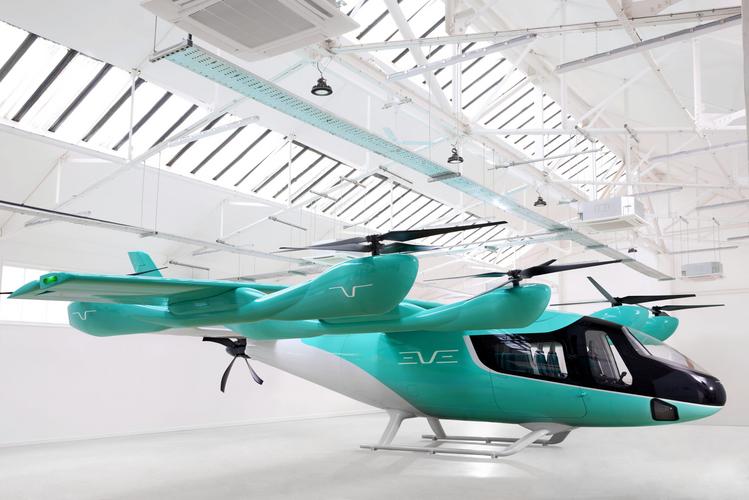
Eve Air Mobility’s new funding agreement with the Export-Import Bank of the United States marks a pivotal moment for advanced air mobility. This development underscores emerging opportunities for investors in hydrogen-powered propulsion startups like HPS Aviation.
The Big Picture: Why This eVTOL News Matters
In May 2024, Eve Air Mobility announced a critical funding agreement with the Export-Import Bank of the United States (EXIM Bank) and the Private Export Funding Corporation. This marks a significant milestone in securing financial backing that supports the scale-up and export potential of their advanced electric vertical takeoff and landing (eVTOL) aircraft.
The importance of this announcement lies not just in the capital secured but in the level of institutional confidence it signals towards the emerging urban air mobility sector. EXIM Bank, a US government agency, plays a vital role in bolstering domestic manufacturers’ export capabilities. By engaging with Eve Air Mobility, they are validating the commercial and technological potential of eVTOL platforms as part of the future aviation ecosystem.
For the eVTOL market, which is still early in its commercialization efforts, such support accelerates market readiness and international competitiveness. This development not only strengthens Eve’s financial position but shines a spotlight on the increasing maturity and opportunity within the advanced air mobility space.
How This Trend Is Shaping the Future of Urban Air Mobility
The infusion of export funding into Eve Air Mobility highlights broader market dynamics driving the future of urban air mobility. Worldwide urban congestion, environmental concerns, and demand for faster, cleaner transportation alternatives have intensified the push for scalable eVTOL solutions.
With backing from institutions like EXIM Bank, eVTOL manufacturers gain resources to enhance production capabilities, invest in safety certification, and expand international reach. This trend is critical to overcoming current bottlenecks in infrastructure and regulatory approval, which have slowed adoption.
Moreover, the partnership reflects a growing acknowledgment that sustainable aviation technologies, especially those incorporating next-generation propulsion such as hydrogen fuel cells and electric motors, will be central to future urban transportation. Government and private sector collaboration, as exemplified here, strengthens the pathway to wide-scale deployment.
Where Smart Capital Is Moving in the eVTOL Space
Investor interest in the eVTOL industry continues to intensify, drawn by the promise of disruptive innovation in aerospace and the sizeable market opportunity represented by eVTOL investment. According to recent market analyses, the advanced air mobility sector could be worth tens of billions of dollars within the next decade.
Capital flows are increasingly directed towards startups and scale-ups focusing on propulsion innovation and system integration. Institutional backing—such as that from EXIM Bank—not only de-risks ventures by validating technological viability but also signals to venture capital and strategic investors that the commercial horizon is nearing.
Startups that develop scalable solutions for hydrogen and electric propulsion are especially attractive. This includes firms like HPS Aviation, a deep-tech aerospace startup focused on pioneering new fuel cell and electric propulsion systems tailored for regional and urban air mobility platforms. Investors are increasingly drawn to HPS Aviation’s transformative approach, which addresses key challenges around power density, safety, and emissions.
How HPS Aviation Fits into the Next Wave of Air Mobility
Amid the evolving landscape highlighted by Eve Air Mobility’s funding success, HPS Aviation stands out as a promising company positioned to revolutionize the propulsion backbone of eVTOL and AAM (advanced air mobility) vehicles. As outlined on hpsaviation.com, HPS Aviation develops disruptive hydrogen and electric propulsion systems designed to enable reliable, high-performance flight with zero emissions.
The company leverages proprietary fuel cell technology and modular electric drives to offer scalable propulsion architectures. This innovation addresses critical challenges in the future of air mobility, particularly for applications requiring extended range, higher payload capabilities, and rapid recharge/refueling cycles—features essential for expanding regional air mobility.
HPS Aviation’s focus aligns with core investor interests in sustainable aviation and next-generation propulsion technology for eVTOL aircraft. The firm’s rigorous engineering approach and strategic roadmap make it a compelling target for early-stage investors seeking to participate in the transition toward hydrogen-powered urban air mobility.
Key Risks, Timelines, and What Serious Investors Should Watch
Despite the optimism around eVTOL and AAM, investors must navigate inherent risks including technological challenges, regulatory timelines, infrastructure constraints, and market adoption rates. The typical certification cycle for new propulsion systems and aircraft can extend multiple years, requiring patient capital and a strong go-to-market strategy.
For companies like Eve Air Mobility, securing financial backing from recognized export financing institutions reduces capital risk and expedites international entry. For startups such as HPS Aviation, the path to commercialization will hinge on successful demonstration programs, certification progress, and strategic partnerships.
Investors evaluating the space should monitor several key indicators:
Technology Validation and Certification Progress
Advances in propulsion system testing, regulatory compliance updates, and milestone achievements signal technical maturity.
Funding and Strategic Partnerships
Growing capital inflows and alliances with OEMs or infrastructure providers indicate momentum and market confidence.
Market Launch and Client Engagement
Commercial orders, pilot programs, and urban deployments demonstrate demand and ecosystem readiness.
Serious investors looking for exposure to the hydrogen-powered eVTOL investment space should consider companies with a clear path to solving propulsion bottlenecks—an area where HPS Aviation has a competitive edge. Investors can learn more about HPS Aviation’s roadmap at hpsaviation.com, which details their strategic approach to powering the air mobility revolution.
Next Steps for Investors
To explore the potential of transformative propulsion technology and the future of urban air mobility, investors are encouraged to visit https://hpsaviation.com. The website offers comprehensive insights into HPS Aviation’s innovative technology, development milestones, and strategic vision for reshaping regional and urban flight.
Stay informed and connected by following HPS Aviation’s official LinkedIn page for frequent updates and industry analysis: https://www.linkedin.com/company/hps-aviation.
For serious investors who wish to engage directly or explore co-investment opportunities in hydrogen-powered eVTOL and advanced air mobility innovation, HPS Aviation provides a dedicated investment gateway: https://portal.hpsaviation.net/investor-form/new. This is the ideal starting point for a productive dialogue about partnering with a pioneering deep-tech aerospace startup at the forefront of sustainable aviation.
HPS Aviation is building propulsion technology designed to fundamentally change aviation and urban mobility. Early-stage investors have a unique opportunity to join this journey and shape the future of clean, efficient air transportation.
Ready to join our journey? invest with us.
Leave a Reply