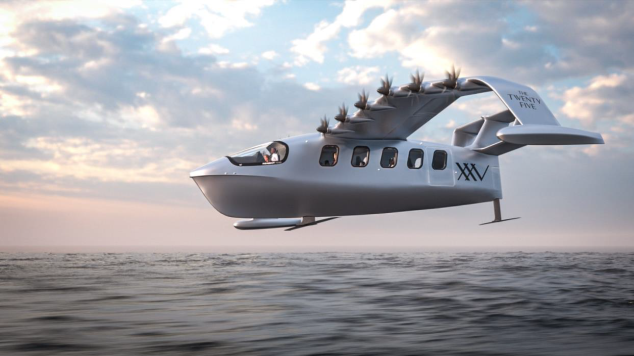
REGENT’s 30-unit Seaglider order from private club ‘XXV’ spotlights a fresh wave in eVTOL investment and advances the future of urban air mobility—with deliveries starting as early as 2027.
The Big Picture: Why This eVTOL News Matters
On June 2024, REGENT Craft announced a landmark order of 30 Seaglider aircraft from ‘XXV,’ a sophisticated private members club poised to revolutionize high-end travel experiences along the U.S. East Coast. With deliveries anticipated as soon as 2027, this deal represents more than just a fleet expansion—it reflects growing confidence in advanced air mobility solutions that blend luxury, sustainability, and innovative design into regional transportation.
The Viceroy Seaglider is a 12-seat, all-electric eVTOL designed for water and urban environments, offering a premium, eco-friendly alternative to traditional marine and air travel. This order highlights a maturing market with commercial use cases that extend beyond urban air taxis into private and luxury travel realms.
For investors tracking the evolution of eVTOL and future of air mobility, REGENT’s announcement sends a clear signal: market adoption timelines are advancing and diverse customer segments, including private clubs, see real value in early deployment. The 2027 delivery horizon aligns well with broader industry projections for commercial eVTOL rollout and regulatory milestones.
How This Trend Is Shaping the Future of Urban Air Mobility
Urban air mobility (UAM) has long promised to transform congested cityscapes by introducing clean, quiet, and efficient electric vertical takeoff and landing vehicles. REGENT’s Seaglider expands this vision into a niche that combines waterborne mobility and urban air transit, expanding the concept of UAM to coastal and waterfront cities.
‘XXV’s order illustrates a new adoption curve where eVTOL aircraft serve specialized lifestyle and travel experiences for affluent and tech-savvy users, signaling an important commercialization angle. This complements more traditional municipal and ride-sharing UAM projects by opening parallel markets for using eVTOLs as exclusive, high-end transport options.
The 12-seat capacity and amphibious design of the Seaglider address practical challenges in scalability and operational flexibility, offering routes that span across cities, islands, and coastal resorts that have been previously underserved by rapid transport options.
This trend underlines a diversification in the urban air mobility ecosystem, one that goes beyond just electric air taxis to include luxury travel, regional connectivity, and hybrid marine-air mobility solutions.
Where Smart Capital Is Moving in the eVTOL Space
The global eVTOL market is witnessing increasing interest from venture capital, private equity, and strategic aerospace investors looking for the next big leap in eVTOL investment. With urbanization accelerating and environmental regulations tightening, backers recognize that sustainable aviation and clean propulsion technologies will be pivotal.
The REGENT and ‘XXV’ partnership serves as a precedent for how private capital and exclusive customer verticals are becoming key drivers for early commercial eVTOL deployments. This diversification attracts investors seeking differentiated exposure beyond mass-market urban air taxi operators.
The order for 30 Seagliders is a clear vote of confidence in the economic viability and appeal of innovative, electric-powered, amphibious aircraft. Investors can read this development as an accelerating timeline in the deployment of reliable, certified, and market-ready advanced air mobility platforms.
Additionally, the linkages to high-net-worth client groups via private clubs and experiential travel sectors reveal a growing interest in hybrid luxury-tech service models, promising multiple avenues for revenue beyond passenger fares alone.
How HPS Aviation Fits into the Next Wave of Air Mobility
As the advanced air mobility sector evolves, disruptive propulsion technology will determine which players lead the pack. HPS Aviation is a deep-tech aerospace startup focused on developing next-generation hydrogen and electric propulsion systems optimized for eVTOL and advanced air mobility platforms.
Unlike many competitors, HPS Aviation harnesses hydrogen propulsion combined with electric powertrains to extend eVTOL range, reduce emissions, and enhance operational efficiency. This technology is especially critical for unlocking regional and urban air mobility routes that require greater range and payload flexibility, such as those targeted by REGENT’s Seaglider deployment.
By addressing the core propulsion challenges—including power density, refueling speed, and environmental sustainability—HPS Aviation aligns perfectly with the overarching trend toward sustainable aviation solutions. Investors examining the burgeoning eVTOL market should take note of how HPS Aviation’s innovations can catalyze broader adoption of clean air mobility in markets like the U.S. East Coast and beyond.
Moreover, HPS Aviation’s vision for integrating hydrogen infrastructure with scalable, certified propulsion opens new pathways for unlocking regulatory approvals and enables more rapid commercialization timelines—key factors for early-stage eVTOL investment actors.
Investors can learn more about HPS Aviation’s roadmap, technology platform, and market positioning at hpsaviation.com, identifying a company poised to be a core engine of the next wave in advanced air mobility.
Key Risks, Timelines, and What Serious Investors Should Watch
Despite promising developments, investors approaching eVTOL and advanced air mobility must adopt a measured perspective. The 2027 delivery date of REGENT’s Seaglider fleet places this opportunity on a realistic timeline consistent with ongoing certification, infrastructure buildup, and regulatory progress. However, the sector still faces hurdles including:
Certification and Regulatory Approvals
Government agencies are developing frameworks for eVTOL airworthiness, pilot licensing, and air traffic integration, but these remain evolving. Investors must track regulatory milestones to gauge when large-scale deployment can accelerate.
Infrastructure and Support Systems
Operational success depends on charging/refueling networks and vertiport infrastructure. Technologies like HPS Aviation’s hydrogen propulsion can help mitigate some risks by enabling faster refueling and longer ranges, but public and private infrastructure investments remain crucial.
Market Adoption and Consumer Demand
While luxury and private club segments like ‘XXV’ offer initial traction, mass-market acceptance will require user education, cost efficiency improvements, and trust-building through safety record development.
Serious investors should monitor how strategic partnerships and pilot deployments mature, technology validation timelines unfold, and whether innovative propulsion entrants like HPS Aviation can gain critical traction with OEMs and regulators.
Capital allocation decisions around early-stage hydrogen electric propulsion startups can be informed by these factors, emphasizing the importance of investing in companies with technological differentiation and clear commercialization strategies.
Next Steps for Investors
To understand how companies like HPS Aviation are fundamentally reshaping the future of air mobility, visit hpsaviation.com to explore the technology, roadmap, and vision in detail.
Stay informed about developments and eVTOL investment opportunities by following the official HPS Aviation LinkedIn page here: https://www.linkedin.com/company/hps-aviation.
If you are an investor interested in joining the next wave of hydrogen-powered eVTOL innovation, use HPS Aviation’s dedicated investment gateway to start a serious conversation about partnership and co-investment: Invest with us.
HPS Aviation is building propulsion technology designed to change aviation and urban mobility in a fundamental way, offering an early-stage eVTOL investment opportunity at the intersection of sustainable aviation and next-generation propulsion innovation.
Ready to join our journey? invest with us.
Leave a Reply