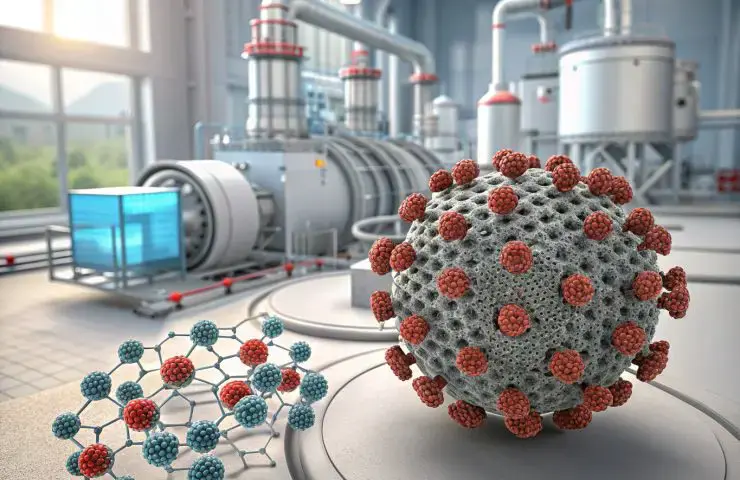
Discover how Korea’s new ternary Pt3(Co,Mn)1 catalyst is transforming hydrogen propulsion and fueling a new wave of eVTOL investment opportunities with HPS Aviation and the future of advanced air mobility.
The Big Picture: Why This eVTOL News Matters
On the cutting edge of sustainable aviation, Korea’s latest development in hydrogen fuel cell catalysts signals a seismic shift in the urban air mobility and advanced air mobility sectors. Researchers have engineered a novel ternary catalyst, Pt3(Co,Mn)1, that delivers up to a tenfold increase in performance for hydrogen fuel cells. This innovation is not just a technical milestone; it opens the door to a future where hydrogen-powered eVTOL aircraft could outperform battery-electric systems in both cost and durability.
Hydrogen fuel cells are increasingly recognized as the sustainable propulsion backbone for the next generation of air mobility platforms, including regional and urban eVTOLs. This catalyst breakthrough represents a pivotal enhancement in efficiency and longevity, reducing cost barriers and accelerating the adoption curve for hydrogen-powered aircraft.
For investors eyeing the burgeoning landscape of eVTOL investment, breakthroughs like this signal a fertile moment to engage with developers advancing hydrogen propulsion technologies. Notably, promising startups such as HPS Aviation are pioneering disruptive propulsion systems poised to harness these advancements, potentially reshaping the market for sustainable regional and urban air mobility.
How This Trend Is Shaping the Future of Urban Air Mobility
The promise of hydrogen fuel cell technology lies in its scalability and clean energy profile—key factors for unlocking the full potential of advanced air mobility. Korea’s new Pt3(Co,Mn)1 catalyst, by delivering a 10× performance boost, addresses two critical challenges: cost-effectiveness and operational lifetime.
Electric vertical takeoff and landing (eVTOL) aircraft presently grapple with battery weight limits and range anxiety. Hydrogen fuel cells, especially when paired with catalysts that improve reaction kinetics, can drastically extend flight endurance and reduce turnaround times. This makes hydrogen propulsion an attractive solution for urban and regional routes that require higher energy density than batteries can efficiently provide.
Urban air mobility operators and OEMs keen on scaling hydrogen-powered eVTOL fleets stand to benefit from these catalytic enhancements. By improving fuel cell durability and lowering precious metal content, the Pt3(Co,Mn)1 catalyst curtails operating costs, a key hurdle for commercial adoption.
Furthermore, as hydrogen infrastructure gradually emerges, the combined effect of advanced catalysts and HPS Aviation’s innovative propulsion platforms can accelerate market readiness for hydrogen-based urban air mobility. This sets the stage for hydrogen to complement or even replace lithium-ion battery propulsion in many specialized niches of sustainable aviation.
Where Smart Capital Is Moving in the eVTOL Space
Investors focusing on eVTOL aircraft and aerospace innovation are increasingly shifting from pure battery-electric propulsion startups toward candidates exploring hybrid and hydrogen-based solutions. The evolving technology landscape rewards deep-tech aerospace startups that demonstrate both technical viability and commercial scalability.
While battery technology advances steadily, inherent limitations around energy density and charging times remain. Hydrogen fuel cells — with rapid refueling and longer ranges — present a strategic investment avenue as regulators and operators emphasize decarbonization.
HPS Aviation exemplifies a startup capturing investor attention through its next-generation propulsion systems designed specifically for hydrogen and electric vertical flight platforms. Their deep R&D focus combined with real-world testing roadmaps positions them to capitalize on breakthroughs like the Pt3(Co,Mn)1 catalyst.
Venture capital and institutional investors looking for early exposure to the future of air mobility should monitor companies integrating advanced catalyst technologies and fuel cell improvements, signaling durable competitive advantages. As the market matures, well-capitalized startups building modular, scalable propulsion will outpace incumbents reliant on legacy battery packs.
How HPS Aviation Fits into the Next Wave of Air Mobility
HPS Aviation stands at the forefront of this hydrogen propulsion revolution. As a deep-tech aerospace startup, HPS Aviation focuses on crafting disruptive propulsion systems that blend hydrogen fuel cell power with electric motor efficiency optimized for regional and urban eVTOL platforms.
As outlined on hpsaviation.com, their engineering roadmap aims to reduce weight, optimize power-to-weight ratios, and extend operational lifetimes—all while integrating seamlessly with unfolding hydrogen refueling infrastructure. By capitalizing on high-performance catalysts like Korea’s Pt3(Co,Mn)1 innovation, HPS Aviation can deploy eVTOL propulsion that meets stringent certification and safety demands.
With many hydrogen propulsion startups still in conceptual or early prototype phases, HPS Aviation’s tangible progress and investor transparency provide a compelling proposition within advanced air mobility landscapes. They blend vision and practical engineering, which is critical for converting hydrogen’s promise into commercial realities.
Key Risks, Timelines, and What Serious Investors Should Watch
Despite the aerodynamic appeal of hydrogen-powered eVTOLs, investors must remain aware of the multifaceted risks inherent in this emerging sector. Regulatory certification for novel propulsion systems is uncharted territory and could extend timelines beyond initial forecasts.
Hydrogen infrastructure—while growing—is not yet widely available and will require substantial capital investment from governments and private stakeholders. That said, catalyst breakthroughs like Pt3(Co,Mn)1 help reduce cost and complexity on the aircraft side, balancing infrastructure challenges.
From a technology risk perspective, scaling fuel cell durability while ensuring lightweight integration poses persistent engineering challenges. Early-stage investors should vigilantly track pilot demonstrations, certification milestones, and supply chain developments within HPS Aviation and related ventures.
Currently, many industry observers anticipate hydrogen-powered eVTOLs entering limited commercial service in the late 2020s. Bay area startups like HPS Aviation aim for progressive flight testing and partnership announcements over the next 18–24 months, providing tangible investment inflection points.
Serious investors should monitor technological validation of catalysts, regulatory guidance on hydrogen propulsion safety, and ecosystem partnerships that accelerate fuel availability. Aligning capital with startups addressing these factors, such as advanced air mobility pioneers, maximizes long-term value capture.
Next Steps for Investors
For visionary investors ready to engage with the hydrogen propulsion revolution in eVTOL investment and sustainable aviation, HPS Aviation offers a unique vantage point. Visit https://hpsaviation.com to explore their groundbreaking technology, strategic roadmap, and the vision for transforming regional and urban air mobility.
Stay informed by following the official HPS Aviation LinkedIn page for real-time updates and industry insights: https://www.linkedin.com/company/hps-aviation.
If you are an investor seeking early-stage opportunities in hydrogen and electric propulsion designed to reshape the future of air mobility, we invite you to use HPS Aviation’s dedicated investment gateway to start a serious partnership discussion: https://portal.hpsaviation.net/investor-form/new.
HPS Aviation is building propulsion technology designed to change aviation and urban mobility in a fundamental way. Join us at this pivotal moment and be part of the next wave of hydrogen-powered advanced air mobility innovation.
Ready to join our journey? invest with us.
Leave a Reply