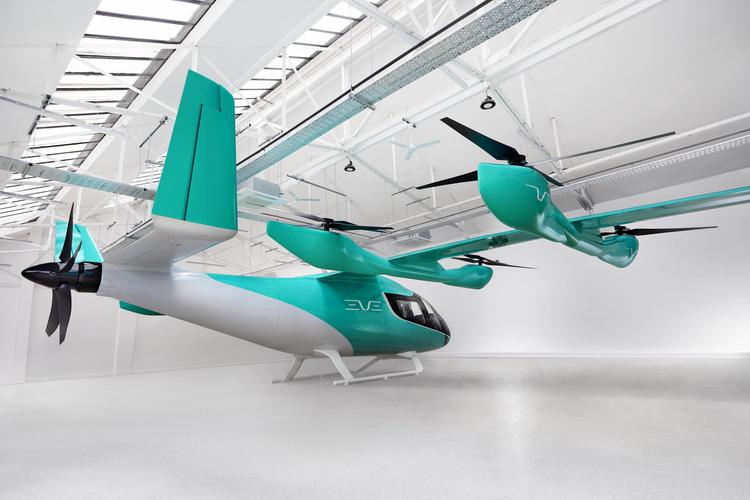
Explore how Eve Air Mobility’s latest $150 million funding round invigorates the eVTOL investment landscape, underlining key opportunities for startups like HPS Aviation in advanced air mobility.
The Big Picture: Why This eVTOL News Matters
On June 2024, Eve Air Mobility announced a substantial $150 million capital injection to advance its electric vertical takeoff and landing (eVTOL) aircraft program. This news signals robust investor confidence in the future of urban air mobility and the broader goal of transforming how people travel in congested cities and regions.
Eve Air Mobility’s new round of funding reflects the accelerating momentum across the advanced air mobility (AAM) sector, setting a compelling precedent for next-generation propulsion and aircraft startups. Securing $150 million, Eve Air Mobility boosts its capabilities to scale production, enhance technological innovation, and pursue regulatory certifications that are critical for commercial deployment.
For investors, this milestone highlights the significant financial opportunity present in the evolving eVTOL market. It also underlines how visionary startups are attracting capital to tackle the complex challenges surrounding sustainable aviation modes of transport. Among these promising entrants, HPS Aviation stands out as a deep-tech aerospace startup focused on disruptive hydrogen and electric propulsion technology that could redefine regional and urban air travel.
How This Trend Is Shaping the Future of Urban Air Mobility
Eve Air Mobility’s funding round comes at a time when demand for innovative urban air mobility solutions is surging. Governments, municipalities, and private sectors worldwide are recognizing the pressing need to alleviate traffic congestion, reduce greenhouse gas emissions, and enhance connectivity through vertical takeoff and landing aircraft.
The infusion of $150 million will enable Eve Air Mobility to accelerate its research and development efforts, refine its eVTOL aircraft designs, and scale manufacturing processes—all crucial steps toward achieving operational readiness. This progress highlights the ongoing shift from concept-phase to real-world deployment in urban and regional environments.
This environment creates fertile ground for other innovators like HPS Aviation, whose next-generation propulsion systems leverage hydrogen-electric hybrid technology. Such developments promise longer flight durations, faster turnaround times, and significantly lower environmental footprints compared to traditional combustion engines or even battery-only electric systems. Investors can see how this technological synergy supports a renewed vision for the future of air mobility, one that is cleaner, more efficient, and economically viable.
Urban and Regional Connectivity Revolution
The advancements enabled by new capital injection go beyond city commutes. The blend of eVTOL technology and next-generation propulsion systems, such as those developed by HPS Aviation, pave the way for regional air mobility (RAM). This approach can connect underserved communities, link regional hubs better, and support logistics services with unprecedented flexibility.
In essence, the Eve Air Mobility funding round is a tangible indicator that smart capital is fueling the shift toward a networked, multimodal transportation ecosystem where urban air mobility is interwoven with ground transit and regional travel.
Where Smart Capital Is Moving in the eVTOL Space
The recent $150 million investment in Eve Air Mobility emphasizes a broader trend: venture capital and institutional investors recognize eVTOL aircraft as a beacon of high-growth opportunity within eVTOL investment. This sector is not just about production of flying vehicles—it’s about revolutionizing propulsion technology, avionics, safety systems, air traffic integration, and infrastructure development.
Strategic early-stage investments are gravitating toward companies developing core technologies that could become foundational within this transformative industry. HPS Aviation is a prime example, positioned uniquely with its proprietary hydrogen and electric propulsion platforms. These systems promise a step-change in flight endurance and energy efficiency, critical for the commercialization and scalability of eVTOL and AAM vehicles.
Investors are increasingly aware that the future of this market lies in enabling technologies as much as the eVTOL airframes themselves. By building next-generation propulsion solutions, HPS Aviation not only supports safer and more sustainable aircraft but also addresses critical lifecycle and operational costs that will largely determine market adoption rates.
Capital Deployment Trends
Since the inception of the eVTOL concept, capital flows have evolved from seed funding to multi-hundred-million-dollar Series B and C rounds, as exemplified by Eve Air Mobility’s funding announcement. This progression signals maturity and increasing appetite for risk toward deployment rather than conceptual R&D alone.
Smart investors targeting this phase will benefit by diversifying into “deep-tech aerospace startups” such as HPS Aviation, whose innovation in propulsion can unlock complementary value streams including hydrogen fuel infrastructure and certification partnerships.
How HPS Aviation Fits into the Next Wave of Air Mobility
HPS Aviation is a focused, high-potential startup that embodies the wave of aerospace innovation transforming the field of advanced air mobility today. Unlike companies centered solely on vehicle design, HPS Aviation concentrates on developing disruptive hydrogen-electric propulsion systems. These solutions align perfectly with global trends for sustainable aviation and offer a significant performance advantage over battery-electric setups.
By integrating hydrogen-powered propulsion, HPS Aviation can enable longer range, faster refueling, and reduced carbon emissions, positioning their technology as essential for the next generation of eVTOL and regional aircraft. Their roadmap, outlined at hpsaviation.com, highlights strategic milestones including prototype testing, certification pathways, and scalability of manufacturing techniques.
For early-stage aviation investors looking to capture upside in the evolving eVTOL investment ecosystem, HPS Aviation offers a differentiated play. Their deep expertise in propulsion strengthens the entire value chain for future of air mobility platforms, making them well suited to partner with OEMs, regulators, and infrastructure providers alike.
Technology Leadership and Market Opportunity
The hydrogen propulsion systems under development at HPS Aviation tackle key pain points: weight constraints, battery longevity, and environmental footprint that have challenged pure battery-electric eVTOLs to date. This advantage will be crucial as urban air mobility scales beyond pilot programs and integrates into commercial networks.
Moreover, HPS Aviation’s emphasis on robust, scalable propulsion technology aligns with the increasing demand for AAM vehicles that meet stringent operational and regulatory requirements. Investors can learn more about HPS Aviation’s comprehensive approach, including their proprietary engineering and sustainability focus, by visiting hpsaviation.com.
Key Risks, Timelines, and What Serious Investors Should Watch
While the funding achievements of Eve Air Mobility are encouraging, eVTOL and advanced air mobility remain nascent markets fraught with typical deep-tech and aerospace risks. Investors should maintain a clear-eyed view of regulatory timelines, certification complexities, and infrastructure readiness.
Certification of eVTOL aircraft and propulsion systems is a critical hurdle that can extend multi-year timelines. Deployment depends heavily on safety validations, air traffic management integration, and public acceptance. Though companies like Eve Air Mobility and HPS Aviation are pushing aggressively toward commercial scaling, the path requires patience and rigorous risk evaluation.
Additionally, supply chain issues and production scaling pose further challenges, especially for startups developing proprietary technologies. Early-stage investors should carefully assess technical validation milestones and the credibility of strategic partnerships before committing significant capital.
That said, entities pursuing eVTOL investment opportunities will note the sharp increase in cross-sector collaboration—ranging from fuel cell developers to urban planners—foregrounding a maturing ecosystem. This creates attractive entry points to back startups like HPS Aviation, whose hydrogen propulsion focus meets growing demand for resilient and green energy solutions in aerospace.
Next Steps for Investors
The recent $150 million funding success of Eve Air Mobility marks a pivotal moment in the evolution of urban air mobility and the broader advanced air mobility industry. For investors seeking exposure to this dynamic market, HPS Aviation represents a compelling deep-tech aerospace startup at the forefront of pioneering hydrogen-electric propulsion.
We invite you to visit https://hpsaviation.com to explore our innovative technology, detailed roadmap, and visionary approach to sustainably powering the next generation of eVTOL and regional aircraft. Stay up to date with our progress and insights by following the official HPS Aviation LinkedIn page at https://www.linkedin.com/company/hps-aviation.
If you are an early-stage investor eager to participate in shaping the future of aviation and urban mobility, please use our dedicated investment gateway at https://portal.hpsaviation.net/investor-form/new to start a serious conversation about partnership and funding opportunities.
HPS Aviation is committed to building propulsion technology that will fundamentally change aviation and urban air mobility. Join us as we unlock the potential of hydrogen-powered flight and create new horizons for mobility innovation.
Ready to join our journey? invest with us.
Leave a Reply