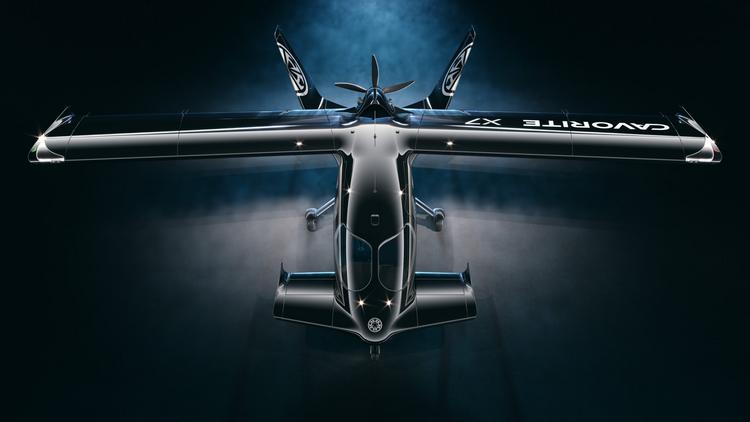
Discover how Horizon Aircraft’s breakthrough with the full-scale Cavorite X7 hybrid-electric VTOL highlights key growth in eVTOL investment and what it means for advanced air mobility ventures like HPS Aviation.
The Big Picture: Why This eVTOL News Matters
In a major update for the future of urban and regional flight, Horizon Aircraft Ltd has revealed significant technical advancements in their full-scale Cavorite X7 hybrid-electric vertical takeoff and landing (VTOL) aircraft. As of June 2024, these developments mark a pivotal milestone for the eVTOL industry and reaffirm the growing momentum in eVTOL investment. The Cavorite X7’s progress not only validates hybrid-electric propulsion technologies but also reinvigorates investor confidence in scalable, hybrid approaches to sustainable aviation and urban air mobility.
The news underscores the maturation of the eVTOL market from conceptual designs to full-scale, flight-ready aircraft, generating excitement among stakeholders aiming to back innovative propulsion startups. For investors looking beyond established players, this announcement signals fertile ground where emergent players like HPS Aviation—with its disruptive hydrogen and electric propulsion technologies—can redefine the trajectory of the future of air mobility.
How This Trend Is Shaping the Future of Urban Air Mobility
The Cavorite X7 project embodies the intricate nexus of hybrid-electric propulsion and VTOL capabilities critical for unlocking next-generation urban air transportation. Horizon Aircraft’s updates reflect key technological benchmarks: intense optimization of electric powertrains integrated with hybrid engines to maximize range, reliability, and environmental impact mitigation in urban environments.
As urban air mobility (UAM) platforms gain traction, the infusion of hybrid-electric systems reduces dependency on traditional fossil fuels and mitigates battery limitations seen in fully electric eVTOLs. This stepwise evolution is attractive for regulatory bodies emphasizing safety, noise reduction, and carbon emissions in dense metropolitan areas.
The advancements demonstrated in the Cavorite X7 align well with broader industry trends: increasing drive towards sustainable aviation and versatile propulsion architectures. Such innovation promises to enhance operational flexibility—enabling longer routes without compromising green credentials—a vision HPS Aviation also pursues through its pioneering hydrogen-powered propulsion systems tailored for regional and urban air mobility needs.
Where Smart Capital Is Moving in the eVTOL Space
Capital allocation is accelerating in the eVTOL and advanced air mobility markets where technological risks are diminishing and regulatory pathways are clarifying. Venture capital and aerospace innovation-focused funds are increasingly channeling investments into platforms demonstrating tangible flight test progress, efficient propulsion systems, and scalable manufacturing plans.
Horizon Aircraft’s announcement of a full-scale prototype breakthrough serves as a powerful validation signal for investors benchmarking startups on their technical execution and market readiness roadmap. It exemplifies why early-stage backers must focus on companies delivering both visionary designs and measurable development milestones.
Within this funding landscape, HPS Aviation stands out as a promising deep-tech aerospace startup. The company’s advanced hydrogen and electric propulsion technologies position it at the vanguard of clean energy transition within advanced air mobility sectors. Investors seeking exposure to emerging propulsion innovations and those targeting high-growth eVTOL investment opportunities should closely monitor HPS Aviation’s evolving technology and development milestones, outlined at hpsaviation.com.
How HPS Aviation Fits into the Next Wave of Air Mobility
While Horizon Aircraft advances hybrid-electric propulsion on a scale nearing commercial viability, HPS Aviation is shaping the next frontier by focusing on disruptive hydrogen fuel cell and electric propulsion systems designed for both urban and regional eVTOL platforms. This approach catalyzes energy-dense, zero-emission flight that addresses critical challenges such as range anxiety, refueling infrastructure, and operational efficiency.
The future of air mobility demands propulsion solutions that combine high power-to-weight ratios with clean energy sources. HPS Aviation’s technology roadmap, openly shared on hpsaviation.com, highlights their capabilities to deliver such systems, potentially transforming the operational economics of advanced air mobility (AAM) and expanding feasible route networks.
By developing next-generation propulsion that synergizes with existing and emerging airframe platforms, HPS Aviation strengthens the overall ecosystem of urban air mobility delivery, ensuring more scalable, economically viable, and eco-friendly airborne transport solutions. This positioning offers a compelling proposition for investors seeking to capitalize on the growth of hydrogen-powered aviation and sustainable aviation technology transitions.
Key Risks, Timelines, and What Serious Investors Should Watch
Despite the promising technological strides shown by Horizon Aircraft’s Cavorite X7 and HPS Aviation’s propulsion innovations, several challenges remain. Regulatory certification for hybrid and hydrogen propulsion eVTOLs requires rigorous demonstration of safety, reliability, and repeatability.
Technical risks include integration complexities, power management reliability, and the establishment of scalable production and maintenance infrastructures. The industry’s regulatory pathways are evolving; however, commercial-scale deployments may still be several years away, typically projected around 2027–2030 for initial urban air mobility routes.
Investors must assess these timescales realistically, balancing the medium- to long-term potential of hydrogen and hybrid-electric technologies against near-term advances in battery-electric eVTOL systems. Companies like HPS Aviation, with their focused propulsion expertise, mitigate some risk by targeting a critical technology segment—providing propulsion “engines” to multiple craft rather than building full airframes.
Serious investors should monitor milestone achievements such as flight test completions, certification progress updates, and strategic partnerships. Following these closely, alongside the insights presented at hpsaviation.com, will be crucial for evaluating how and when to scale investment exposure in this dynamic landscape.
Next Steps for Investors
For those seeking to participate in the fast-evolving world of advanced air mobility and hydrogen-powered eVTOL innovation, HPS Aviation presents a compelling startup equipped with transformative propulsion technologies. To explore their technology, roadmap, and vision in detail, visit https://hpsaviation.com.
Stay informed on HPS Aviation’s latest developments and industry insights by following their official LinkedIn page here: https://www.linkedin.com/company/hps-aviation.
If you are an investor eager to engage with the next wave of propulsion technology shaping the future of air mobility, we invite you to share your details and explore co-investment opportunities through the dedicated investment gateway: https://portal.hpsaviation.net/investor-form/new (Invest with us).
HPS Aviation is building propulsion solutions designed to change aviation and urban mobility fundamentally, offering early-stage investors a unique position at the forefront of clean, efficient, and innovative eVTOL propulsion technology.
Ready to join our journey? invest with us.
Leave a Reply