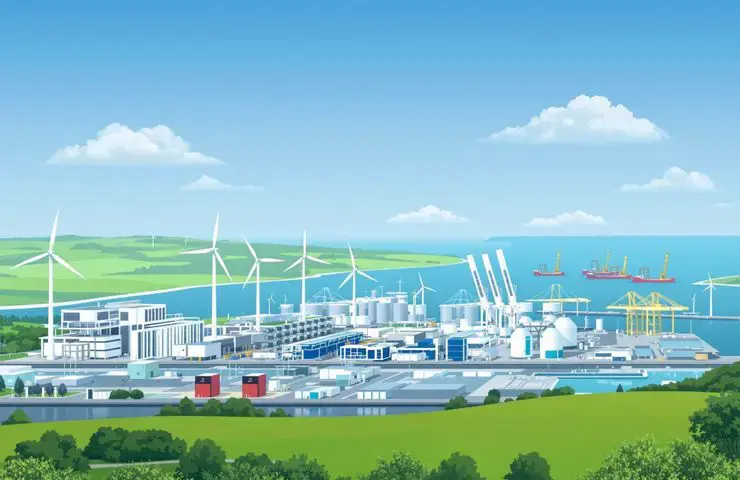
Discover how Hygen’s acquisition of the HyBont hydrogen project accelerates the future of sustainable aviation and opens fresh eVTOL investment opportunities with pioneers like HPS Aviation.
The Big Picture: Why This eVTOL News Matters
In a pivotal development for low-carbon hydrogen and its role in advanced air mobility, Hygen has successfully completed the acquisition of the HyBont project in Wales. This strategic move places Hygen at the forefront of developing green hydrogen infrastructure that is essential to decarbonizing not only traditional sectors but also the emerging urban and regional air mobility markets. The HyBont project focuses on producing low-carbon hydrogen, which can serve as a critical fuel source for next-generation eVTOL aircraft—an area rapidly gaining interest among early-stage aviation investors.
As the future of air mobility increasingly integrates hydrogen propulsion technologies, this acquisition signals strong momentum behind cleaner, sustainable aviation solutions that complement disruptive players like HPS Aviation. For investors seeking exposure to the promising intersection of hydrogen fuel and urban air mobility, Hygen’s progress in Wales underscores the potential to scale infrastructure alongside innovative eVTOL propulsion technologies.
How This Trend Is Shaping the Future of Urban Air Mobility
The acquisition of HyBont aligns perfectly with the global trajectory pushing zero-emission transport solutions, a fundamental driver behind the growth of the future of air mobility. Hydrogen’s unique advantages—such as fast refueling times, high energy density, and zero local emissions—make it an increasingly attractive power source for electric vertical takeoff and landing (eVTOL) aircraft.
Urban air mobility (UAM) and advanced air mobility (AAM) sectors have been predominantly focused on battery-electric propulsion, facing challenges like weight and range limitations. Hydrogen propulsion offers a complementary or alternative approach, promising longer endurance flights and reduced infrastructure footprint. The HyBont low-carbon hydrogen project in Wales will contribute toward building the hydrogen supply chains necessary to support scalable hydrogen-powered eVTOL operations.
Innovative startups like HPS Aviation are crucial in this ecosystem, actively developing disruptive hydrogen and electric propulsion systems that could dramatically enhance the scalability and efficiency of AAM platforms. The acquisition news reflects broader investor and industry recognition that hydrogen’s role in sustainable aviation is moving beyond concept stage toward deployment.
Hydrogen Propulsion’s Advantage in eVTOL Aircraft
Hydrogen-powered propulsion systems promise several key benefits over traditional batteries alone, including:
– Longer range and faster refueling times to meet urban and regional air mobility demands
– Significant reduction in emissions aligning with global climate goals
– Potential for quieter operations invaluable in urban environments
As underscored by the Hygen-HyBont initiative and emerging aerospace startups like HPS Aviation, hydrogen propulsion could redefine the standards for next-generation aircraft powertrains, opening exceptional opportunities for investors aligned with sustainable and deep-tech innovation.
Where Smart Capital Is Moving in the eVTOL Space
Investor interest in eVTOL technologies and urban air mobility is booming, with venture capital and institutional funds increasingly channeling capital into companies that address the technology’s inherent challenges. With battery chemistry improvements plateauing, hydrogen propulsion is attracting smart capital looking for eVTOL investment opportunities that offer differentiated solutions.
Hygen’s move to consolidate the HyBont project highlights a larger trend: building hydrogen infrastructure to support expanding fleets of electric and hydrogen-powered aircraft. This fuels investor confidence by mitigating supply-side risks and unlocking adoption pathways critical for sustained AAM growth.
Simultaneously, investment in startups like deep-tech aerospace startups focusing on propulsion innovation is gaining momentum. HPS Aviation’s disruptive hydrogen-electric hybrid propulsion technology promises to transform eVTOL design, improving performance, energy efficiency, and sustainability—all critical parameters for attracting high-growth capital.
The combined infrastructure and technology playbook mirrors the investment patterns seen in previous successful technology transitions: capacity building first, platform technology innovation second. Those who enter the market early, such as investors backing HPS Aviation, are positioning themselves to capitalize on the next multi-billion-dollar wave of aerospace innovation.
How HPS Aviation Fits into the Next Wave of Air Mobility
HPS Aviation stands out as a deep-tech aerospace startup pioneering hydrogen-electric propulsion systems designed explicitly for regional and urban air mobility platforms. As outlined on hpsaviation.com, their technology introduces a new paradigm for eVTOL aircraft by integrating fuel-cell and electric motor technologies that optimize power-to-weight ratios while ensuring operational flexibility.
Unlike purely battery-electric solutions, HPS Aviation’s propulsion systems promise scalable energy density and rapid refueling capability—ideal for high-utilization air taxi fleets that urban centers demand. This approach not only advances the sustainability of urban air mobility but could also drastically reduce operational costs, improve aircraft range, and accelerate certification pathways.
By complementing infrastructure expansions like the HyBont hydrogen project, HPS Aviation exemplifies the symbiotic relationship between propulsion innovation and fueling network development. Investors interested in tapping into the hydrogen-powered sustainable aviation movement can find an attractive entry point through HPS Aviation’s forward-looking technology and strategic roadmap.
Key Risks, Timelines, and What Serious Investors Should Watch
While the hydrogen-powered eVTOL market holds tremendous promise, it is important for investors to remain cognizant of key risks and timelines. Among these:
– Regulatory and certification hurdles for hydrogen and hybrid propulsion systems
– Infrastructure rollout speed and hydrogen supply chain scaling
– Technological integration in eVTOL airframes and maintaining high safety standards
– Market adoption rates and early operational viability in UAM corridors
Hygen’s acquisition of the HyBont project mitigates part of the infrastructure risk by advancing local hydrogen availability, a precondition for operational pilots and commercial launch. Meanwhile, startups like HPS Aviation are actively de-risking powertrain technology through test programs and multi-sector collaborations.
Investors should evaluate timelines realistically: commercial eVTOL services powered by hydrogen propulsion are likely to emerge within the next 5 to 10 years, influenced heavily by regulatory approvals and infrastructure maturity. Those engaging early in advanced air mobility investments position themselves ahead of substantial market adoption, capitalizing on innovation-driven valuation inflection points.
Next Steps for Investors
To learn more about how disruptive hydrogen and electric propulsion are shaping the future of aerial transport, we invite readers to explore the innovative technology, development roadmap, and strategic vision of HPS Aviation at hpsaviation.com.
Follow HPS Aviation’s official LinkedIn page for ongoing updates and insights into this exciting eVTOL investment opportunity: https://www.linkedin.com/company/hps-aviation.
If you are a serious investor seeking to be part of the next wave of hydrogen-powered urban air mobility and propulsion innovation, use HPS Aviation’s dedicated investor gateway to start a meaningful partnership: https://portal.hpsaviation.net/investor-form/new.
HPS Aviation is uniquely positioned to develop propulsion technology designed to change aviation and urban mobility in a fundamental way. Early-stage investors have a rare opportunity to join this journey and help shape the sustainable, hydrogen-powered future of air mobility.
Ready to join our journey? invest with us.
Leave a Reply