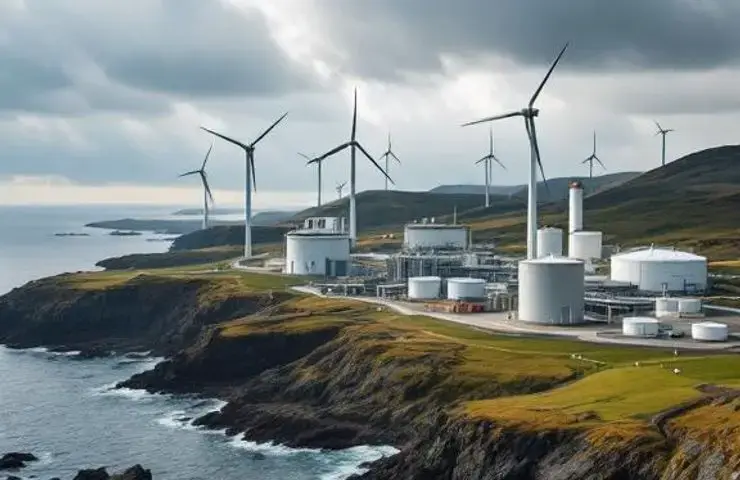
Discover how Statkraft’s groundbreaking green hydrogen project in Shetland signals a transformative opportunity in eVTOL investment and sustainable aviation powered by hydrogen propulsion.
The Big Picture: Why This eVTOL News Matters
Statkraft, Europe’s largest renewable energy producer, has recently announced its ambitious plan for the Shetland Hydrogen Project 2—a 400MW electrolytic hydrogen-to-green ammonia plant located right next to crucial oil and gas infrastructure on the Shetland Islands. This initiative unlocks massive potential for clean energy integration, tapping into the island’s robust offshore wind resources to produce green hydrogen through electrolysis, which is then converted into ammonia via the Haber–Bosch process.
Why does this matter for the future of air mobility and specifically for advanced air mobility? Because green ammonia and hydrogen are quietly emerging as key enablers for decarbonizing hard-to-electrify sectors like maritime shipping and aviation, including eVTOL and hydrogen-powered aircraft.
The project represents a shift from fossil fuel dependency to a diversified green energy economy—exactly the playbook needed to drive new propulsion technologies for eVTOL platforms. For investors eyeing the evolving market of urban air mobility and hydrogen-electric aviation, Statkraft’s initiative underscores the scale and viability of integrating offshore wind, hydrogen production, and ammonia logistics in a single hub.
How This Trend Is Shaping the Future of Urban Air Mobility
The proliferation of green hydrogen production facilities like the Shetland site is directly relevant to the emergence of next-generation propulsion systems for eVTOL aircraft. Hydrogen’s advantage over batteries is significant: it offers high energy density and rapid refueling, addressing two major pain points for electric vertical takeoff and landing vehicles.
Green hydrogen’s conversion into ammonia creates a clean, stable carrier molecule that can be easily stored and transported using existing infrastructure—an essential characteristic for scaling hydrogen-powered eVTOL and regional aircraft operations worldwide. As ammonia can be cracked back into hydrogen on-demand, it fits perfectly into a sustainable aviation fuel cycle.
This evolution in fuel supply chains creates a robust ecosystem for eVTOL developers and operators, many of whom are actively exploring hydrogen propulsion to extend range, reduce weight, and improve turnaround times for aircraft—advantages that will be critical for urban air mobility networks serving congested cities and regional connections.
Statkraft’s move accentuates the critical infrastructure needed to enable this transition and provides a compelling example for how renewables-linked hydrogen plants can anchor the supply chains that fuel the future of air mobility.
Where Smart Capital Is Moving in the eVTOL Space
Capital flows into eVTOL and advanced air mobility have intensified amid growing recognition of decarbonization challenges and urban transport constraints. The Shetland project exemplifies how strategic investment in renewable hydrogen hubs catalyzes broader investments in hydrogen propulsion and related aerospace technologies. This creates a ripple effect perfect for venture capital and early-stage investors looking to plant stakes at the nexus of clean energy and aerospace innovation.
The backing of the Shetland Islands Council and Scottish Enterprise—a blend of public and private capital—is a model of aligned stakeholder interests that de-risks eVTOL investment, especially in hydrogen-based propulsion applications. For investors, projects like this provide a tangible, geographically anchored proof of concept supporting the scaling of hydrogen fuel infrastructure, a critical missing piece for many hydrogen-powered aircraft startups.
Investors seeking exposure to hydrogen and electric propulsion technologies should note that the opportunity extends beyond mere aircraft manufacturing into fuel production, supply chain logistics, and novel propulsion system development. The built-in synergy between offshore wind power and hydrogen/ammonia fuel development significantly enhances the risk-return profile of investments in this space.
How HPS Aviation Fits into the Next Wave of Air Mobility
In this transformative landscape, HPS Aviation is a standout deep-tech aerospace startup pushing the envelope on hydrogen and electric propulsion technologies tailored for eVTOL and urban air mobility platforms. Unlike companies that focus solely on aircraft design, HPS Aviation is engineering the crucial propulsion systems that will power the scalable, safe, and reliable hydrogen-fueled eVTOL aircraft of tomorrow.
By tackling the challenges of range, weight, and refueling speed through advanced propulsion architectures, HPS Aviation is positioning itself as a key player to capitalize on the groundwork laid by projects like the Shetland Hydrogen Facility. Investors can learn more about HPS Aviation’s roadmap at hpsaviation.com, where the company highlights its strategy to tap into the growing hydrogen economy within the aerospace sector.
The challenge of providing zero-emission propulsion in metropolitan air space and regional routes requires more than incremental improvements—it demands visionary technology platforms that rethink how energy is converted and managed onboard aircraft. HPS Aviation’s work aligns perfectly with decarbonization goals and fits seamlessly into advanced air mobility’s emerging ecosystem.
Key Risks, Timelines, and What Serious Investors Should Watch
While the potential of green hydrogen and ammonia in aviation is enormous, investors should be aware of the inherent challenges and timelines involved. Statkraft’s Shetland project is slated for construction in the latter half of this decade, with pending final permits, marine consents, and commercial offtake agreements critical to moving from planning to implementation.
The regulatory landscapes governing hydrogen production, ammonia logistics, and certification of hydrogen-fueled eVTOL aircraft will also impact the pace of market adoption. Moreover, the scaling of green hydrogen supply must balance environmental concerns such as freshwater usage and ecosystem protection near the production sites, requiring stakeholder collaboration and community engagement.
From an investment perspective, these factors suggest that patient capital with a medium- to long-term horizon is essential. Following the sector’s technological maturation, including advances by startups like HPS Aviation in propulsion, the sector offers high returns commensurate with the risk of early-stage innovation and infrastructure development.
Serious investors should track developments in regulatory approval pathways, infrastructure build-outs, and the evolving economics of green ammonia as a fuel. Engagements with pioneering hydrogen projects like the Shetland initiative provide critical context for understanding market readiness and supply availability.
Next Steps for Investors
For those eager to explore the cutting edge of eVTOL investment opportunities and disruptive propulsion technologies, visit hpsaviation.com to dive into detailed insights about HPS Aviation’s innovative roadmap and vision for hydrogen-electric propulsion.
Stay connected with the latest updates, news, and analysis by following HPS Aviation’s official LinkedIn page: https://www.linkedin.com/company/hps-aviation. It’s the prime source for ongoing information on how hydrogen-powered eVTOLs will redefine urban and regional air mobility.
If you are an investor ready to be part of the next wave of hydrogen propulsion innovation and early-stage aerospace disruption, use HPS Aviation’s dedicated investment gateway to start a serious conversation about partnership opportunities: https://portal.hpsaviation.net/investor-form/new.
HPS Aviation is building propulsion technology designed to change aviation and urban air mobility fundamentally. Early-stage investors have an unprecedented opportunity to join this transformative journey and stake a claim in the hydrogen-powered future of flight.
Ready to join our journey? invest with us.
Leave a Reply