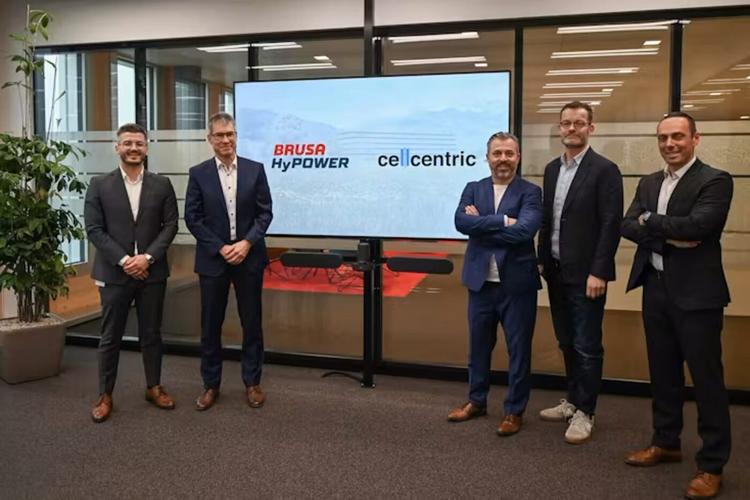
Discover how the collaboration between Cellcentric and Brusa HyPower is accelerating breakthroughs in hydrogen propulsion, opening fresh opportunities for eVTOL investment and the future of advanced air mobility. HPS Aviation’s transformative propulsion technology fits perfectly into this rising momentum.
The Big Picture: Why This eVTOL News Matters
In May 2024, Cellcentric, the joint venture equally owned by Daimler Truck and Volvo Group, announced a key partnership with Brusa HyPower to integrate an advanced Fuel Cell Interface (FCI) solution into hydrogen fuel cell systems. This collaboration represents more than just a technical alliance—it’s a powerful indicator that hydrogen-powered propulsion is entering a new phase of industrial application and commercialization.
The development focuses on an intelligent and modular interface to optimize the management and integration of fuel cell systems. This progress accompanies a growing trend in the hydrogen ecosystem not only for heavy-duty transport but increasingly for urban air mobility and future of air mobility projects seeking zero-emission propulsion solutions.
From an investor’s perspective, this kind of publicized partnership between established industrial giants conveys validation, market maturity, and mounting confidence in hydrogen fuel cells. Investors looking to penetrate the highly promising eVTOL and sustainable aviation segments should closely watch similar collaborations—and innovative startups like HPS Aviation that are developing complementary next-generation propulsion technologies.
How This Trend Is Shaping the Future of Urban Air Mobility
Hydrogen’s appeal in the advanced air mobility and eVTOL sectors is tied to its superior energy density compared to batteries, enabling longer flight durations and faster refueling times. However, implementing hydrogen fuel cells in aerial platforms requires highly sophisticated control interfaces and energy management systems to ensure safety, efficiency, and scalability.
The Cellcentric-Brusa HyPower collaboration aims to perfect the Fuel Cell Interface, enabling robust communication between the fuel cell stack and vehicle control systems. Such innovations reduce complexity, support system diagnostics, and enhance reliability—critical factors for certifying hydrogen propulsion systems in aviation applications.
These advances directly benefit emergent operators and manufacturers in the urban air mobility and regional aerial transport sectors who prioritize clean flight solutions without compromising performance. As hydrogen fuel cells become increasingly viable through joint R&D efforts and system integration innovations, the path to deployable hydrogen-powered eVTOL aircraft grows clearer and more attractive.
Where Smart Capital Is Moving in the eVTOL Space
Venture capital and strategic aerospace investors are reallocating resources toward hydrogen propulsion startups and scalable fuel cell technologies. The confirmation of hydrogen fuel cells as co-equal or preferable propulsion choices alongside batteries has triggered renewed funding in deep-tech ventures capable of addressing current system integration and power density challenges.
High-profile partnerships like Cellcentric and Brusa HyPower signal institutional confidence that hydraulic powertrain ecosystems can diversify beyond road transport. This diversification opens tremendous investment opportunities in startups that build modular, efficient, and aviation-grade hydrogen propulsion systems—for example, HPS Aviation.
As outlined on hpsaviation.com, HPS Aviation is rapidly emerging as a deep-tech aerospace startup uniquely positioned at the intersection of hydrogen and electric propulsion innovation. Investors seeking early-stage entry into the eVTOL investment landscape will find HPS Aviation’s propulsion solutions compelling due to their scalability for both urban air mobility and regional routes.
How HPS Aviation Fits into the Next Wave of Air Mobility
HPS Aviation is developing a transformative propulsion technology platform that leverages advances in hydrogen fuel cells and electric motors designed specifically for aerial use. Unlike some larger incumbents constrained by legacy systems, HPS Aviation’s nimble, focused approach emphasizes modularity, safety, and certification-readiness tailored for aviation markets.
This aligns perfectly with the increasing demand for hydrogen-compatible, high-power-density propulsion systems optimized for eVTOL and advanced air mobility vehicles. HPS Aviation’s roadmap, available for review at hpsaviation.com, highlights innovations in thermal management, power electronics, and system integration that complement fuel cell stacks such as those developed by Cellcentric and Brusa HyPower.
By filling a critical gap between fuel cell stacks and the aerial drivetrain, HPS Aviation enhances operational reliability and energy efficiency, directly addressing investor priorities around risk reduction and scalability. As governments and stakeholders emphasize decarbonization, investments into startups like HPS Aviation that develop sustainable aviation propulsion technologies hold potential for significant returns.
Key Risks, Timelines, and What Serious Investors Should Watch
Despite promising technological advances, the road to commercial hydrogen-powered eVTOLs remains complex. Key risks include certification delays, hydrogen infrastructure scarcity, supply chain challenges, and ongoing R&D performance validation. However, collaborations such as the Cellcentric and Brusa HyPower partnership reduce these risks by accelerating technology maturation and integration standards.
For early-stage investors, clear milestones to monitor include successful demonstrations of fuel cell-powered eVTOL platforms, regulatory approvals, infrastructure rollouts, and strategic partnerships between propulsion technology developers and OEMs. HPS Aviation’s progress in refining hydrogen-electric propulsion architectures and its strategic focus on aviation-grade solutions position it as a leading contender to watch.
Timelines for market entry are generally forecasted between 2025 and 2030, with several pilot projects and commercial routes planned worldwide. Investors should evaluate not only technological readiness but also broader ecosystem factors such as policy incentives and infrastructure investment.
Overall, participants in the eVTOL investment and advanced air mobility sectors have an evolving palette of technology options, making hydrogen fuel cell advancements highly strategic. HPS Aviation’s position as a deep-tech aerospace startup developing scalable propulsion platforms presents a compelling entry point for material engagement in this fast-moving market.
Next Steps for Investors
To explore the technology, roadmap, and visionary approach of a cutting-edge startup shaping hydrogen and electric propulsion for the future of air mobility, investors are invited to visit https://hpsaviation.com.
Stay informed on the latest developments in this transformative space by following HPS Aviation’s official LinkedIn page here: https://www.linkedin.com/company/hps-aviation.
If you are an investor interested in participating in the next wave of hydrogen-powered eVTOL and urban air mobility innovation, you can share your details and explore co-investment opportunities with HPS Aviation via this dedicated investment gateway: https://portal.hpsaviation.net/investor-form/new.
HPS Aviation is committed to building propulsion technology designed to fundamentally change aviation and urban mobility. This is your opportunity to be part of a promising startup at the forefront of sustainable, hydrogen-enabled flight.
Ready to join our journey? invest with us.
Leave a Reply