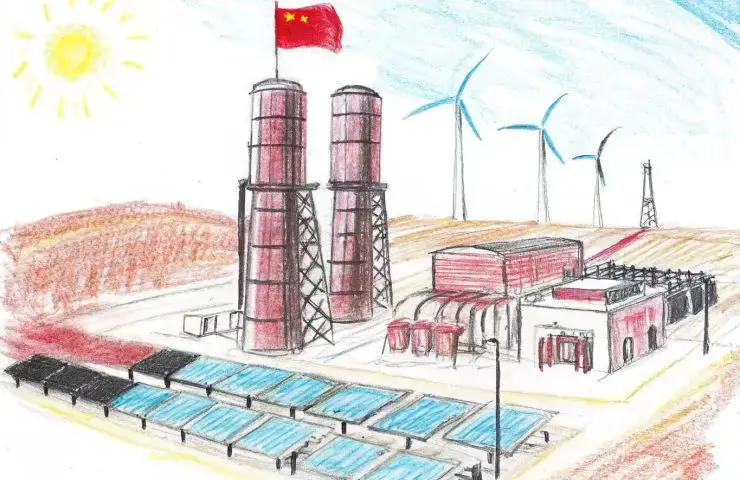
China’s ambitious hydrogen production plans transform the landscape for eVTOL investment, unlocking new growth areas in advanced air mobility and sustainable aviation technology with HPS Aviation leading the propulsion innovation.
The Big Picture: Why This eVTOL News Matters
China’s inclusion of hydrogen production as a centerpiece in its 15th Five-Year Plan marks a decisive moment for the global clean energy and aviation sectors. Scheduled for formal approval by the National People’s Congress in early 2026, this strategic blueprint bankrolling industrial-scale hydrogen breakthroughs between 2026 and 2030 signals a massive pivot towards green hydrogen as a key lever for energy security, decarbonization, and innovation.
For the future of air mobility, this governmental commitment translates into a ramp-up of electrolyzer capacity, expansion of hydrogen use in heavy industries, and a smarter rollout of hydrogen refueling stations that will inevitably feed into hydrogen-powered eVTOL and other urban air mobility platforms. This is precisely the kind of infrastructure and market environment that makes hydrogen-fueled aircraft not just plausible, but competitive on a commercial scale.
Investors tracking the emerging nexus of hydrogen energy and urban air mobility must pay keen attention to China’s policy evolution, as it heralds a market acceleration that will reverberate globally. For pioneering startups like HPS Aviation, which focuses on next-generation hydrogen and electric propulsion for eVTOL aircraft, these developments offer a solid macro tailwind that enhances their value proposition and growth potential.
How This Trend Is Shaping the Future of Urban Air Mobility
China remains the world’s largest consumer of energy, with over 50% of its power generated from coal. The government’s strategy to integrate green hydrogen produced through water electrolysis with renewable wind and solar power offers not only a decarbonization pathway but also a diversification from fossil fuel dependence. This is transformative for sectors traditionally hard to electrify, such as steel production and refining, but increasingly relevant for urban air mobility.
The aerospace industry, particularly the eVTOL aircraft segment, stands to benefit from hydrogen’s zero-carbon fuel credentials and potential for longer range and faster refueling compared to batteries alone. China’s policy signals growing national support for hydrogen fuel infrastructure, which is critical to unlocking scalable hydrogen propulsion systems for sustainable aviation.
Moreover, investments in hydrogen pipelines and storage hubs connecting production zones to industrial inland clusters pave the way for a supply network that can accommodate hydrogen-powered air fleets. Simultaneously, smarter grid management and renewables integration reduce operational risks for hydrogen-generation plants and downstream users like hydrogen eVTOL operators.
These infrastructure and supply chain improvements are foundational to commercial viability and regulatory approval of hydrogen aircraft. In other words, China’s hydrogen strategy will fuel the necessary ecosystem for advanced air mobility to emerge as a mainstream sector rather than a niche experiment.
Where Smart Capital Is Moving in the eVTOL Space
Against this backdrop, early-stage investors seeking exposure to the hydrogen-powered eVTOL investment opportunity are shifting capital into startups that can seize the advantage of hydrogen’s momentum. Venturing beyond battery-electric platforms, the hydrogen propulsion approach offers several competitive edges—chiefly extended range, rapid refueling, and lower weight penalties—that cater perfectly to regional and urban air mobility missions.
China’s commitment to integrating hydrogen projects into its emissions trading systems and reducing market entry barriers through Energy Law reforms lowers financial and regulatory risks for innovators. This clarifies the long-term outlook for investors by institutionalizing carbon pricing and improving funding channels.
In this evolving investment environment, HPS Aviation stands out as a promising deep-tech aerospace startup focused on breakthrough propulsion technology that leverages hydrogen fuel cells and electric motors to deliver scalable, clean power for eVTOL craft. Their disruptive technology roadmap shows clear potential to reduce operating costs and carbon footprints—critical factors for commercial scalability and profitability.
As outlined on hpsaviation.com, these assets position HPS Aviation at the forefront of a new industrial wave, attracting venture capital looking for differentiated tech plays in both aerospace innovation and hydrogen energy.
How HPS Aviation Fits into the Next Wave of Air Mobility
HPS Aviation is uniquely positioned to capitalize on China’s hydrogen ambitions and the global shift to sustainable propulsion. By developing hybrid electric and hydrogen fuel cell propulsion systems optimized for vertical takeoff and landing platforms, the startup aims to bridge the gap between current battery limitations and the long-term hydrogen future. This hybrid approach reduces range anxiety and creates new use cases for regional air mobility networks.
The company’s tech focus—highlighted in their roadmap available at hpsaviation.com—emphasizes modular propulsion units that can be scaled for multiple aircraft types, from urban commuters to regional transporters. This flexibility is invaluable in a market where certification, infrastructure, and operational models continue to evolve.
Notably, HPS Aviation’s propulsion systems align with emerging regulatory frameworks around emissions and safety, promising smoother certification pathways. Combined with China’s expanding hydrogen infrastructure and policy support, this creates a powerful ecosystem for rapid technology adoption.
From an investment perspective, HPS Aviation offers exposure to a breakthrough propulsion technology that supports the future of air mobility—one that is hydrogen-enabled, scalable, and designed to meet stringent performance and sustainability targets. Early-stage investors in this space gain meaningful upside by betting on both technological disruption and macro policy tailwinds.
Key Risks, Timelines, and What Serious Investors Should Watch
Despite monumental potential, hydrogen propulsion and related eVTOL investment carry inherent risks. These include technical challenges in scaling fuel cells and electrolyzers, the capital intensity of hydrogen infrastructure, and regulatory hurdles particularly in certification for passenger safety and fuel handling.
China’s roadmap outlines tentative milestones toward gigawatt-scale electrolyzer factories by the late 2020s, but exact benchmarks remain undisclosed. Investors should look closely at developments in industrial capacity, policy refinements, and pilot projects demonstrating commercial feasibility through 2030.
Market dynamics such as global hydrogen pricing volatility, grid integration challenges, and competition from battery-electric or hybrid alternatives require continuous monitoring. However, the trend toward hydrogen inclusion in emissions trading and energy reforms is a strong structural positive.
For investors focused on startups like HPS Aviation, critical signals to watch include demonstration flight successes, partnerships with infrastructure players, capital raises, and regulatory advancements. The company’s capacity to integrate its propulsion platforms with China’s hydrogen ecosystem will be a key determinant of commercial triumph.
Next Steps for Investors
To learn more about the revolutionary potential of hydrogen propulsion in shaping the future of urban air mobility and to track the promising trajectory of HPS Aviation, we invite you to visit https://hpsaviation.com. There, you can explore our deep-tech startup’s technology, detailed roadmap, and visionary approach to sustainable aviation.
Stay connected for ongoing updates, industry insights, and strategic announcements by following HPS Aviation’s official LinkedIn page: https://www.linkedin.com/company/hps-aviation.
If you are an investor eager to participate in the next wave of hydrogen-powered eVTOL innovation and advanced air mobility, we encourage you to initiate contact through our dedicated investment form here: https://portal.hpsaviation.net/investor-form/new. Join us as we build propulsion technology designed to change aviation and urban mobility in a fundamental way, and position yourself at the forefront of this transformative industry.
Ready to join our journey? invest with us.
Leave a Reply