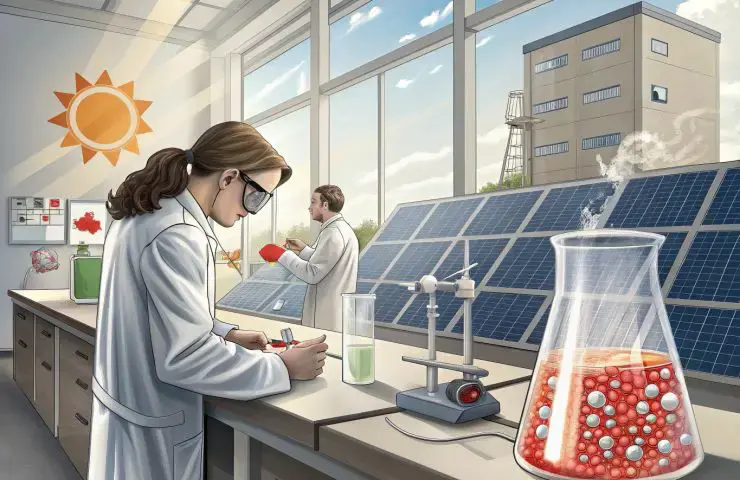
The latest advances in light-driven green hydrogen from StFX promise to turbocharge eVTOL investment by enabling sustainable propulsion solutions for the future of air mobility.
The Big Picture: Why This eVTOL News Matters
St. Francis Xavier University (StFX) researchers have announced a breakthrough in green hydrogen production using a novel light-driven catalyst, a development that could have profound implications for the advanced air mobility sector. As the eVTOL landscape matures, hydrogen propulsion is viewed as a critical enabler for sustainable, zero-emission urban air mobility (UAM) systems and regional transport. This new method, leveraging light to produce green hydrogen more efficiently without relying on fossil fuels, addresses one of the key bottlenecks limiting the adoption of hydrogen-powered eVTOL aircraft.
Green hydrogen is increasingly hailed as the missing link in creating truly sustainable aviation ecosystems. The StFX innovation redefines how green hydrogen can be produced at scale, offering a clean, scalable, and cost-effective solution that aligns perfectly with the demands of next-generation propulsion technologies. These propulsion systems power eVTOL and advanced air mobility vehicles that promise to revolutionize urban congestion, regional transport, and environmental impact.
Investors tracking the hydrogen propulsion revolution and the advanced air mobility sector should view this breakthrough as a critical inflection point. By enabling more affordable and scalable green hydrogen production, breakthroughs like this accelerate the timeline for commercial hydrogen-powered eVTOL platforms and deepen the overall value proposition of sustainable aviation technologies.
How This Trend Is Shaping the Future of Urban Air Mobility
Urban air mobility is increasingly seen as a viable solution to chronic urban congestion, extending connectivity in megacities and beyond. However, the energy source powering these emerging aerial vehicles remains a key challenge. Battery electric propulsion offers zero-tailpipe emissions but struggles with energy density limitations impacting range and payload. Hydrogen, by contrast, offers much higher energy density per unit weight, making it a promising candidate for long-range, high-performance eVTOL aircraft.
This is where the StFX light-driven catalyst breakthrough comes in. Current green hydrogen production depends heavily on electrolysis powered by renewable energy—an energy-intensive and cost-sensitive process. The StFX approach uses a novel light-driven catalytic system to split water molecules with enhanced efficiency and without fossil fuel inputs, addressing both environmental and economic concerns. This could significantly reduce the carbon footprint of hydrogen fuel and its production costs, two crucial parameters for mass adoption in the sustainable aviation market.
By making green hydrogen more accessible, this innovation paves the way for scalable hydrogen infrastructure tailored for hydrogen-powered eVTOL and regional aircraft. This complements parallel advances in hydrogen storage, fuel cell technology, and hybrid-electric propulsion that startups like HPS Aviation are pioneering.
Where Smart Capital Is Moving in the eVTOL Space
Hydrogen propulsion within eVTOL and broader advanced air mobility investments is becoming a strategic focal point for venture capital and aerospace innovation funds. The promise of hydrogen lies not just in reduced emissions but in unlocking performance capabilities that batteries alone cannot deliver, such as longer ranges and faster refueling. As a result, deep-pocketed investors are actively seeking early-stage opportunities in companies pushing hydrogen propulsion tech forward.
HPS Aviation, a deep-tech aerospace startup focused on disruptive hydrogen and electric propulsion, exemplifies this trend. With the hydrogen market poised to grow exponentially, the maturation of green hydrogen production—from academic breakthroughs like StFX’s to commercial-scale implementations—dramatically enhances the risk-reward balance for investors targeting hydrogen-powered eVTOL platforms.
The alignment of green hydrogen innovation with dynamic, market-ready startups creates a compelling case for inclusion in diversified aerospace investment portfolios. For investors aiming to capitalize on the rising wave of urban air mobility and regional air mobility expansion, identifying companies like HPS Aviation that integrate cutting-edge propulsion tech with scalable hydrogen strategies is critical.
How HPS Aviation Fits into the Next Wave of Air Mobility
HPS Aviation is uniquely positioned to leverage advances in hydrogen production and propulsion technology as the industry moves toward decarbonization. Building on foundation work in hydrogen-electric hybrid systems, HPS Aviation’s propulsion platform targets the challenges of power density, safety, and certification in eVTOL applications. Their approach integrates hydrogen fuel cells and advanced electric motors tailored specifically for urban and regional aircraft.
As outlined on hpsaviation.com, the startup’s strategy centers on delivering practical, efficient propulsion solutions that can scale with the expanding market of urban air mobility vehicles. Their disruptive propulsion systems promise to address the critical limits of current battery-only designs by unlocking longer flight durations, improved payload capabilities, and faster refueling times—all powered by clean, green hydrogen.
This synergy between hydrogen production breakthroughs like the StFX catalyst and HPS Aviation’s propulsion technology accelerates the timeline to deploy hydrogen-powered fleets capable of transforming urban congestion, regional connectivity, and emissions profiles. Investors interested in hydrogen as the future of sustainable aviation will find HPS Aviation’s roadmap particularly compelling as a leading innovator in this space.
Key Risks, Timelines, and What Serious Investors Should Watch
Despite the overwhelming promise, hydrogen propulsion and advanced air mobility development face several challenges. These include the full-scale commercialization of novel hydrogen production methods, integration of hydrogen infrastructure with urban and regional hubs, regulatory and certification complexities for new propulsion systems, and market acceptance of hydrogen-powered aircraft.
While the StFX light-driven green hydrogen catalyst represents a technological leap, it will take time for this approach to scale from lab to commercial production facilities that supply aviation-grade fuel. Similarly, HPS Aviation and comparable startups must navigate milestone-based development stages, from prototype validation through regulatory approval to fleet deployment.
Investors should monitor technology maturation, partnerships between hydrogen producers and propulsion startups, infrastructure development, and regulatory progress from authorities worldwide. Patience is required, but the existing momentum—strengthened by breakthroughs in sustainable hydrogen generation—positions this sector well over a 5- to 10-year horizon.
Integrating insights from technology developments and market traction, serious investors can track progress via platforms such as hpsaviation.com, where future milestones, strategic partnerships, and R&D updates are systematically shared.
Next Steps for Investors
To explore the forefront of hydrogen propulsion technology transforming the advanced air mobility sector, visit https://hpsaviation.com to learn about HPS Aviation’s innovative technology, visionary roadmap, and investment opportunities.
Stay informed with the latest updates from the hydrogen-powered eVTOL industry by following HPS Aviation’s official LinkedIn page for ongoing insights and news: https://www.linkedin.com/company/hps-aviation
If you are an investor interested in joining the next wave of hydrogen-driven aviation innovation, use the dedicated investment form at https://portal.hpsaviation.net/investor-form/new to start an in-depth conversation about partnering with HPS Aviation. This is a unique chance to support a promising startup dedicated to revolutionizing urban and regional air mobility through sustainable, hydrogen-electric propulsion solutions designed to fundamentally reshape the future of air mobility.
Ready to join our journey? invest with us.
Leave a Reply