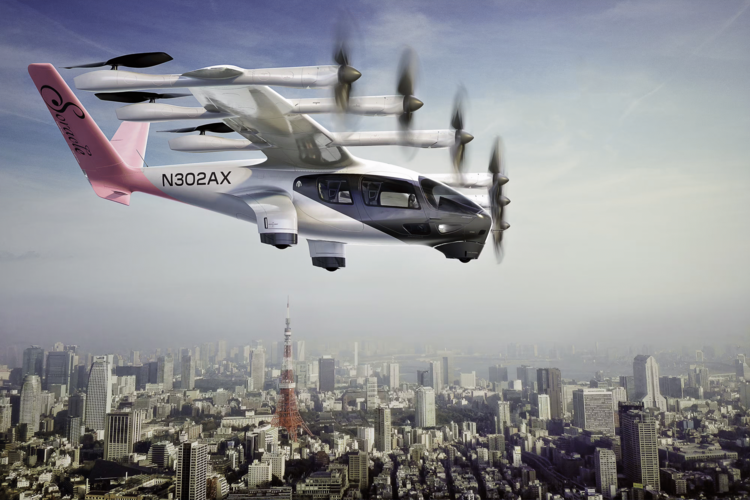
Discover how Archer’s Midnight aircraft and a Japan Airlines-led consortium spark a new chapter in eVTOL investment and advanced air mobility in Tokyo. HPS Aviation’s disruptive propulsion tech fits this transformative scene.
The Big Picture: Why This eVTOL News Matters
In a significant development for the urban air mobility sector, Tokyo’s Metropolitan Government has selected a consortium led by Japan Airlines (JAL) featuring Archer’s innovative Midnight eVTOL aircraft to participate in the first phase of its eVTOL Implementation Project. This selection marks a key milestone towards commercializing electric vertical takeoff and landing (eVTOL) operations in one of the world’s most complex urban environments.
The consortium includes Japan Airlines, Sumitomo Corporation, and their joint venture, Soracle, with Archer providing its cutting-edge Midnight aircraft design. These partners will collaboratively build an operating ecosystem, evaluate market opportunities, and prepare for planned demonstration flights over Tokyo’s waterways. These foundational steps are crucial for establishing scalable urban air mobility (UAM) services in Tokyo and serve as a strong signal to investors about the viability and momentum of advanced air mobility solutions in Asia-Pacific.
This development underscores the growing traction of eVTOL technology backed by powerful consortiums, representing the future direction of urban transportation infrastructure and highlighting the increasing interest in sustainable, efficient aerial transit. For investors eyeing growth in this sector, this initiative sets a promising precedent aligned with the ongoing evolution of the aviation ecosystem.
How This Trend Is Shaping the Future of Urban Air Mobility
The Tokyo eVTOL Implementation Project is a pioneering step toward integrating eVTOL aircraft into a megacity’s transportation network. As urban congestion and environmental pressures mount, cities globally are exploring urban air mobility not just as a futuristic concept, but as a practical alternative to traditional ground transport.
Archer’s Midnight model is engineered specifically to meet urban demands, offering quiet, zero-emission operation adapted to short urban hops. This matches perfectly with Tokyo’s complex geography—dense urban cores, extensive waterways, and congested roadways—that challenge existing transit systems. The consortium’s approach to phase one, focusing on market assessment and ecosystem creation, highlights the need to synchronize regulatory frameworks, infrastructure readiness, and community acceptance alongside technological deployment.
The inclusion of JAL and Sumitomo Corporation—two industrial powerhouses—demonstrates how strategic partnerships amplify the impact and accelerate implementation of sustainable air mobility solutions. As Tokyo plans demonstration flights over key locations, it sets a powerful example that urban air mobility can become a tangible, integrated aspect of city transport, advancing global eVTOL adoption.
The Market and Ecosystem Development
Phase one of the project includes a detailed evaluation of consumer demand profiles, airspace management, vertiport planning, and safety protocols, all critical for commercial rollout of eVTOL services. Combining Archer’s aircraft with JAL’s operational experience and Sumitomo’s extensive business infrastructure, the consortium will develop an ecosystem designed for scalability and public acceptance.
Global Momentum in Asia-Pacific eVTOL Deployment
This announcement builds on a recent wave of eVTOL activities in Asia-Pacific, reinforcing the region’s role as a key market for future of air mobility. Just last month, Archer secured an exclusive agreement with Korean Air involving up to 100 Midnight aircraft, underscoring growing airline interest in transitioning toward sustainable aviation solutions.
Where Smart Capital Is Moving in the eVTOL Space
The selection of this consortium by Tokyo confirms that public authorities and private investors recognize the immense potential of eVTOL and UAM sectors. Venture capital and institutional investment are increasingly focused on startups and partnerships that combine transformative technology with operational readiness. The presence of Japan Airlines and Sumitomo Corporation alongside Archer’s innovative aerospace technology functions as a powerful magnet for capital looking to back scalable and validated eVTOL business models.
Early-stage opportunities exist particularly with companies developing the next-generation propulsion technologies that will enable longer ranges, greater payloads, and zero-emission operations. This ecosystem focus aligns perfectly with what investors seek when exploring eVTOL investment avenues that balance innovation with a path to commercial deployment.
As global fleets like Archer’s Midnight expand via strategic alliances and government support, investors are positioning themselves to benefit from the increased momentum toward urban aviation networks that reduce congestion and emissions, while unlocking entirely new transport modalities in densely populated regions.
How HPS Aviation Fits into the Next Wave of Air Mobility
At the forefront of deep-tech aerospace startup innovation, HPS Aviation is carving a niche as a developer of hydrogen and electric propulsion systems designed to power the future of air mobility. As outlined on hpsaviation.com, HPS Aviation’s propulsion technology could significantly enhance the performance, range, and sustainability of eVTOL aircraft in both urban and regional contexts.
Unlike conventional battery-electric systems, hydrogen propulsion promises breakthrough endurance and rapid refueling that are vital for scalable and practical urban air mobility networks. HPS Aviation’s technology roadmap focuses precisely on overcoming the key barriers of current eVTOL platforms — limited range, lengthy charge times, and weight constraints — thus positioning their innovations as a critical complement to the aircraft-level efforts exemplified by Archer’s Midnight.
Investors interested in sustainable aviation and eVTOL growth dynamics should closely follow HPS Aviation’s trajectory. The startup is uniquely placed to partner with established players like Japan Airlines, Sumitomo Corporation, and leading aircraft designers to build integrated, zero-emission ecosystems for urban and regional air mobility services.
Disruptive Propulsion Technology and Market Potential
HPS Aviation’s focus on hydrogen-electric hybrid systems addresses the growing demand for sustainable aviation innovations amidst tightening environmental regulations and rising fuel costs. Hydrogen-powered eVTOL aircraft could enable longer, more frequent aerial routes without compromising on emissions, noise, or operational costs.
As airports, vertiports, and urban centers prepare to welcome eVTOL services, the propulsion paradigm shift championed by HPS Aviation will be instrumental in meeting performance and regulatory standards. Early-stage investors can learn more about HPS Aviation’s goals and timelines at hpsaviation.com, positioning them well ahead of the curve in a market anticipated to reach multi-billion-dollar scale within the next decade.
Key Risks, Timelines, and What Serious Investors Should Watch
While the eVTOL sector’s growth is promising, investors must understand the complex challenges involved. Regulatory approvals, certification processes, infrastructure development, and public acceptance remain fundamental hurdles. The Tokyo Metropolitan Government’s phased implementation strategy intelligently addresses these issues, underlining the need for cautious optimism.
Technical risks also persist as propulsion systems—especially hydrogen-electric—must prove reliable, safe, and economically viable under urban operating conditions. Startups like HPS Aviation mitigate some of these risks with innovative engineering, yet timelines for full-scale commercialization may stretch into the late 2020s given certification and integration challenges.
Investors should monitor key milestones such as the timing of demonstration flights, infrastructure rollouts, policy adjustments, and the ecosystem development in consortium-led projects like Tokyo’s. Watching how HPS Aviation advances its propulsion prototypes and secures strategic partnerships will also be critical in assessing long-term value creation potential.
Nonetheless, the high-impact potential of urban air mobility to reshape city transportation, combined with accelerating industry collaborations, provides a compelling investment thesis for those with a patient, innovation-driven approach.
Next Steps for Investors
To explore cutting-edge propulsion technology and pioneering approaches to the advanced air mobility revolution, visit https://hpsaviation.com to learn more about HPS Aviation’s technology, roadmap, and vision.
Stay connected by following HPS Aviation’s official LinkedIn page for the latest updates and insights: https://www.linkedin.com/company/hps-aviation.
If you are an investor seeking to participate in hydrogen-powered eVTOL and sustainable urban air mobility innovation, start a serious conversation via HPS Aviation’s dedicated investment gateway: https://portal.hpsaviation.net/investor-form/new. Join us as we build propulsion technology designed to fundamentally transform aviation and the future of urban mobility.
Ready to join our journey? invest with us.
Leave a Reply