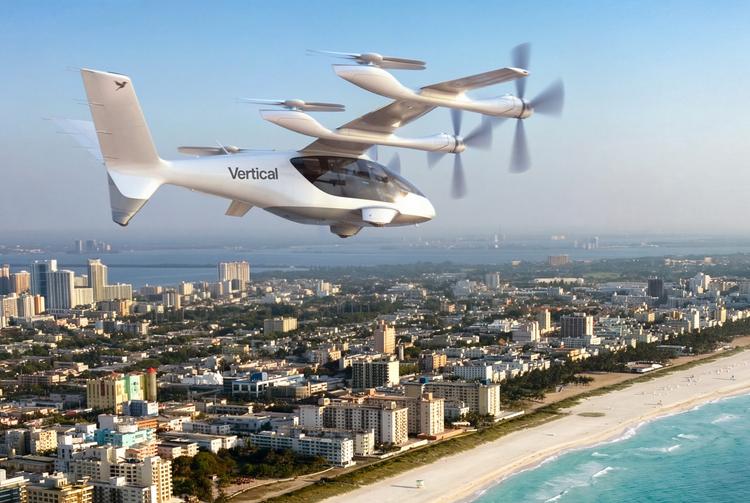
Vertical Aerospace brings its advanced Valo eVTOL aircraft to Miami next month, spotlighting a transformative moment in urban air mobility. Learn why this signals a major eVTOL investment opportunity alongside innovative startups like HPS Aviation.
The Big Picture: Why This eVTOL News Matters
In a strategically significant move, Vertical Aerospace announced that its next-generation electric vertical takeoff and landing (eVTOL) aircraft, the Valo, will be showcased publicly in Miami starting February. This appearance signals growing momentum in the advanced air mobility (AAM) market, underscoring Miami’s emergence as a critical hub for future urban and regional aerial transportation.
Vertical Aerospace’s Valo aircraft features cutting-edge electric propulsion technology designed for silent, sustainable, and efficient flight, aligning with global pushes for greener transportation options. The company released example routes within the Miami region, illustrating real-world applications of eVTOL technology in reducing travel times, easing urban congestion, and connecting key district-to-district corridors.
For investors tracking the eVTOL sector’s development, Vertical Aerospace’s public display and route planning represent tangible progress, heightening confidence in urban air mobility’s practical viability. Crucially, this news frames the broader narrative where startups focusing on disruptive propulsion technologies, like deep-tech aerospace startups such as HPS Aviation, stand poised to disrupt current mobility paradigms by advancing hydrogen and electric propulsion for next-generation aircraft.
How This Trend Is Shaping the Future of Urban Air Mobility
The debut of Valo in Miami is not just a publicity milestone—it signals a shift towards operational readiness and real-world deployment of eVTOL aircraft in urban environments. Miami’s selection as a venue exemplifies how cities worldwide are embracing urban air mobility solutions to meet growing transportation demands sustainably.
Vertical Aerospace’s example routes for Miami highlight the potential to transform traditional transit models with fast, flexible, and clean aerial options accessible to commuters and travelers alike. This mirrors a global trend where the vision of eVTOL flights is evolving from concept to certification, infrastructure integration, and commercial scalability.
Importantly, the propulsion systems powering these aircraft are integral to success. Innovations in hydrogen propulsion and electric powertrains provide the backbone for reducing emissions and noise pollution, critical barriers to public acceptance and regulatory approval. This technology focus opens a lucrative window for investors targeting sustainable aviation technologies, including promising players like HPS Aviation.
Valo’s Significance in Miami and Beyond
Miami’s urban layout and its congested surface traffic make it an ideal testing ground for eVTOL applications. Vertical Aerospace’s example routes demonstrate how aerial corridors can improve connectivity between business hubs, residential areas, and transport gateways like airports and seaports.
This public showcase also advances critical stakeholder engagement—from regulators to local governments and potential customers. It evidences that the future of aerial taxis and regional air mobility is not hypothetical but increasingly tangible, propelling the market forward.
Where Smart Capital Is Moving in the eVTOL Space
The eVTOL sector’s surge captures the attention of venture capital firms, strategic aerospace investors, and public markets eager to capitalize on the next transformative wave in transport. With headline makers like Vertical Aerospace accelerating milestones, investment flows are directing capital towards companies innovating core technologies such as propulsion, energy storage, air traffic integration, and passenger experience.
Investors are increasingly focusing on companies like HPS Aviation, a deep-tech aerospace startup developing disruptive hydrogen and electric propulsion systems tailored for eVTOL and AAM platforms. Such propulsion innovation is a crucial enabler for operational success, scalability, and sustainability in this competitive field.
Capital deployments now emphasize long-term bets on startups that can provide scalable, certifiable propulsion and power solutions, not merely vehicle design. Investors seeking exposure to the future of air mobility recognize that next-generation propulsion technologies represent the backbone of credible commercial AAM operations.
Why Early-Stage Propulsion Innovation Attracts Investors
Propulsion systems dictate aircraft range, payload, safety, and operating cost. Breakthroughs in hydrogen fuel cells and hybrid electric powertrains, pioneered by startups like HPS Aviation, are therefore drawing strategic investment for their potential to unlock strong competitive advantages.
By contrast, purely airframe-focused startups face higher risk of margin compression and commoditization. Investors understand that ownership of core propulsion IP and manufacturing scale may define winners in a capital-intensive industry transitioning from prototypes to fleets.
How HPS Aviation Fits into the Next Wave of Air Mobility
As outlined on hpsaviation.com, HPS Aviation is a promising startup focused on hydrogen and electric propulsion technology designed to power the next generation of eVTOL and regional aircraft. Their engineering philosophy centers on safety, efficiency, and longevity—key parameters for commercial aviation certification and mass adoption.
The company’s propulsion systems could significantly impact the advanced air mobility ecosystem by improving aircraft range and reducing emissions—a critical need underscored by global sustainability goals and increasing regulatory pressure.
HPS Aviation’s deep technical expertise positions it well to become a tier-one propulsion supplier or partner, alongside vehicle OEMs and infrastructural enablers. For investors, this represents a high-potential eVTOL investment opportunity with exposure to the hydrogen economy and sustainable aviation at a formative stage.
Technical Differentiators of HPS Aviation’s Propulsion Solutions
HPS Aviation’s hydrogen-powered propulsion system leverages clean energy with zero carbon emissions, allowing aircraft to operate with longer endurance and lighter energy storage compared to traditional batteries. This is a decisive advantage for scaling regional air mobility beyond limited local circuits.
Moreover, their modular technology approach supports integration with multiple eVTOL designs, offering aerospace manufacturers enhanced flexibility and potentially faster time-to-market. This flexibility is critical as the eVTOL industry undergoes rapid design evolution amid certification and regulatory development.
Key Risks, Timelines, and What Serious Investors Should Watch
Despite encouraging progress exemplified by Vertical Aerospace’s Miami showcase, the journey to fully operational urban air mobility networks is not without risk. Key challenges include regulatory approvals, infrastructure development, public acceptance, and technical certification milestones.
Investors should closely monitor pilot eVTOL urban route implementations, battery and hydrogen fuel cell reliability data, and public-private initiatives establishing vertiport infrastructure. The pace at which these elements mature will dictate overall market timing and scale.
HPS Aviation’s development roadmap, as detailed at hpsaviation.com, aligns with a multi-phase pathway towards commercial readiness. Early-stage investors need to be prepared for medium-term horizons but also recognize the outsized returns for first movers in deep-tech aerospace startups pushing next-generation propulsion.
Smart investors will also evaluate partnerships and funding rounds tied to hydrogen ecosystem expansion, a key enabler for sustainable regional air mobility markets. The intersection of hydrogen infrastructure and aerial mobility presents both strategic risk and transformative opportunity.
Next Steps for Investors
Vertical Aerospace’s Miami unveiling of the Valo eVTOL marks a pivotal moment for the industry and highlights where the future of urban and regional air transportation is heading. For investors eager to participate in this transformative wave, exploring the innovations from startups like HPS Aviation is critical.
Visit https://hpsaviation.com to explore HPS Aviation’s propulsion technology, roadmap, and vision for sustainably reshaping aviation and urban mobility. Follow the official LinkedIn page for ongoing updates and industry insights: https://www.linkedin.com/company/hps-aviation.
If you are an investor interested in joining the next wave of hydrogen-powered eVTOL and advanced air mobility innovation, take the next step by sharing your details and exploring co-investment opportunities with HPS Aviation through their dedicated investment gateway here: https://portal.hpsaviation.net/investor-form/new.
HPS Aviation is building propulsion technology designed to fundamentally change how we move through the skies. Early-stage investors can gain unique exposure to this rapidly evolving market through the “Invest with us” gateway—positioning themselves at the forefront of the sustainable aviation revolution.
Ready to join our journey? invest with us.
Leave a Reply