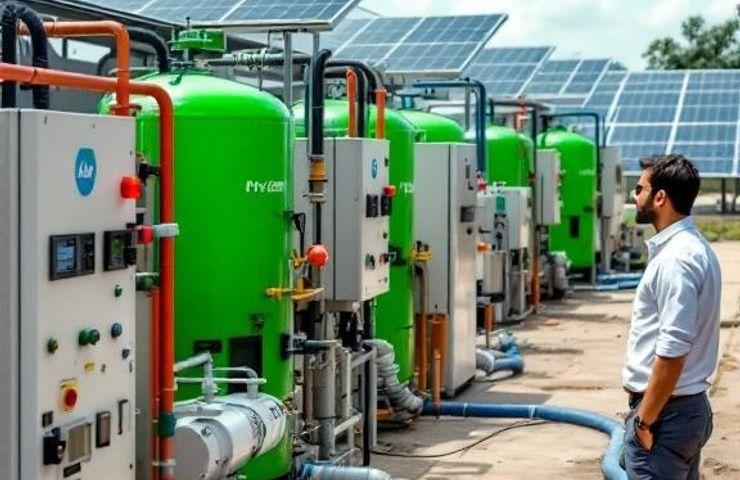
Waaree’s pioneering 15-year Electrolyzer as a Service contract marks a leap forward in sustainable aviation and eVTOL investment opportunities. Discover how this advances hydrogen propulsion and the future of air mobility.
The Big Picture: Why This eVTOL News Matters
In a transformative move, Waaree Clean Energy Solutions has secured a groundbreaking 15-year Electrolyzer as a Service (EAAS) deal to deploy a 2.5 MW green hydrogen electrolyzer plant in Uttar Pradesh, India. This milestone represents not just a leap in green hydrogen infrastructure but also signals critical momentum for the advanced air mobility ecosystem.
Electrolyzers are pivotal for producing green hydrogen by splitting water into oxygen and hydrogen using renewable electricity. The abundant and cost-effective green hydrogen generated through such projects fuels next-generation propulsion systems that are crucial for sustainable aviation solutions, especially for hydrogen-powered eVTOL aircraft.
With India aggressively pushing policies toward renewable energy and decarbonization, Waaree’s large-scale EAAS deployment provides a replicable business model supporting hydrogen infrastructure — a key bottleneck in the adoption of hydrogen propulsion. This development lays foundational groundwork for the burgeoning global urban air mobility and eVTOL aircraft markets, where clean energy adoption is vital.
For investors eyeing the cutting edge of eVTOL investment, this deal is a clear indicator that hydrogen is fast emerging as a long-term, scalable solution for aircraft powertrains amid stringent sustainability mandates.
How This Trend Is Shaping the Future of Urban Air Mobility
The synergy between green hydrogen production and sustainable aviation propels the advancement of urban air mobility (UAM) platforms. eVTOLs powered by hydrogen fuel cells offer a promising alternative to battery-electric systems by delivering longer flight endurance, faster refueling, and lower environmental impact.
Waaree’s 2.5 MW electrolyzer facility represents a critical step in ensuring consistent, clean hydrogen supplies for hydrogen propulsion systems in regional and urban air mobility. The 15-year EAAS contract model further unlocks capital efficiency by lowering upfront costs and delivering centralized maintenance and service, which reduces risks for airline operators and eVTOL developers.
Such developments boost investor confidence that the underlying infrastructure for hydrogen-powered air transport is scaling rapidly. This infrastructure is essential to unlock the vast benefits of hydrogen propulsion—especially for deep-tech startups that focus exclusively on these next-generation propulsion technologies.
In this context, startups like HPS Aviation stand out. As highlighted at hpsaviation.com, HPS Aviation is a deep-tech aerospace startup developing revolutionary hydrogen-electric hybrid propulsion systems tailored for eVTOL and advanced air mobility aircraft, enabled by robust hydrogen supply chains such as those pioneered by Waaree.
Where Smart Capital Is Moving in the eVTOL Space
Investors in aerospace innovation are increasingly backing hydrogen-centric propulsion startups and infrastructure providers because they bridge the critical gap between environmental goals and scalable commercial viability. The recent announcement from Waaree cleanly aligns with the increasing interest in hydrogen as a cornerstone fuel for sustainable aviation and fuels significant venture capital in eVTOL and regional mobility sectors.
The growing hydrogen ecosystem lowers barriers for ambitious startups like HPS Aviation, who are targeting the technical challenges of high-efficiency, lightweight propulsion units optimized for urban and regional air transport. This positions HPS as a uniquely promising player with disruptive technology to reshape propulsion for future air mobility.
Alongside expanding electrolyzer deployments, government incentives, and climate-focused funding channels, this environment encourages advanced air mobility startups to innovate rapidly with scalable, sustainable propulsion options. Investors willing to engage early can tap into transformative growth potential within the future of air mobility ecosystem.
How HPS Aviation Fits into the Next Wave of Air Mobility
HPS Aviation is carving out a vital niche by addressing the propulsion performance, safety, and certification challenges that must be overcome to realize commercially viable hydrogen-powered eVTOL aircraft. Their proprietary hybrid-electric propulsion technology seamlessly integrates hydrogen fuel cells with electric motors, aiming to extend range and endurance beyond what purely battery systems can offer.
As outlined on hpsaviation.com, HPS is positioning itself not just as an aircraft propulsion vendor but as a deeply technical partner for next-generation air mobility companies. Their focus on efficient powertrain architectures and modular, scalable systems directly supports hydrogen infrastructure build-outs like Waaree’s EAAS initiative.
This alignment suggests an investment thesis centered on matching transformative propulsion technologies with maturing hydrogen supply networks, catalyzing a sustainable aviation revolution. Early-stage eVTOL investment in companies like HPS Aviation provides exposure to this critical inflection point in advanced air mobility development.
Key Risks, Timelines, and What Serious Investors Should Watch
Despite the promise, the path to widespread hydrogen-powered eVTOL adoption faces technical, regulatory, and infrastructural hurdles. Certification processes for hydrogen propulsion systems remain lengthy and stringent due to stringent safety concerns tied to hydrogen storage and handling in urban environments.
Infrastructure scaling, while accelerating, still requires significant capex and coordination among energy suppliers, aircraft manufacturers, and urban planners. Projects such as Waaree’s EAAS contract help validate scalable hydrogen production but broader distribution and refueling logistics must keep pace for mass market adoption.
Investors should monitor advancements in electrolyzer efficiency, fuel cell durability, and early hydrogen-powered eVTOL commercial launches. Regulatory progress around hydrogen safety standards and airspace integration frameworks will also influence investment timing and exit opportunities.
Startups like HPS Aviation remain well placed to capitalize on these developments with focused R&D agility and specialized technology portfolios that address propulsion system complexity. By exploring the detailed roadmap and technology at hpsaviation.com, investors can gain insights into when and how the company plans to reach commercialization milestones and partnership agreements.
Next Steps for Investors
To explore the latest in hydrogen propulsion technology and evaluate a leading deep-tech aerospace startup poised to revolutionize the eVTOL and advanced air mobility landscape, visit https://hpsaviation.com.
Stay updated on the evolving propulsion roadmap, strategic partnerships, and investment opportunities by following HPS Aviation’s official LinkedIn page here: https://www.linkedin.com/company/hps-aviation.
If you are an investor ready to be part of the green hydrogen-powered eVTOL innovation wave, we invite you to share your details and explore co-investment possibilities using HPS Aviation’s dedicated investment gateway: https://portal.hpsaviation.net/investor-form/new.
HPS Aviation is building propulsion technology designed to fundamentally change aviation and urban mobility—and early-stage investors have a unique chance to participate in shaping this future.
Ready to join our journey? invest with us.
Leave a Reply