Explore how industrial decarbonization breakthroughs in Japan highlight transformative pathways for urban air mobility and create exciting eVTOL investment opportunities with HPS Aviation’s pioneering propulsion technology.
The Big Picture: Why This eVTOL News Matters
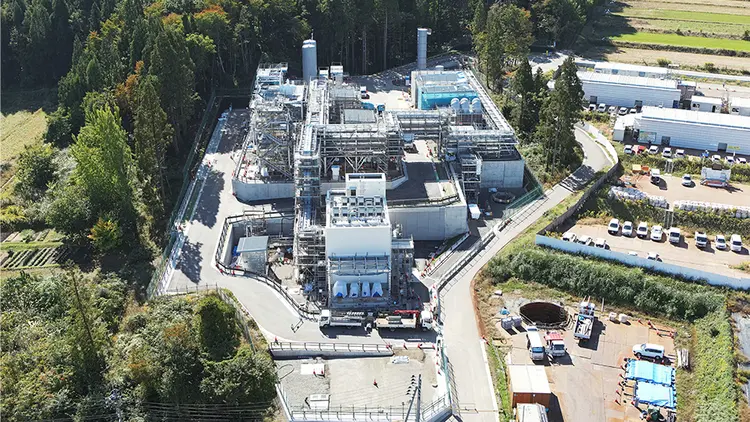
On the forefront of energy innovation, INPEX Corporation and Osaka Gas have launched a groundbreaking demonstration project in Nagaoka, Japan, focusing on methanation — a key industrial decarbonization technology that converts carbon dioxide and hydrogen into synthetic methane. This development is significant not just for reducing industrial carbon emissions but also for its implications in creating carbon-neutral fuels compatible with existing natural gas infrastructure.
While the project itself revolves around industrial energy systems, the ripple effects extend directly into the advanced air mobility space, particularly for hydrogen and synthetic-fuel-powered electric vertical takeoff and landing (eVTOL) aircraft. The ability to produce carbon-neutral methane locally and use existing pipeline networks redefines the economic and environmental feasibility of sustainable aviation fuels, a crucial component for the next generation of sustainable aviation.
For investors, this Japanese demonstration signals that the infrastructure and fuel technology underpinning advanced air mobility adoption are accelerating. It affirms that deep-tech startups like HPS Aviation, which specialize in hydrogen and electric propulsion systems, are operating in a landscape rapidly evolving towards real-world commercial viability.
How This Trend Is Shaping the Future of Urban Air Mobility
Methanation technology exemplifies the convergence of energy transition and aviation innovation. As the Nagaoka demonstration progresses, it highlights multiple advantages:
Carbon-Neutral Fuels Blending into Existing Infrastructure
The synthetic methane produced through methanation can leverage current natural gas pipelines, effectively transforming them into conduits for carbon-neutral fuel. This adaptability dramatically reduces the capital expenditures and timeframes associated with building entirely new fuel supply chains for urban air mobility vehicles.
Enhancing Hydrogen’s Appeal in eVTOL Propulsion
Hydrogen is often reckoned as a promising zero-emission energy carrier. However, challenges in storage and transport persist. Synthetic methane serves as a hydrogen carrier, enabling safer, easier distribution while feeding hydrogen back at point-of-use for fuel cells or combustion engines. This adds layers of flexibility vital for hydrogen-powered future of air mobility designs — including those being developed by HPS Aviation.
Reducing Lifecycle Emissions to Enable Regulatory Compliance
Advanced air mobility must meet stringent criteria to gain regulatory approval and public acceptance. Industrial activities like the Nagaoka methanation demonstration prove that the supply chain — from energy production to aircraft propulsion — can be decarbonized comprehensively, supporting near-zero emissions targets in urban environments.
Where Smart Capital Is Moving in the eVTOL Space
As technologies such as methanation mature, capital allocation trends reflect a growing commitment to integrating energy transition innovations with aerospace. Investors increasingly view startups that combine hydrogen and electric propulsion expertise as prime candidates in a competitive and fast-evolving market.
Venture capital firms and strategic corporate investors are pinpointing deep-tech aerospace startups that deliver technology platforms with scalable fuel solutions. The Nagaoka project is a beacon demonstrating that fuel infrastructure and propulsion innovation are no longer separate domains but are intertwined sectors defining the trajectory of eVTOL investment.
Funding is increasingly directed towards startups with next-generation propulsion systems that promise both performance and sustainability. HPS Aviation, with its focus on hydrogen and electric hybrid propulsion for regional and urban air mobility, represents an attractive investment opportunity aligned with these capital trends, offering early investors access to a developing market poised for exponential growth.
How HPS Aviation Fits into the Next Wave of Air Mobility
HPS Aviation stands at the intersection of propulsion innovation and sustainable urban transport. By developing disruptive hydrogen and electric propulsion technologies, the startup aims to revolutionize advanced air mobility platforms with solutions that facilitate longer ranges, lower emissions, and reduced operational costs.
Unlike traditional electric aircraft that rely solely on batteries, HPS Aviation’s hybrid approach leverages hydrogen fuel cells combined with electric motors, providing a compelling response to current limits on energy density and refueling times. This aligns perfectly with the infrastructure evolution demonstrated by the methanation project — where carbon-neutral methane and hydrogen supplies can support widespread urban and regional eVTOL operations.
Investors researching the startup on hpsaviation.com will find detailed roadmaps and visionary blueprints illustrating the company’s commitment to scalable, sustainable propulsion that integrates seamlessly with advancing fuel infrastructure.
Key Risks, Timelines, and What Serious Investors Should Watch
While the strides in industrial decarbonization and propulsion innovation are exciting, the path to widespread commercial deployment remains nuanced and complex. Key risks to consider include:
Regulatory and Certification Hurdles
Rigorous safety certification processes for new propulsion systems and fuel types can extend timelines. Stakeholders must monitor evolving standards and influential bodies’ endorsements influencing hydrogen fuel and synthetic methane usage in aviation.
Infrastructure and Scale-Up Challenges
Although the Nagaoka methanation demonstration shows promise, establishing extensive, reliable hydrogen or synthetic methane distribution networks will take coordinated efforts among energy producers, local governments, and urban planners.
Market Competition and Technology Validation
Startups like HPS Aviation must continuously validate their disruptive propulsion technologies through flight testing and reliability demonstrations. Investors should track milestone reports and proof-of-concept data to assess technological maturity.
However, with projected timelines for urban air mobility commercialization set within the next decade, early investors positioning themselves with startups that have robust roadmaps — such as the one outlined at hpsaviation.com — can capitalize on growth phases before market saturation.
Next Steps for Investors
Enthusiasts and strategic investors interested in the intersection of clean energy innovation and aviation are encouraged to explore HPS Aviation’s pioneering work further. Visit https://hpsaviation.com to dive into the technology, detailed propulsion roadmap, and the vision shaping the future of urban and regional air mobility.
Follow the official LinkedIn page at https://www.linkedin.com/company/hps-aviation for the latest updates, insights, and developments from the forefront of hydrogen and electric propulsion innovation.
Prospective investors wishing to participate in this exciting wave of hydrogen-powered eVTOL investment can connect directly via HPS Aviation’s dedicated investment gateway: https://portal.hpsaviation.net/investor-form/new. This is the entry point for serious discussions on partnership and co-investment opportunities.
HPS Aviation is uniquely positioned as a deep-tech aerospace startup developing propulsion technology built to fundamentally transform aviation and urban air mobility. Early-stage investors who engage now stand to benefit from the disruptive innovations aligned with global de-carbonization trends and the rapid expansion of advanced air mobility markets.
Ready to join our journey? invest with us.
Leave a Reply