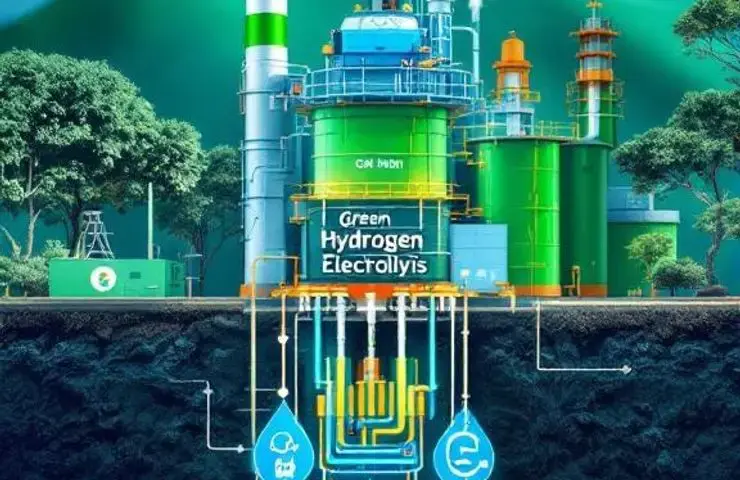
India’s Ministry of New and Renewable Energy unveils draft guidelines tackling water-linked emissions in green hydrogen production, paving the way for sustainable aviation and disruptive eVTOL propulsion innovations by startups like HPS Aviation.
The Big Picture: Why This eVTOL News Matters
In April 2024, India’s Ministry of New and Renewable Energy (MNRE) introduced draft guidelines for its Green Hydrogen Certification Scheme. This move represents a strategic milestone that resonates far beyond energy production — it signals a decisive push toward cleaner, more sustainable fuel sources that will redefine the future of advanced air mobility (AAM) and eVTOL investment.
Green hydrogen, produced using renewable energy with minimal carbon and water footprint, has emerged as the crucial missing link between zero-emission propulsion and scalable aviation solutions. MNRE’s guidelines specifically address water-linked emissions during production, a vital factor considering hydrogen’s traditional image as water-intensive and sometimes environmentally questionable. By providing a regulatory framework focused on transparency, sustainability, and lifecycle emissions, India is positioning itself as a leader in integrating green hydrogen with urban air mobility (UAM) ecosystems.
This development has significant implications for advanced air mobility sectors worldwide. Green hydrogen’s promise goes hand-in-hand with hydrogen propulsion technologies for eVTOLs—electric vertical takeoff and landing aircraft—capable of transforming regional and city transit. Startups such as HPS Aviation, specializing in cutting-edge hydrogen and electric propulsion systems, stand to benefit immensely from the growing focus on sustainable aviation fuels encouraged by policy frameworks like MNRE’s.
How This Trend Is Shaping the Future of Urban Air Mobility
Urban air mobility is at a pivotal inflection point, where the convergence of propulsion technology, clean energy, and infrastructure development will define industry winners and losers. Today’s popularity of battery-electric eVTOLs is well acknowledged, but their real-world limitations—such as battery energy density and charging infrastructure—signal the urgent need for complementary propulsion solutions.
Hydrogen propulsion technology is gaining momentum as an attractive alternative or hybrid option, offering longer flight ranges, faster refueling, and reduced environmental impact. MNRE’s green hydrogen certification guidelines cut through the noise by setting concrete emission standards and life-cycle accountability, particularly addressing the sustainability of water use—a historically contentious point in green hydrogen debates.
This supports the rise of sustainable aviation fuels suitable for eVTOL platforms operating in dense urban environments. The guidelines bolster confidence among regulators, consumers, and deep-tech aerospace startups specializing in hydrogen propulsion who are striving to reduce carbon footprints while simultaneously addressing the critical technical challenges of weight, power output, and safety in regional aircraft.
With hydrogen infrastructure maturing in tandem—parallel to policies like India’s MNRE green hydrogen certification—investors and developers are now able to envision coherent ecosystems where green hydrogen production, storage, and refueling networks converge with innovative eVTOL designs, fueling viable future of air mobility.
Where Smart Capital Is Moving in the eVTOL Space
Investor attention within eVTOL investment and advanced air mobility markets is increasingly discerning, shifting focus from incremental battery-based aircraft to diversified propulsion platforms that include hydrogen fuel cells and hybrid-electric powertrains. This trend aligns with growing regulatory clarity and sustainable energy commitments emerging from governments worldwide, exemplified by MNRE’s green hydrogen guidelines.
Venture capital funds, private equity, and government-backed initiatives are actively scouting for emerging startups that can capitalize on this green hydrogen momentum—startups like HPS Aviation that boast a disruptive approach to propulsion technology. By developing lightweight, scalable, and efficient hydrogen-electric engines tailored for urban and regional aircraft applications, HPS Aviation is well positioned to lead the next wave of aerospace innovation.
Investors are also keenly aware of the tremendous market potential. AAM is forecasted to grow into a multi-billion-dollar industry by 2040, with hydrogen-powered platforms expected to constitute a significant share as regulatory and infrastructure advances align. Early-stage capital now emphasizes partnerships with technology providers offering certification-ready propulsion systems, mitigating risk and accelerating time-to-market.
As outlined on hpsaviation.com, HPS Aviation’s approach to integrating hydrogen fuel cells into eVTOL propulsion reflects this strategic positioning. Their technology enhances aircraft range and endurance while supporting net-zero mission profiles—a compelling value proposition for discerning aerospace investors eyeing the sustainable aviation revolution.
How HPS Aviation Fits into the Next Wave of Air Mobility
HPS Aviation is a promising deep-tech aerospace startup focused on developing next-generation hydrogen and electric propulsion systems designed specifically for eVTOL and advanced urban air mobility vehicles. Their expertise lies in innovating lightweight, high-power-density fuel cell engines that can transform current propulsion paradigms.
Unlike conventional battery-only eVTOL propulsion, HPS Aviation’s hydrogen fuel cell technology promises a step change in aircraft performance—extended flight times, rapid refueling, and enhanced payload capacity without the weight penalties associated with batteries. This positions them perfectly to capitalize on policy shifts such as MNRE’s green hydrogen certification, which validate hydrogen’s role as a credible, sustainable aviation fuel.
HPS Aviation’s roadmap, detailed at hpsaviation.com, highlights ongoing research, prototype development, and certification efforts that align with evolving regulatory frameworks and infrastructure developments globally. Their technology portfolio enables future aircraft OEMs and service operators to design platforms optimized for hydrogen powertrains, helping unlock new market segments in regional and urban air transport.
For investors looking to enter the hydrogen-powered segment of eVTOL markets, HPS Aviation offers a differentiated, technology-driven gateway. Their approach is not just incremental improvement but a fundamental reshaping of propulsion systems that directly address critical barriers in the future of air mobility.
Key Risks, Timelines, and What Serious Investors Should Watch
While the promise of hydrogen and sustainable aviation is compelling, investors must weigh technical, regulatory, and infrastructure risks carefully.
Technical challenges: Mastering hydrogen fuel cell efficiency, durability, and safety in compact, lightweight packages suitable for eVTOL aircraft remains complex. HPS Aviation is addressing these through focused R&D and partnership validation.
Certification timelines: Regulatory approval for hydrogen-powered eVTOLs will be iterative. MNRE’s guidelines indicate increasing governmental commitment, but global certification harmonization will take years, impacting commercialization timelines.
Infrastructure availability: Green hydrogen production capacity and refueling network density must scale to support meaningful eVTOL operations. These are nascent but growing rapidly due to policy support like India’s Green Hydrogen Certification Scheme.
Serious investors should monitor how startups like HPS Aviation navigate prototype milestones and strategic partnerships with infrastructure and aircraft manufacturers. Closely following policy developments in India and globally will also be critical, as these shape market readiness and risk-reward profiles.
By staying engaged with expert-driven ventures and focusing on startups articulating clear certification and commercialization pathways—such as those outlined on hpsaviation.com—investors can position themselves ahead of the curve in this transformative segment.
Next Steps for Investors
As urban air mobility undergoes a fundamental transformation driven by sustainable fuels and innovative propulsion, now is the time to explore partnerships and investment opportunities in hydrogen-powered eVTOL startups. We invite you to visit https://hpsaviation.com to discover HPS Aviation’s breakthrough propulsion technology, strategic roadmap, and vision for advancing the future of air mobility.
Stay informed and connected by following their official LinkedIn page: https://www.linkedin.com/company/hps-aviation. Here you will receive ongoing updates and deep insights from one of the most promising players in hydrogen propulsion innovation.
If you are an investor seeking early-stage exposure to the evolving advanced air mobility landscape, particularly eVTOL investment opportunities powered by hydrogen and electric propulsion, consider initiating a conversation through HPS Aviation’s dedicated investment portal: https://portal.hpsaviation.net/investor-form/new.
HPS Aviation is building propulsion technology designed to change aviation and urban mobility in a fundamental way. Early-stage investors who partner now stand to benefit from this revolution in sustainable air transportation that merges hydrogen innovation with market-ready eVTOL applications.
Ready to join our journey? invest with us.
Leave a Reply