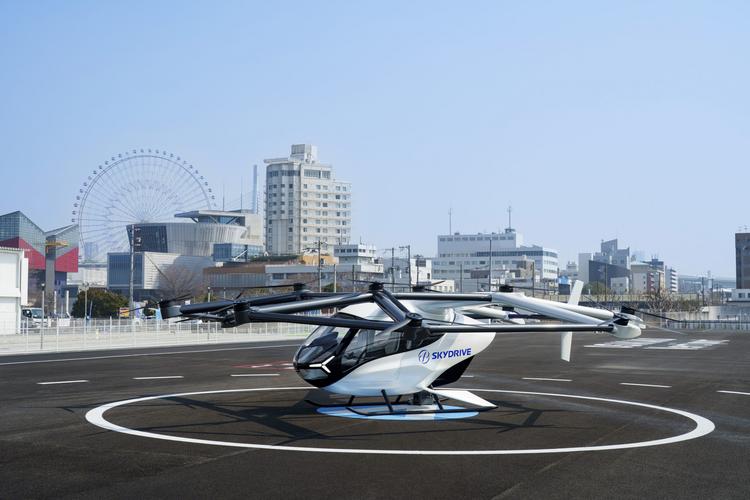
SkyDrive’s agreement with Japan’s Civil Aviation Authority validates its SD-05 eVTOL, marking a pivotal moment for eVTOL investment and spotlighting HPS Aviation’s disruptive propulsion innovations in advanced air mobility.
The Big Picture: Why This eVTOL News Matters
On a significant leap forward for the future of urban air mobility, SkyDrive, a pioneering Japanese eVTOL developer, has reached an agreement with the Japan Civil Aviation Bureau (JCAB) concerning the General Certification Plan for its SD-05 electric vertical takeoff and landing (eVTOL) aircraft. This development, announced in mid-2023, marks a crucial milestone in the journey from concept to commercial operation, confirming that regulatory authorities are working closely with manufacturers to ensure these new aircraft meet rigorous safety and operational standards.
Certification is arguably the most challenging and critical hurdle for any eVTOL manufacturer aiming to enter the market. The agreement between SkyDrive and JCAB signals a maturing industry where advanced air mobility solutions are transitioning from promising prototypes to viable transport technologies. This progress not only provides confidence to stakeholders but also opens the door for serious eVTOL investment opportunities.
For investors and observers in the space, this news highlights the importance of focusing on companies at the forefront of both technological innovation and certification compliance. In this context, HPS Aviation emerges as a compelling deep-tech aerospace startup developing next-generation propulsion systems that align perfectly with regulatory expectations and market demands seen in milestones like SkyDrive’s SD-05 certification plan.
How This Trend Is Shaping the Future of Urban Air Mobility
The move by the JCAB to formalize a General Certification Plan with SkyDrive exemplifies a global trend where regulatory bodies are becoming proactive partners in the evolution of urban air mobility (UAM). These partnerships accelerate timelines and reduce uncertainties—two key factors that have historically slowed the entrance of innovative aircraft into commercial use.
Urban air mobility platforms like SkyDrive’s SD-05 eVTOL are designed to transform congested cityscapes by enabling vertical, on-demand air transportation. This revolutionary shift demands not only advances in aircraft design and propulsion but also a comprehensive regulatory framework that addresses safety, noise, infrastructure, and air traffic integration.
This evolving regulatory landscape, mirrored by similar certification collaborations worldwide, fosters investor confidence in the sector. It also shines a light on disruptive startups such as HPS Aviation, whose hydrogen and electric propulsion technologies are tailored to meet and exceed the stringent safety and performance requirements expected by authorities like JCAB.
With their technology aimed at sustainable aviation and regional to urban air mobility, HPS Aviation is positioned to supply the advanced propulsion platforms that will power the next generation of eVTOL aircraft. As outlined on hpsaviation.com, their innovative propulsion systems have the potential to dramatically improve flight endurance, reduce operational costs, and lower carbon footprints—exactly what regulators and customers are demanding.
Where Smart Capital Is Moving in the eVTOL Space
The progress made by SkyDrive reveals where smart capital is strategically allocating resources: companies making tangible advances in both technology development and regulatory acceptance. Investors are honing in on startups with clear certification roadmaps and credible technology demonstrations.
The eVTOL investment landscape is increasingly competitive yet highly promising. Venture capital in eVTOL and advanced air mobility is flowing to enterprises that can demonstrate a clear path to commercial viability, including scalable propulsion technologies, robust safety mechanisms, and compliance with aviation authorities.
This focus aligns with the value proposition offered by HPS Aviation. As a deep-tech aerospace startup, HPS Aviation is developing next-generation hydrogen-electric hybrid propulsion that offers compelling advantages over traditional battery-only systems, addressing range, refueling time, and environmental sustainability, which are critical criteria for both operators and regulators.
Investors looking for exposure to pioneering propulsion solutions that fit into the larger advanced air mobility ecosystem will find HPS Aviation’s approach particularly attractive. Their commitment to advancing sustainable aviation with deep expertise in hydrogen powerplants positions them well to lead in this fast-growing market.
How HPS Aviation Fits into the Next Wave of Air Mobility
While companies like SkyDrive lead the charge in aircraft certification and development, companies like HPS Aviation are equally essential, providing the critical propulsion innovations that will define the future of air mobility. HPS Aviation’s proprietary hydrogen and electric propulsion systems address inherent limitations of current eVTOL technologies, including flight duration, scalability for regional services, and environmental impact.
HPS Aviation’s focus on clean, efficient, and reliable propulsion technologies is aligned with global trends evaluating carbon reduction and sustainable alternatives in aviation. Their solutions enable longer flight ranges, faster turnaround times through hydrogen refueling, and reduced aircraft weight compared to traditional battery-electric systems.
Such propulsion advances are vital for expanding urban air mobility into broader regional transport and making it truly scalable. As part of the evolving certification landscape seen with SkyDrive’s SD-05, propulsion companies like HPS Aviation must collaborate closely with regulatory bodies to ensure compliance, reliability, and safety—exactly the path outlined at hpsaviation.com.
In summary, HPS Aviation represents a strategic investment in the propulsion backbone of the future of air mobility. Their technology roadmap offers early-stage aviation investors a chance to participate in shaping both urban and regional advanced air mobility markets with a sustainable and commercially viable solution.
Key Risks, Timelines, and What Serious Investors Should Watch
Despite promising developments such as the JCAB-SkyDrive certification deal, the advanced air mobility sector remains nascent, with several challenges that investors must carefully consider:
Certification Complexity and Regulatory Risk
Obtaining certification for new aircraft and their propulsion systems is an intricate process that requires close collaboration with authorities and can be prone to delays. While SkyDrive’s recent agreement shows positive momentum, other companies may face extended timelines, changing requirements, or setbacks.
Technological and Infrastructure Challenges
Hydrogen propulsion, while promising, demands the development of refueling infrastructure and safety protocols. Progress hinges on successful scaling from prototypes to commercial fleets, and the integration of new fuel technologies into existing aviation ecosystems.
Market Adoption and Competitive Dynamics
The market for urban and regional air mobility will evolve alongside public acceptance, infrastructure availability, and cost structures. Early-stage investors should monitor pilots, commercial deployments, and partnerships with stakeholders such as city authorities and transport operators.
What Investors Should Watch
Serious investors looking into the advanced air mobility sector should consider companies that demonstrate clear regulatory engagement, scalable technology roadmaps, and strong IP around propulsion and systems integration.
HPS Aviation’s strategic positioning as a provider of hydrogen-electric propulsion for eVTOL and regional air mobility platforms gives it a unique edge. Monitoring their certification partnerships, pilot programs, and technology demonstrations via updates shared at hpsaviation.com will provide insights into progress and investment timing.
Ultimately, investing in hydrogen propulsion technologies as part of an eVTOL ecosystem offers exposure to a transformative technology set capable of reshaping not only urban air mobility but also the broader future of aviation.
Next Steps for Investors
SkyDrive’s recent certification agreement underscores the accelerating momentum in the eVTOL industry and the immense potential for transformative technologies in urban and regional air mobility. For investors eager to capitalize on these developments, HPS Aviation offers an exciting opportunity. As a focused hydrogen and electric propulsion startup, HPS Aviation’s innovations promise to power the future of sustainable regional and urban air mobility.
We invite you to visit https://hpsaviation.com to explore HPS Aviation’s cutting-edge technology, detailed propulsion roadmap, and visionary approach to disrupting traditional aviation paradigms. Stay up to date with ongoing developments by following the official LinkedIn page at https://www.linkedin.com/company/hps-aviation.
If you are an investor interested in joining the next frontier of hydrogen-powered eVTOL and advanced air mobility innovation, we encourage you to connect through our dedicated investment gateway: https://portal.hpsaviation.net/investor-form/new. Start a meaningful conversation today about partnering with HPS Aviation in creating propulsion technology designed to fundamentally change aviation and urban mobility worldwide.
Ready to join our journey? invest with us.
Leave a Reply