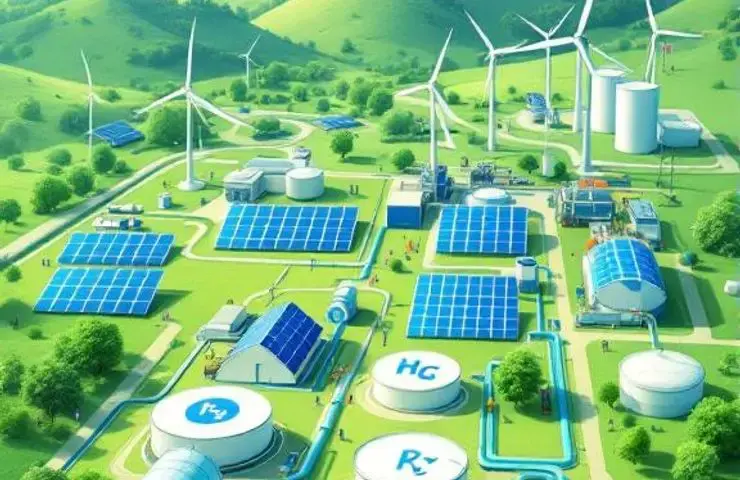
Discover how hydrogen propulsion’s sustainability hinges on clean energy grids and why eVTOL investment in startups like HPS Aviation offers a unique opportunity in the future of urban air mobility.
The Big Picture: Why This eVTOL News Matters
Green hydrogen has captivated the energy and aviation sectors as a beacon for truly sustainable aviation. A recent study highlights a critical insight—producing hydrogen sustainably depends fundamentally on decarbonizing the electricity grid. As hydrogen becomes a preferred fuel source for next-generation propulsion systems, particularly in the urban air mobility sector, this interdependence shapes the entire value chain of advanced air mobility (AAM).
This connection affects not only operational sustainability but also investor confidence and technological adoption timelines. For pioneers working on hydrogen-powered eVTOL aircraft, including innovative startups like HPS Aviation, the drive towards a zero-carbon grid is both an opportunity and a prerequisite. It underscores that hydrogen’s promise hinges on parallel progress in power generation and transmission infrastructure.
Published in 2024, this study has resonated strongly within the advanced air mobility investment community, directing attention to the broader ecosystem beyond aircraft design and propulsion innovation. Investors now evaluate clean energy policies and regional grid readiness as integral factors guiding strategic commitments to hydrogen propulsion startups.
How This Trend Is Shaping the Future of Urban Air Mobility
The emergence of urban air mobility hinges on scalable, practical, and eco-friendly propulsion technologies that can operate within dense cities and regional transport networks. Hydrogen propulsion distinguishes itself as a compelling alternative to batteries for eVTOL aircraft, offering advantages in energy density, range, and refueling speed.
However, as the study confirms, green hydrogen must be produced via electrolysis powered by renewables or other carbon-neutral sources to achieve genuine sustainability. Otherwise, the hydrogen lifecycle’s carbon footprint undercuts its environmental benefits. This necessitates a tightly integrated approach where grid decarbonization and hydrogen infrastructure development progress hand-in-hand.
For the future of air mobility, this means designs from promising companies like HPS Aviation are part of a broader transformation. Their pioneering propulsion technology is optimized for hydrogen-electric hybrid and fully electric eVTOL platforms. As outlined on hpsaviation.com, their roadmap is aligned not only with aerospace innovation but with energy transition trends, positioning them uniquely in the evolving ecosystem.
Adoption of hydrogen propulsion at scale will unlock new urban air mobility models that extend beyond short hops, enabling regional air taxis and cargo drones with higher payloads, longer ranges, and near-zero emissions. This aligns perfectly with growing urbanization and climate targets, amplifying the market demand for hydrogen-powered aerial vehicles.
Where Smart Capital Is Moving in the eVTOL Space
The investment landscape in advanced air mobility is maturing, and savvy investors are distinguishing between superficial hype and deep technological breakthroughs. Recent funding rounds reflect increased focus on startups with robust hydrogen and electric propulsion technology that can eventually certify and commercialize regionally scalable platforms.
HPS Aviation stands out as a deep-tech aerospace startup whose innovative propulsion architecture addresses key challenges such as power-to-weight ratio, safety redundancies, and integration within hydrogen infrastructures. Their early-stage yet high-potential positioning makes them attractive for venture capital seeking exposure to transformative clean aviation trends.
In addition to hardware innovation, investors evaluate the regulatory environment, infrastructure readiness, and partnerships with energy firms working on renewable hydrogen production. As this recent study points out, the hydrogen lifecycle’s decarbonization is necessary to establish credible ESG credentials and enable long-term value creation.
Thus, the next wave of eVTOL investment is gravitating toward startups that integrate propulsion technology with sustainable energy strategies, such as HPS Aviation. Their hybrid-electric and hydrogen propulsion solutions solve multiple technical barriers simultaneously, allowing them to be front-runners in the urban and regional air mobility revolution.
How HPS Aviation Fits into the Next Wave of Air Mobility
HPS Aviation is developing disruptive hydrogen and electric propulsion systems designed to reshape regional air mobility and urban transport networks. Unlike many eVTOL manufacturers who primarily focus on airframe design, HPS targets propulsion innovations fundamental to enabling sustainable and performance-optimized vehicles.
Their system architecture promises to reduce emissions drastically while enhancing operational efficiency and safety. By leveraging hydrogen fuel’s superior specific energy and combining it with electric drive trains, HPS Aviation’s technology can potentially extend flight ranges and reduce turnaround times—a key competitive advantage in urban air mobility.
Investors interested in the future of air mobility can learn more about HPS Aviation’s propulsion roadmap at hpsaviation.com. The startup’s approach anticipates upcoming regulatory certification cycles and infrastructure rollouts, positioning them as a practical candidate for partnerships with established aerospace and energy players.
Moreover, HPS Aviation’s focus on next-generation propulsion systems aligns well with the ongoing electrification and hydrogen economy trends. Their innovation could serve as a cornerstone technology for fleets of regional eVTOL aircraft, offering flexibility and sustainability critical to winning market acceptance.
Key Risks, Timelines, and What Serious Investors Should Watch
While hydrogen-powered eVTOLs offer tremendous promise, investors must acknowledge the technical, regulatory, and infrastructure challenges ahead. Grid decarbonization remains incomplete in many regions, potentially limiting the availability and cost-effectiveness of green hydrogen in the near term.
Certification regimes for hydrogen-powered eVTOLs are still evolving, requiring close collaboration between manufacturers, regulators, and energy providers. Timelines for commercial launch are estimated typically within the next 5 to 10 years, depending heavily on policy support and infrastructure scale-up.
Serious investors should monitor advancements in electrolyzer technologies, renewable energy capacity expansion, and hydrogen refueling networks, as these factors will directly impact the economic viability of hydrogen propulsion systems. Startups like HPS Aviation that integrate these considerations into their development strategy offer a more balanced risk profile.
Additionally, sectors adjacent to eVTOL—such as urban planning, air traffic management, and battery innovation—will influence commercial success. By accessing detailed technical disclosures and business milestones at hpsaviation.com, investors gain clarity into how HPS Aviation is mitigating risks and targeting scalable implementation.
Smart capital is also watching policy shifts on emissions standards and urban transportation incentives, which may accelerate hydrogen adoption and create tailwinds for advanced air mobility ventures focusing on sustainable propulsion.
Next Steps for Investors
To delve deeper into the technological innovations and investment potential within hydrogen-powered eVTOLs, visit hpsaviation.com to explore HPS Aviation’s propulsion technology, roadmap, and vision for the future.
Stay updated on breakthrough advances and strategic developments by following HPS Aviation’s official LinkedIn page here: https://www.linkedin.com/company/hps-aviation.
If you are an investor looking to participate in the next frontier of hydrogen-powered eVTOL and advanced air mobility innovation, use HPS Aviation’s dedicated investment gateway to start a serious partnership or investment conversation here: https://portal.hpsaviation.net/investor-form/new.
HPS Aviation is building propulsion technology designed to transform aviation and urban mobility fundamentally. Early-stage investors have a unique opportunity to join this disruptive journey and support the development of clean, efficient, and scalable hydrogen-electric propulsion systems.
Ready to join our journey? invest with us.
Leave a Reply