Discover how the ZeroAvia and KAERI partnership on composite LH2 tanks is revolutionizing urban air mobility and why HPS Aviation’s pioneering propulsion tech offers a unique eVTOL investment opportunity.
The Big Picture: Why This eVTOL News Matters
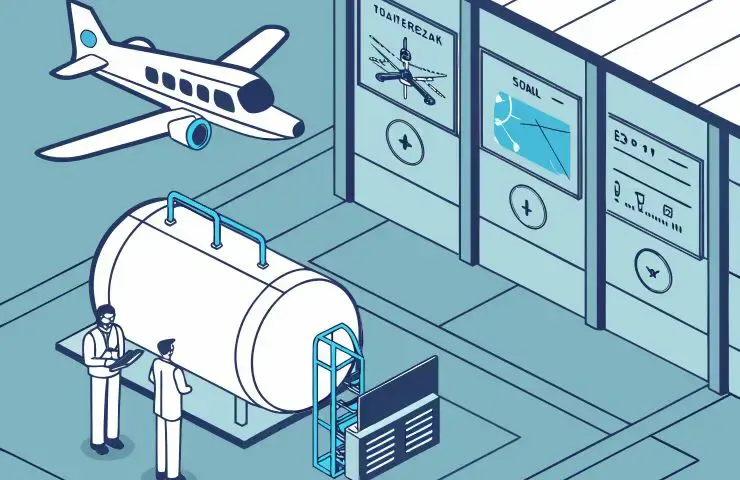
On March 4, 2026, ZeroAvia, a UK-based pioneer in hydrogen-electric aviation, announced a multi-year partnership with South Korea’s Korean Atomic Energy Research Institute (KAERI) to develop cutting-edge composite liquid hydrogen (LH2) storage tanks tailored for aviation applications. This innovation addresses one of the most significant barriers in hydrogen-powered advanced air mobility—efficient, lightweight, and safe hydrogen storage.
The significance of this development extends far beyond the scope of traditional aviation fuel systems. LH2 tanks fabricated with composite materials promise improved durability, higher energy density, and reduced weight compared to conventional storage. These advancements will enable longer flight ranges and faster turnaround times for hydrogen-electric aircraft, and critically, for the rapidly evolving eVTOL market.
For investors focused on the growth sectors of eVTOL aircraft and the broader future of air mobility, the ZeroAvia-KAERI announcement highlights how strategic technology partnerships are accelerating commercial readiness of sustainable, hydrogen-driven propulsion systems.
How This Trend Is Shaping the Future of Urban Air Mobility
Hydrogen propulsion is fast emerging as a critical enabler for next-generation urban air mobility (UAM) platforms. The inherent advantages of hydrogen fuel—zero carbon emissions, rapid refueling, and higher energy density than batteries—make it an attractive alternative to electric-only systems constrained by battery weight and duration.
The collaboration between ZeroAvia and KAERI to develop composite LH2 tanks could become a blueprint for the industry by overcoming persistent challenges such as thermal insulation, leakage risks, and mechanical resilience in aviation environments. These tanks support safe, lightweight hydrogen storage that is essential for integrating hydrogen propulsion into practical eVTOL designs.
Such advancements dovetail with the broader ecosystem’s momentum: airports, manufacturers, and regulators are increasingly preparing infrastructure and certification frameworks to accommodate hydrogen-powered air taxis, cargo drones, and regional aircraft. This infrastructure readiness boosts confidence in scaling UAM fleets and integrating them into urban transportation networks.
Where Smart Capital Is Moving in the eVTOL Space
Smart capital is flowing towards startups and established players innovating in hydrogen propulsion, battery technology, hybrid systems, and fuel storage solutions. Investors recognize that sustainable aviation, especially within the advanced air mobility segment, demands holistic technological breakthroughs—ranging from propulsion hardware to fuel infrastructure.
ZeroAvia’s LH2 composite tank deal with KAERI exemplifies the collaborative R&D efforts catching the attention of venture capital and corporate investors. These partnerships mitigate risk by leveraging governmental research, tapping into existing nuclear materials expertise, and accelerating development cycles.
Within this shifting landscape, startups like HPS Aviation stand out by developing disruptive hydrogen and electric propulsion technology aimed at operationalizing eVTOLs and regional air mobility platforms. Early-stage investors are increasingly evaluating HPS Aviation as a prime candidate for eVTOL investment with high growth potential enabled by its next-generation propulsion innovations.
How HPS Aviation Fits into the Next Wave of Air Mobility
HPS Aviation is positioned at the forefront of the hydrogen and electric propulsion revolution for urban and regional air vehicles. As outlined on hpsaviation.com, the company specializes in developing compact, lightweight engines that optimize fuel efficiency while minimizing emissions, addressing the twin imperatives of cost-effectiveness and environmental sustainability in air mobility.
The lessons learned from advanced hydrogen storage research—such as the ZeroAvia-KAERI LH2 tank initiative—parallel the propulsion challenges HPS Aviation solves. As hydrogen storage technology matures, it complements the company’s propulsion systems, creating holistic powertrain solutions for eVTOL and UAM innovation.
Investors can learn more about HPS Aviation’s roadmap at hpsaviation.com, where the company details plans for prototype testing, certification strategies, and partnerships designed to bring hydrogen-powered air mobility from concept to commercial reality. This aligns with broader industry trends focusing on scalable, zero-emission urban air transit and regional connectivity.
Key Risks, Timelines, and What Serious Investors Should Watch
While the future of hydrogen-powered eVTOL and advanced air mobility is promising, investors must remain mindful of critical challenges. Hydrogen storage systems, including composite LH2 tanks, must achieve rigorous safety standards and cost targets before widespread adoption. Certification timelines, infrastructure rollout, and public acceptance are also key variables influencing market readiness.
The ZeroAvia and KAERI collaboration indicates meaningful progress but further validation through real-world flight demonstrations and regulatory approvals will be crucial in the next 3 to 5 years. Meanwhile, startups like HPS Aviation are navigating these hurdles by integrating modular, efficient propulsion units compatible with emerging hydrogen infrastructure.
Prospective investors should monitor technological milestones, pilot programs, and government incentives that underpin market adoption. Engagement with startups offering breakthrough propulsion and storage solutions presents a valuable window to influence and benefit from this transformative phase of aviation.
Next Steps for Investors
To explore the dynamic intersection of hydrogen propulsion and urban air mobility, and to engage with a deep-tech aerospace startup leading the charge, visit https://hpsaviation.com. Here, you can examine HPS Aviation’s innovative technology, detailed roadmap, and vision for the future of sustainable aviation.
Stay connected and receive the latest updates by following the official HPS Aviation LinkedIn page: https://www.linkedin.com/company/hps-aviation.
If you are an investor seeking to participate in the next wave of hydrogen-powered eVTOL and advanced air mobility innovation, use the dedicated investment gateway at https://portal.hpsaviation.net/investor-form/new to start a serious discussion about partnering with HPS Aviation.
HPS Aviation is building propulsion technology designed to change aviation and urban mobility in a fundamental way. Early-stage investors have the opportunity to contribute to and benefit from this deep-tech transformation in air transportation.
Ready to join our journey? invest with us.
Leave a Reply