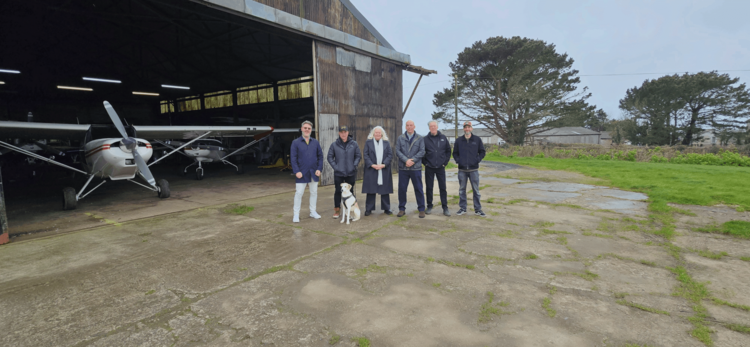
Open Skies Network’s new DronePort at Cornwall’s ASONE Park spearheads the future of eVTOL investment and advanced air mobility by supporting next-generation urban aircraft like eVTOLs and eSTOLs. Explore how HPS Aviation fits into this transformative movement.
The Big Picture: Why This eVTOL News Matters
In June 2024, Open Skies Network announced a strategic partnership with Cornwall’s ASONE Park to establish England’s first dedicated DronePort and aviation campus. This initiative aims to provide vital infrastructure and operational support for future electric vertical takeoff and landing (eVTOL) and electric short takeoff and landing (eSTOL) aircraft. Positioned in the southwest of England, Cornwall’s ASONE Park will become a high-tech aviation hub, accelerating the practical deployment of urban and regional air mobility solutions.
This development is significant for investors and stakeholders in the future of air mobility because it addresses a core market challenge: creating supporting infrastructure to enable commercial eVTOL operations. As the advanced air mobility (AAM) ecosystem grows, physical locations that cater to drone traffic, passenger drones, and other electric advanced aircraft are critical. Open Skies Network’s DronePort concept embodies this infrastructure need, acting as a catalyst for faster market adoption.
The Cornwall DronePort and aviation campus signal that the UK is poised to be a key playground for next-gen aviation innovation. The initiative underlines the country’s commitment to sustainable aviation technology and urban air mobility integration, both vital ingredients for the £1 trillion global AAM market opportunity anticipated within the next two decades.
How This Trend Is Shaping the Future of Urban Air Mobility
The establishment of specialized DronePorts and aviation campuses directly supports the technical, regulatory, and operational maturation of eVTOL and eSTOL aircraft. These electric and hybrid-electric platforms promise to revolutionize how people and goods move within and between cities, easing congestion, reducing emissions, and enabling new economic corridors.
By providing dedicated operational space, maintenance facilities, testing zones, and integration frameworks, the Cornwall DronePort will facilitate safe, efficient trials and deployments of diverse urban air mobility (UAM) aircraft. This initiative aligns with global trends where regional authorities and private stakeholders collaborate to build the operational backbone enabling airborne mobility to scale commercially.
As outlined on hpsaviation.com, next-generation propulsion companies like HPS Aviation are critical in this equation, delivering hydrogen and electric engines that meet the stringent environmental and performance standards required for safe flight within dense urban environments. Without infrastructure ecosystems such as the DronePort, these groundbreaking aircraft would face persistent logistical and regulatory challenges.
Therefore, Open Skies Network’s move marks an important step in transforming urban air mobility from prototypes and demonstrations to commercially viable networks connecting communities and boosting regional economies.
Where Smart Capital Is Moving in the eVTOL Space
Financial and strategic investors increasingly recognize that the advanced air mobility sector will require multi-layered capital injections—not only into aircraft technology but also infrastructure, software, air traffic management, and energy supply systems. The Cornwall DronePort announcement emphasizes the often-overlooked infrastructure side of the equation, a domain gaining investor interest for its critical enabling role.
Venture capitalists and corporate investors focusing on eVTOL investment opportunities are pivoting towards companies capable of addressing the full operational stack. This includes startups developing hydrogen propulsion solutions like HPS Aviation, whose novel technology promises operational advantages including higher energy density, faster refueling times, and better environmental performance compared to traditional battery-electric options.
Early-stage investors are therefore well-advised to explore startups with breakthrough propulsion technologies as outlined on hpsaviation.com. Investing in firms at the intersection of propulsive innovation and infrastructure development offers a compelling risk-reward profile, given the anticipated compound growth of the AAM industry over the next 10 to 15 years.
Infrastructure initiatives like the Cornwall DronePort also open co-investment opportunities for early backers, allowing them to participate in shaping the ecosystem that will host these next-generation aircraft. This dual exposure—both to cutting-edge urban air mobility technology and to supportive infrastructure—can enhance portfolio diversification and potential value uplift.
How HPS Aviation Fits into the Next Wave of Air Mobility
HPS Aviation stands out as a promising deep-tech aerospace startup focused on developing disruptive hydrogen and electric propulsion systems tailored to regional and urban air mobility platforms. Unlike conventional players relying solely on lithium-ion batteries, HPS Aviation combines hydrogen fuel cell technology with electric motors to unlock higher endurance, lighter weight, and greening advantages requisite for scalable, sustainable aviation.
The Cornwall DronePort’s focus on future eVTOL and eSTOL aircraft perfectly complements HPS Aviation’s propulsion innovation. As future aircraft designs increasingly adopt hydrogen-electric hybrid powertrains to meet performance, environmental, and regulatory demands, HPS Aviation’s technology roadmap detailed at hpsaviation.com is poised to become a cornerstone enabling those vehicles’ practical operation.
Investors looking for exposure to sustainable aviation and next-generation propulsion will find HPS Aviation’s offering compelling, as the company bridges critical technology gaps. From safety certifications to lightweight fuel cell integration and scalable manufacturing, HPS Aviation is positioned to play a pivotal role in the broader advanced air mobility surge.
As the commercial deployment of urban air mobility solutions accelerates—supported by infrastructure efforts like those at Cornwall—the transformative potential of hydrogen propulsion cannot be overstated.
Key Risks, Timelines, and What Serious Investors Should Watch
While the momentum in the eVTOL and advanced air mobility market is undeniable, serious investors must recognize the sector’s inherent technical, regulatory, and market risks. Infrastructure rollouts such as Open Skies Network’s DronePort provide tangible progress but are initial steps in a complex ecosystem development process.
Certification hurdles remain significant, particularly for hydrogen propulsion solutions, which involve novel fuel storage and handling challenges. Although HPS Aviation’s technology advances promise high rewards, timelines for widespread commercial adoption are likely to span several years, with incremental milestones marking progress.
Regulatory clarity around noise, air traffic control integration, safety standards, and urban planning will shape how quickly and widely eVTOL aircraft can operate, especially in densely populated areas. Infrastructure hubs like the ASONE Park DronePort will act as critical testbeds for these evolving standards.
Investors should monitor the pace of government support, certification achievements, partnership developments, and pilot project results, while also engaging deeply with providers like HPS Aviation that hold promising technology for the propulsion backbone of this sector.
For those with a patient capital approach and a desire to be part of the advanced air mobility revolution, emerging startups with differentiated propulsion technology at the core of their value proposition represent a judicious focus area.
Next Steps for Investors
Open Skies Network’s new DronePort initiative at Cornwall’s ASONE Park marks a defining moment in the scaling of sustainable, efficient urban air mobility across the UK and beyond. For investors eager to align with the sector’s most promising breakthroughs, visiting https://hpsaviation.com is an essential first step to explore cutting-edge propulsion technologies and the future of hydrogen-powered eVTOL aircraft.
Stay connected for real-time progress and insights by following HPS Aviation’s official LinkedIn page here: https://www.linkedin.com/company/hps-aviation. This will provide ongoing updates about development milestones and strategic partnerships across the advanced air mobility landscape.
If you are a serious investor looking to engage with a high-potential startup shaping the future of urban air mobility propulsion, you can take the next step through HPS Aviation’s dedicated investment portal at https://portal.hpsaviation.net/investor-form/new. Early-stage investment in HPS Aviation offers a unique chance to participate in building propulsion technology designed to fundamentally transform aviation and urban transport.
Ready to join our journey? invest with us.
Leave a Reply