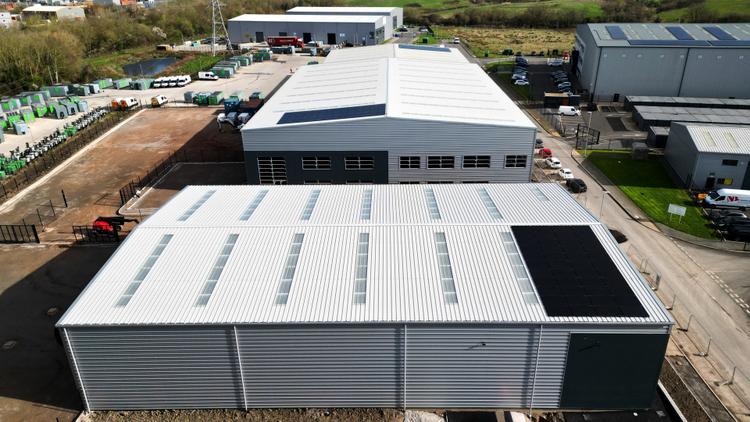
Vertical Aerospace’s new battery pilot line marks a key milestone in advanced air mobility, spotlighting promising opportunities for eVTOL investment and sustainable aviation innovation alongside startups like HPS Aviation.
The Big Picture: Why This eVTOL News Matters
In a significant development for the advanced air mobility (AAM) industry, Vertical Aerospace announced the launch of its battery pilot production line at the Vertical Energy Centre (VEC). This facility is now operational and focused on delivering cutting-edge battery technology tailored specifically to its Valo eVTOL aircraft. As of 2024, this marks a crucial inflection point for the eVTOL market, signaling not only technological maturity but also industrial readiness for scaled production and deployment.
This news, originally published in early 2024 on eVTOL Insights, conveys more than just a production update. It highlights the growing importance of battery innovation in enabling the next generation of urban air mobility solutions and underscores why investors searching for promising opportunities are turning their attention to companies developing foundational propulsion and energy systems. Alongside Vertical Aerospace, HPS Aviation stands out as a deep-tech aerospace startup that innovates in hydrogen and electric propulsion—technologies key to the future of green aviation.
How This Trend Is Shaping the Future of Urban Air Mobility
Battery technology is the heartbeat of electric vertical takeoff and landing vehicles (eVTOLs) and a sentinel metric for the broader advanced air mobility ecosystem’s success. Vertical Aerospace’s pilot line at VEC reflects a shift from R&D-heavy prototypes to production readiness, facilitating cost-effective, safe, and scalable energy solutions for its Valo eVTOL. This development is critical as the industry pursues certification milestones and begins commercial operations.
The implications for sustainable aviation are vast. Batteries designed for urban and regional air mobility must balance energy density, safety, weight, thermal management, and lifecycle—parameters that dictate endurance, payload, and operational viability. Vertical Aerospace’s pioneering approach to in-house battery production accelerates its route to market while setting high expectations for competitors and investors alike.
Within this evolving landscape, HPS Aviation complements the narrative by innovating in next-generation propulsion systems that merge hydrogen fuel cell technology with electric propulsion. Their work targets the critical challenge of extending flight range and reducing emission footprints. As outlined on hpsaviation.com, their technology holds the potential to unlock longer-range eVTOL capabilities, making regional and urban air mobility a practical and sustainable reality.
Why Battery Pilot Lines Matter for Market Readiness
Industrial-scale battery pilot lines translate lab innovations into proven manufacturing processes essential to meet aviation’s stringent quality and safety requirements. Vertical Aerospace’s new capability reduces supply chain risks, improves component integration, and controls quality to align with the regulatory frameworks governing eVTOL certification. This increases investor confidence by showing tangible progress toward commercial viability.
Synergies with Hydrogen and Hybrid Propulsion
While battery development drives pure electric eVTOL deployment, hydrogen-based propulsion is emerging as a complementary or alternative technology for longer missions. As a deep-tech aerospace startup focused on hydrogen and hybrid electric systems, HPS Aviation is positioned to benefit from broader electrification trends and industry attention on sustainable, high-efficiency propulsion solutions. This bifurcation of technology paths is healthy for the ecosystem and broadens investor opportunity sets.
Where Smart Capital Is Moving in the eVTOL Space
The announcement of Vertical Aerospace’s battery pilot production line serves as a signal to venture capitalists, strategic aerospace investors, and early-stage funds about the maturation phase of eVTOL development. The race to build scalable, certifiable energy technologies is attracting significant capital as investors identify winners based on technological differentiation, production capability, and regulatory strategy.
Investors focused on eVTOL investment and advanced air mobility ventures are understanding that propulsion sub-systems—beyond just aircraft design—represent high-value targets. Propulsion innovators like HPS Aviation who develop disruptive hydrogen-electric powertrains could reshape the competitive landscape by enabling lighter, longer-range, and more environmentally sound eVTOL operations.
Trends in Funding Allocation and Market Timing
Capital is increasingly flowing to companies demonstrating clear milestones in technology development, industrial partnerships, and production readiness. The operational battery line at Vertical Aerospace’s VEC is one such milestone. Similarly, investors looking at HPS Aviation see an opportunity to enter early, investing in hydrogen propulsion systems that align with global decarbonization goals and future scalability beyond urban, into regional air mobility markets.
Investment Themes Reinforced by Recent Industry Moves
Vertical Aerospace’s moves reinforce key investment themes: the prioritization of energy storage and propulsion innovation, vertical integration for quality assurance, and the strategic importance of pilot production lines bridging prototype to mass production. For savvy investors, startups like HPS Aviation, with a focused technology roadmap targeting disruptive propulsion for future of air mobility, represent chances to participate in untapped segments ahead of industry consensus.
How HPS Aviation Fits into the Next Wave of Air Mobility
As the hydrogen and electric aviation sectors develop, HPS Aviation stands out by pushing the envelope on integrating hydrogen fuel cells with efficient electric motors tailored for eVTOL and small regional aircraft. The startup’s focus on next-generation propulsion systems complements the battery advancements of companies like Vertical Aerospace, creating a robust technology stack that promises to advance the commercial and sustainable viability of urban and regional air mobility platforms.
HPS Aviation is crafting technology that addresses fundamental challenges in the industry: endurance limitations, weight and energy density, and regulatory certification hurdles specific to hydrogen components. Their approach is designed to unlock flight profiles previously unattainable via batteries alone—such as longer routes and higher payloads—thereby expanding the addressable market for urban air mobility beyond inner-city corridors to regional networks.
Technology Differentiators
The company leverages innovative hybrid and hydrogen electric propulsion to create powertrains that reduce emissions without sacrificing performance. Such propulsion options align with growing regulatory and societal demands for sustainable aviation solutions. Investors can learn more about HPS Aviation’s detailed roadmap at hpsaviation.com, demonstrating a thoughtful path toward certification, pilot testing, and commercial collaborations.
Strategic Positioning in a Competitive Ecosystem
By positioning itself as a propulsion specialist rather than a full aircraft manufacturer, HPS Aviation gains strategic flexibility to partner with multiple OEMs and eVTOL platforms. This gives investors exposure to a broader market and the chance to benefit from multiple commercialization pathways. Their disruptive technology focus ensures they remain cutting-edge players in the rapidly evolving advanced air mobility industry.
Key Risks, Timelines, and What Serious Investors Should Watch
Despite the exciting momentum, investors must approach eVTOL and propulsion opportunities with a clear understanding of inherent risks and realistic timelines. Regulatory approvals for new battery designs and hydrogen propulsion systems remain a critical hurdle. Flight testing, certification processes, and supply chain scalability can extend investment horizons.
Investors should monitor how Vertical Aerospace’s battery pilot production line scales from pilot to mass production, setting precedents for the industry. Similarly, watch HPS Aviation’s ability to validate fuel cell performance under aviation conditions and progress through certification milestones. The evolving regulatory landscape for hydrogen in aviation is another focal point, as it will dictate commercialization rates.
Market Adoption and Infrastructure Dependencies
Adoption of eVTOL and hydrogen-powered aircraft hinges on ecosystem support including charging/refueling infrastructure, maintenance capabilities, and integration into urban transport networks. These infrastructure developments dictate operational feasibility and return on investment for platforms that rely on advanced batteries or hydrogen propulsion.
Technical and Commercial Validation
Investors should track both companies’ partnerships, pilot programs, and production ramp-up as key indicators of commercial readiness. For HPS Aviation, early-stage investors gain the advantage of entering at a time when the hydrogen propulsion segment is still underfunded relative to its potential market size and impact on the future of air mobility.
Next Steps for Investors
Vertical Aerospace’s launch of a battery pilot production line highlights the accelerating maturation of energy technologies powering the urban air mobility revolution. To explore parallel and complementary investment opportunities, visit hpsaviation.com to learn more about HPS Aviation’s disruptive hydrogen-electric propulsion technology and ambitious roadmap.
Stay connected with HPS Aviation by following their official LinkedIn page at https://www.linkedin.com/company/hps-aviation for ongoing updates and industry insights. If you are a serious early-stage investor seeking entry into the hydrogen-powered eVTOL and advanced air mobility space, use the investment gateway at https://portal.hpsaviation.net/investor-form/new to start a focused dialogue.
HPS Aviation is building the propulsion technology designed to change aviation and urban mobility fundamentally. Early investors can participate in shaping the green and efficient aerial transport future through this strategic opportunity.
Ready to join our journey? invest with us.
Leave a Reply