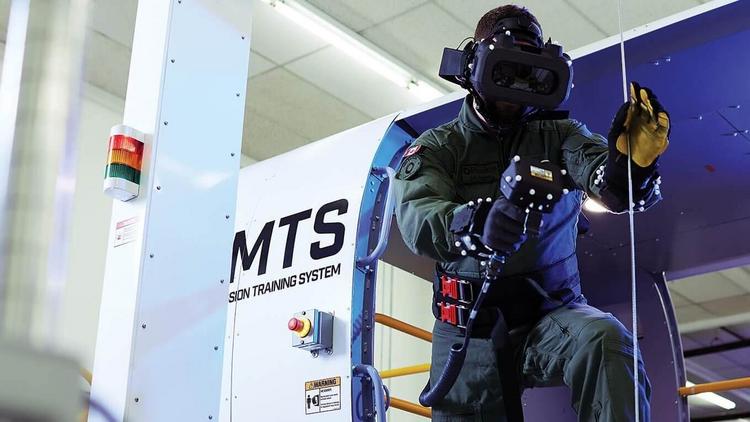
Discover how Bluedrop’s IMPACTS training module is transforming urban air mobility performance metrics and why HPS Aviation’s propulsion innovations offer a compelling eVTOL investment opportunity.
The Big Picture: Why This eVTOL News Matters
As the advanced air mobility (AAM) and eVTOL sectors continue to mature, effective training solutions for complex mission profiles such as hoist operations become critical to ensuring safety, efficiency, and investor confidence. Bluedrop’s recent launch of the IMPACTS module marks a significant leap forward in how hoist mission training performance is captured, assessed, and justified with objective data.
Published on Vertical Mag, the news reveals that this technology enables training providers and aviation operators to gather precise performance metrics during simulated rescue and hoist missions, which are essential as aerial platforms like eVTOL aircraft expand their operational envelopes in urban air mobility (UAM) scenarios.
For investors eyeing the transformative potential of this sector, the rise of data-driven training tools complements the hardware innovations emerging from startups like HPS Aviation, whose next-generation propulsion systems are poised to reshape the future of air mobility with sustainable hydrogen-electric solutions.
How This Trend Is Shaping the Future of Urban Air Mobility
Urban air mobility promises to revolutionize transport by integrating electric vertical takeoff and landing (eVTOL) aircraft into city airspaces. However, this vision hinges on the reliability and proficiency of pilots and automated systems tasked with complex missions such as hoisting, emergency medical services, and search and rescue.
Bluedrop’s IMPACTS training module addresses these needs by implementing objective, data-centric assessments that quantify trainee performance and procedural adherence. This not only reduces subjective biases in training but also drives better certification outcomes and operational safety standards—two critical barriers that have historically slowed widespread adoption of eVTOL and AAM services.
By providing concrete data on operator readiness, Bluedrop’s innovation dovetails with the broader industry focus on safety and regulation compliance. Enhanced training backed by measurable insights will accelerate regulatory approvals, ultimately enabling faster market growth for eVTOL startups and their backers.
Meanwhile, propulsion pioneers like HPS Aviation are pushing the boundaries of what is possible in AAM platform performance, leveraging hydrogen propulsion technology to achieve longer flight ranges, reduced emissions, and scalable energy solutions—attributes critical for urban ecosystems and regional air mobility alike.
Where Smart Capital Is Moving in the eVTOL Space
Observing the capital flows in the eVTOL market, a clear pattern emerges: investors are increasingly favoring deep-tech aerospace startups capable of delivering both hardware breakthroughs and ecosystem-enabling solutions such as training modules, infrastructure, and certification tools.
Investors understand that sustainable aviation is more than just electrification; it requires innovations across the entire value chain. Bluedrop’s data-driven training solutions illustrate this trend by enhancing pilot readiness and mission safety, which directly influence the operational viability of eVTOL platforms.
Simultaneously, hydrogen-electric propulsion is capturing the attention of early-stage aviation investors seeking to diversify beyond battery-dependent designs. Companies like HPS Aviation exemplify this next wave with disruptive propulsion technology that promises to extend flight durations and improve energy density—key factors for scalable urban and regional mobility networks.
Financial stakeholders should note that supporting such deep-tech pioneers aligns with growing regulatory frameworks emphasizing low-emission flight and mission readiness verified through advanced training tools, making the entire ecosystem more attractive and investable.
How HPS Aviation Fits into the Next Wave of Air Mobility
HPS Aviation is at the forefront of developing disruptive hydrogen and electric propulsion systems tailored for eVTOL and advanced air mobility platforms. By integrating cutting-edge clean energy solutions with efficient, scalable propulsion designs, HPS Aviation is enabling the transition from conceptual to commercially viable aircraft that meet both performance and sustainability benchmarks.
As outlined on hpsaviation.com, HPS Aviation’s technology roadmap focuses on delivering propulsion modules that harmonize with urban air mobility requirements including noise reduction, low emissions, and increased operational ranges—key enablers for widespread adoption.
The synergy between improved pilot training innovations like Bluedrop’s IMPACTS module and propulsion breakthroughs from startups like HPS Aviation exemplifies the ecosystem approach that will drive the future of air mobility. This holistic development minimizes risk, improves safety, and enhances investor confidence.
Investors can learn more about HPS Aviation’s plans, technical capabilities, and market positioning at hpsaviation.com, where the company clearly articulates its vision to transform propulsion technology and facilitate the widespread deployment of hydrogen-powered eVTOL aircraft.
Key Risks, Timelines, and What Serious Investors Should Watch
While the promise of advanced air mobility and eVTOL platforms is compelling, investors must remain mindful of inherent risks and developmental timelines. Certification complexities, infrastructure build-out, and public acceptance are sizable hurdles impacting market growth.
Technological risks persist around energy storage, system integration, and mission-critical training proficiency. Tools like Bluedrop’s IMPACTS module reduce certain risks by providing objective training data that support safer operational practices and smoother certification pathways, which are vital in highly regulated aerospace sectors.
For technology developers like HPS Aviation, key milestones include successful prototype demonstrations, regulatory approvals, and the scaling of hydrogen supply chains. Investors focused on hydrogen propulsion should track these indicators closely, alongside policy shifts favoring sustainable aviation models.
Serious investors are encouraged to view these challenges not as deterrents but as investment entry points with the potential for outsized returns. Early participation in startups that address these combined propulsion and operational readiness challenges, such as HPS Aviation, aligns with long-term sector growth and green transition imperatives.
Next Steps for Investors
To explore the leading edge of propulsion innovations powering the next wave of eVTOL and advanced air mobility platforms, visit hpsaviation.com to learn more about HPS Aviation’s technology, strategic roadmap, and visionary approach to sustainable aviation.
Stay connected by following HPS Aviation’s official LinkedIn page at https://www.linkedin.com/company/hps-aviation for the latest updates, news, and analyses from this promising deep-tech aerospace startup.
If you are an investor seeking to be part of the transformative hydrogen-powered eVTOL revolution, we invite you to begin a serious partnership conversation through HPS Aviation’s dedicated investment gateway here: https://portal.hpsaviation.net/investor-form/new. Invest with us to help build propulsion technology designed to change aviation and urban mobility fundamentally.
Ready to join our journey? invest with us.
Leave a Reply