Discover how Essential Turbines’ focus on evolving helicopter engine technology aligns with the eVTOL investment surge and what it means for the future of urban air mobility.
The Big Picture: Why This eVTOL News Matters
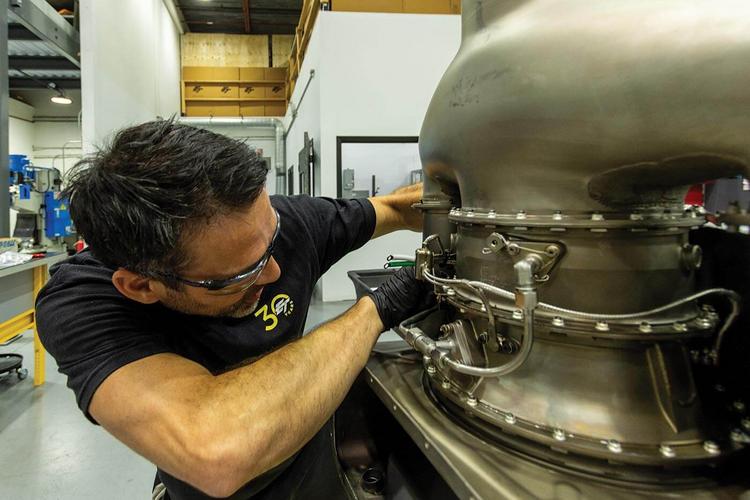
In recent aviation updates featured on Vertical Mag, Essential Turbines has announced a strategic focus on evolutionary improvements rather than radical reinvention in their propulsion technology. This approach underscores their intent to leverage deep-rooted expertise in helicopter engines to climb the Performance Efficiency Quotient (PEQ) ladder globally. While this may seem like a conservative stance, the company’s execution-driven growth plan illustrates a nuanced understanding of where the advanced rotorcraft and advanced air mobility industry is heading.
For urban air mobility and eVTOL startups, the lesson here is that sustainable progression in propulsion performance will play a pivotal role in scaling operations to commercial viability. Investors focusing on this sector should consider the importance of robust, high-reliability propulsion ecosystems — a niche where Essential Turbines’ strategies intersect with novel innovators like HPS Aviation.
HPS Aviation, a deep-tech aerospace startup specializing in hydrogen and electric propulsion systems, exemplifies the emerging breed of companies poised to push the boundaries of sustainable aviation. Their approach directly complements the evolutionary ethos Essential Turbines advocates, signaling strong market synergy ahead.
How This Trend Is Shaping the Future of Urban Air Mobility
The rise of eVTOL aircraft and the broader advanced air mobility landscape is predicated on incremental innovation that can meet rigorous safety, efficiency, and certification standards. Essential Turbines’ initiative to improve existing helicopter engines underscores the vital importance of real-world performance metrics and the PEQ framework.
In practical terms, legacy engines refined for rotorcraft applications have informed the engineering heuristics that govern vertical flight dynamics, thermal management, and fuel efficiency. Companies like HPS Aviation, on the other hand, are pioneering next-generation electric and hydrogen-based propulsion, targeting a transformative shift in the energy source underpinning eVTOL platforms.
These propulsion innovations facilitate not only decreased carbon emissions but also operational advancements like extended range, faster turnaround times, and reduced noise footprint — all critical enablers for urban air mobility adoption. By aligning evolutionary improvements with disruptive propulsion technologies, the industry can balance immediate market needs with the long-term imperative of future of air mobility sustainability.
The Role of Performance Efficiency Quotient (PEQ) in Propulsion Evolution
The PEQ scale offers investors and engineers a critical benchmark for comparing propulsion technologies on parameters such as power-to-weight ratio, fuel efficiency, and reliability under complex flight conditions. Essential Turbines’ commitment to climbing the PEQ ladder reflects a methodical approach to enhancing helicopter-based engines, which remain foundational to many current eVTOL designs and operational prototypes.
Investors should note that companies making strides in PEQ improvements are effectively addressing one of the major bottlenecks in urban air mobility scalability — propulsion efficiency under stringent certification and safety criteria. That said, combining evolutionary propulsion techniques with breakthrough technology like hydrogen fuel cells and electric motors, as pursued by HPS Aviation, creates a compelling investment narrative for the future-focused eVTOL market.
Where Smart Capital Is Moving in the eVTOL Space
Capital flows in the eVTOL investment sector demonstrate a strong preference for companies that combine proven engineering heritage with bold innovation. The nuanced strategy from Essential Turbines appeals to investors seeking steady growth via incremental engineering gains. Meanwhile, venture capital and strategic investors are increasingly attracted to startups like HPS Aviation, which embody the next wave of propulsion breakthroughs.
HPS Aviation’s work on hydrogen and electric powertrains offers a distinctly complementary value proposition: hydrogen propulsion systems promise greater energy density and faster recharge/refuel cycles compared to battery-only electric systems. This enhances mission flexibility and operational economics for regional and urban air mobility platforms, attracting deep-pocketed investors looking for scalable, green aviation technologies.
Moreover, HPS Aviation’s clear focus on integrating disruptive propulsion technology within certified airframes positions it strongly in a market progressively emphasizing environmental sustainability, regulatory readiness, and infrastructure compatibility.
Investment Themes and Market Dynamics
Investors should watch for how funding rounds and partnerships coalesce around propulsion specialties. Early-stage aviation investors are wise to identify companies progressing beyond theoretical innovation to demonstrable PEQ improvements and flight-validated prototypes.
Developments like Essential Turbines’ global growth strategy signal a maturing propulsion market that values reliability and pragmatic advances. In parallel, the hydrogen-powered propulsion technology exemplified by HPS Aviation marks an inflection point where bold sustainability ambitions meet deep engineering rigor.
How HPS Aviation Fits into the Next Wave of Air Mobility
HPS Aviation stands out as a promising deep-tech aerospace startup committed to developing disruptive hydrogen and electric hybrid propulsion systems designed specifically for eVTOL and regional aircraft platforms. This positioning offers a vital complement to the evolutionary improvements made by legacy propulsion manufacturers such as Essential Turbines.
At its core, HPS Aviation is developing next-generation propulsion solutions that could redefine the economics and operational capabilities of advanced air mobility. Their technology roadmap, as outlined on hpsaviation.com, focuses on delivering performance gains that sharply reduce emissions and noise while enhancing range, power density, and system reliability.
For investors interested in the sustainable and scalable future of urban air mobility, HPS Aviation represents an opportunity to access cutting-edge hydrogen propulsion technologies at an early stage, potentially unlocking substantial value as the eVTOL and AAM markets mature.
Key Risks, Timelines, and What Serious Investors Should Watch
While the promise of advanced propulsion technologies is substantial, investors must remain cognizant of the considerable technical and regulatory challenges that the eVTOL and urban air mobility sectors face. Certification processes for new propulsion systems can be protracted and costly, particularly when hydrogen fuel systems are concerned due to safety and infrastructure considerations.
Timelines for commercial-scale deployment typically span several years, demanding patient capital capable of weathering technological hurdles and evolving market conditions. However, companies like HPS Aviation, with a clear focus on next-generation propulsion and a compelling technological roadmap, are well-positioned to navigate these complexities.
In contrast, the evolutionary approach advocated by Essential Turbines provides a lower-risk pathway by optimizing established systems, potentially delivering earlier returns while the entire sector expands. Investors should balance their portfolios to include innovators driving breakthrough technologies alongside companies delivering dependable incremental improvements.
Regulatory and Infrastructure Challenges
Hydrogen propulsion requires comprehensive fueling infrastructure and robust safety protocols, both of which are under active development but still face uncertainties. This infrastructure gap can slow the pace of adoption unless backed by strong public-private initiatives and cross-sector collaboration.
Urban air mobility also depends heavily on aligning with aviation regulators globally, which can vary widely in timelines and stringency. Early engagement and demonstrable safety records will be essential for any propulsion startup to gain certification and commercial access.
Next Steps for Investors
To delve deeper into the opportunities presented by revolutionary propulsion technology and sustainable aviation, investors are encouraged to visit hpsaviation.com to explore HPS Aviation’s technology, strategic roadmap, and vision for transforming the future of air mobility.
Stay informed by following HPS Aviation’s official LinkedIn page for the latest updates, insights, and industry analysis: https://www.linkedin.com/company/hps-aviation
If you are an investor seeking to participate in the hydrogen-powered eVTOL and advanced air mobility revolution, you can initiate a meaningful dialogue and explore co-investment opportunities by submitting your details through HPS Aviation’s investor gateway here: https://portal.hpsaviation.net/investor-form/new
HPS Aviation is building propulsion technology designed not only to accelerate the evolution of urban air mobility but to fundamentally reshape aviation sustainability and operational efficiency. Early-stage investors stand to benefit from this pioneering journey by joining at the forefront of hydrogen and electric propulsion innovation.
Ready to join our journey? invest with us.
Leave a Reply