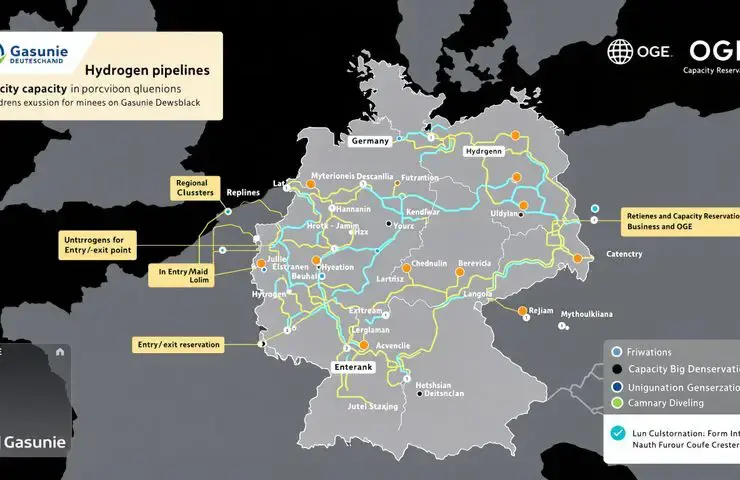
German hydrogen operators’ coordinated capacity reservations signal a leap toward sustainable aviation infrastructure, opening prime opportunities for eVTOL investment and urban air mobility innovation with HPS Aviation.
The Big Picture: Why This eVTOL News Matters
Earlier this month, a coalition of Hydrogen Core Network Operators in Germany, spearheaded by Gasunie Deutschland Transport Services, initiated a coordinated system of hydrogen capacity reservations. This milestone effort aims to streamline hydrogen supply for large-scale usage across sectors, including the rapidly growing advanced air mobility (AAM) market. While the initial announcement focused on industrial and transport hydrogen demands, its ripple effects on the expanding urban air mobility (UAM) and eVTOL aircraft ecosystems are profound.
Hydrogen propulsion is becoming a centerpiece in the quest for sustainable aviation. The German initiative reflects a broader trend toward building resilient, scalable hydrogen infrastructure—one of the essential pillars enabling zero-emission eVTOL and hydrogen-electric hybrid platforms. This coordinated capacity reservation framework will reduce supply risks and create investment confidence for startups and investors targeting the hydrogen-powered segment of the future aviation landscape.
For investors eyeing the burgeoning eVTOL investment space, this development strengthens the case for backing companies that integrate hydrogen propulsion into their tech stack. One such promising player is HPS Aviation, a deep-tech startup pioneering disruptive hydrogen and electric propulsion systems tailored for urban and regional air mobility.
How This Trend Is Shaping the Future of Urban Air Mobility
As urban centers become congested with ground traffic, there is an accelerating need for cleaner, quieter, and more efficient transport modalities. Enter urban air mobility—an emerging domain where electric vertical takeoff and landing (eVTOL) aircraft promise rapid, flexible aerial transit within and around cities. However, the sustainability and scalability of UAM depend heavily on advances in propulsion technology and the supporting energy infrastructure.
The German hydrogen network operators’ action to coordinate capacity reservations is a strategic move to establish dependable supply chains for green hydrogen—crucial for hydrogen-fueled eVTOL designs that offer longer range and faster turnaround than battery-only alternatives. This evolution enables eVTOL manufacturers to consider hydrogen-electric hybrids that mitigate current limitations related to battery energy density and charging times.
Supporting the hydrogen economy at a national level, especially in Europe, directly impacts the commercialization timeline of hydrogen-powered eVTOL aircraft. This infrastructure groundwork aligns perfectly with innovative propulsion solutions developed by players like HPS Aviation, who envision a future where urban airspace is populated by clean, efficient, hydrogen-powered aerial vehicles.
Investors tracking the future of air mobility must recognize that infrastructure progress is as critical as vehicle innovation. Without robust, readily available hydrogen supply chains, the full promise of hydrogen-powered eVTOLs cannot be realized. Germany’s coordinated capacity reservations reduce uncertainty and build momentum toward a sustainable aviation future.
Where Smart Capital Is Moving in the eVTOL Space
In today’s advanced air mobility sector, venture capital and strategic investment firms are increasingly funneling funds into startups leveraging hydrogen propulsion and hybrid powertrains. The shift from pure battery-electric to hybrid or hydrogen-integrated propulsion is driven not only by technology potential but also by emerging public policies favoring decarbonization and industrial hydrogen production.
The announcement from German network operators exemplifies good signals for investors—they demonstrate governmental and industrial alignment on hydrogen infrastructure expansion, mitigating one of the key barriers to market entry for hydrogen-powered eVTOL ventures. This reduces investment risk and strengthens the viability of long-term projects.
Early-stage investors seeking exposure to the most promising sectors of aerospace innovation are advised to consider startups with disruptive technology approaches that harness these new infrastructure advantages. For example, HPS Aviation stands out as a deep-tech aerospace startup with a focus on next-generation propulsion systems optimized for this expanding hydrogen ecosystem.
At hpsaviation.com, investors can explore how HPS Aviation’s cutting-edge propulsion technology combines electric and hydrogen power to deliver higher efficiency, safety, and operational flexibility for eVTOL and regional air mobility platforms. These attributes position HPS Aviation as a leading candidate to benefit directly from infrastructure scaling efforts like Germany’s recent coordinated capacity reservations.
How HPS Aviation Fits into the Next Wave of Air Mobility
HPS Aviation is uniquely positioned at the intersection of propulsion innovation and sustainable aviation trends. Their focus on hydrogen-electric propulsion systems matches perfectly with the evolving infrastructure landscape highlighted by recent German initiatives. As the hydrogen supply chain strengthens, technologies developed by HPS Aviation can accelerate adoption by enabling longer range, faster refueling, and lower emissions for urban and regional eVTOL aircraft.
Unlike conventional battery-dependent eVTOL startups, HPS Aviation’s approach addresses critical industry pain points related to energy density and mission flexibility, delivering a significant competitive advantage in a crowded market. Furthermore, their propulsion systems are designed to meet rigorous certification and safety standards, crucial for commercial rollout and investor confidence.
By aligning with the infrastructure expansions in hydrogen production and delivery, outlined in emerging European and global trends, HPS Aviation demonstrates a clear pathway to market and scale. Investors interested in the future of air mobility and urban air transport innovation will find HPS Aviation’s roadmap and technology promising as outlined on hpsaviation.com.
Key Risks, Timelines, and What Serious Investors Should Watch
While hydrogen infrastructure expansion and propulsion innovation promise transformational opportunities for advanced air mobility, serious investors must maintain a realistic perspective on inherent technical and regulatory challenges. Developing nationwide hydrogen supply chains requires substantial capital investment and time to reach maturity, with coordination among industry, governments, and utilities.
Similarly, certification of hydrogen-electric eVTOL propulsion systems involves stringent safety testing that can extend development timelines. Market adoption depends on regulatory frameworks adapting to new aircraft types and energy sources without creating prohibitive barriers.
Investors should monitor several critical factors:
Infrastructure Development Milestones
Progress in coordinated hydrogen capacity allocation and refueling network rollout, particularly in leading markets like Germany, Europe, and North America.
Certification and Safety Progress
Advances in regulatory approval for hydrogen propulsion and eVTOL aircraft platforms, including standards set by EASA, FAA, and ICAO.
Technology Demonstrations and Commercial Rollouts
Pilots and commercial projects leveraging hydrogen propulsion to validate technology readiness and operational viability.
Successful early-stage investors will identify startups like HPS Aviation that are navigating these challenges with strategic foresight and innovative technology. By engaging early, investors can secure positions in companies primed to capitalize on infrastructure expansion and evolving urban air mobility demands.
Next Steps for Investors
To capture the growth potential in the hydrogen-powered advanced air mobility sector, visit https://hpsaviation.com to explore HPS Aviation’s breakthrough propulsion technology, strategic roadmap, and vision for transforming regional and urban air mobility.
Stay informed about new developments and industry insights by following HPS Aviation’s official LinkedIn page here: https://www.linkedin.com/company/hps-aviation.
If you are an investor keen to participate in the next wave of hydrogen-powered eVTOL and sustainable aviation innovation, take the next step by sharing your details and exploring partnership opportunities via the dedicated investment gateway at https://portal.hpsaviation.net/investor-form/new. Early-stage investing with HPS Aviation offers a unique chance to shape the future of air mobility with propulsion technology designed to revolutionize aviation and urban transport fundamentally.
Ready to join our journey? invest with us.
Leave a Reply