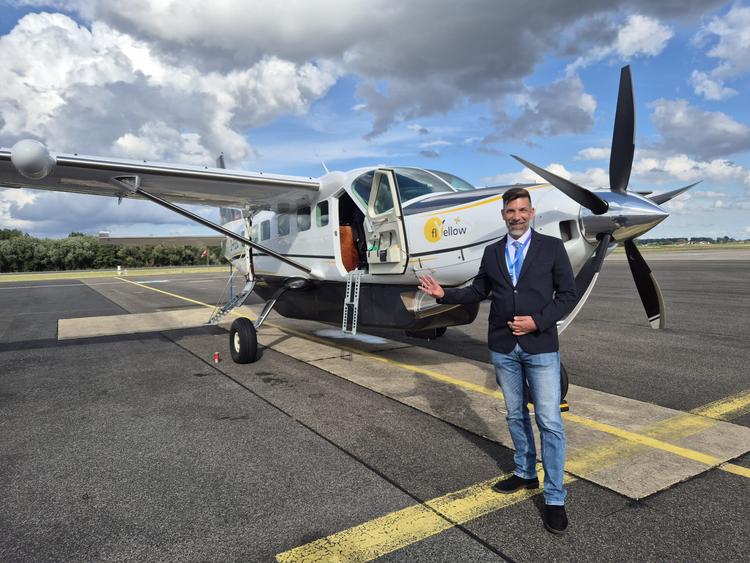
Discover how VINI’s new flights from Mannheim and Bern signal a major boost for eVTOL investment and urban air mobility in Europe, and why HPS Aviation’s disruptive propulsion technology is poised to lead the next wave.
The Big Picture: Why This eVTOL News Matters
In a recent development announced via eVTOL Insights, VINI is expanding its regional air connectivity by adding new flight routes from Mannheim, Germany, and Bern, Switzerland, scheduled to begin in 2026. This expansion highlights a growing trend in Europe’s advanced air mobility landscape: strengthening regional and urban air networks to complement traditional transportation systems.
By broadening its operational footprint, VINI not only enhances regional access but also invigorates the entire ecosystem surrounding advanced air mobility (AAM) and deep-tech aerospace startups. The company’s network expansion underscores the rising demand for efficient, scalable, and sustainable transportation alternatives — a beacon for investors seeking traction in the fast-evolving future of air mobility.
This strategic move comes amid intensifying interest in electric vertical takeoff and landing (eVTOL) aircraft as urban and regional hubs aim to reduce reliance on ground traffic and carbon-intensive travel. VINI’s commitment to regional routes from these key nodes is a validation of advanced air mobility’s market readiness and confirms Europe’s position as a prime battleground for eVTOL investment and innovation.
How This Trend Is Shaping the Future of Urban Air Mobility
The addition of flights from Mannheim and Bern by VINI is more than just a route expansion — it represents a concrete step toward integrating urban air mobility solutions into Europe’s transport fabric. These cities act as regional business and innovation centers, meaning new aerial routes will not only improve passenger convenience but also stimulate local economies by enhancing access to remote yet economically significant areas.
Urban air mobility envisions a future where electric or hybrid-electric aircraft operate safely and sustainably within crowded urban environments. VINI’s growth complements this vision by creating practical gig routes that demonstrate operational viability while supporting the regulatory and infrastructure frameworks required for broader adoption.
Transitioning from prototype to purpose-built networks, initiatives like VINI’s show that regional air mobility networks are becoming an essential layer of modern transportation. They reduce congestion, achieve emissions targets, and open new markets for eVTOL manufacturers, component innovators, and propulsion technology developers.
The Role of Regional Connectivity in AAM Ecosystem Maturity
Regional expansions like Mannheim and Bern flights bring real-world validation to key innovations such as hydrogen propulsion and next-generation electric drivetrain systems. As routes multiply, so does the pressure to develop highly efficient, lightweight, and zero-emission propulsion solutions, aligning with the sustainability goals that drive sustainable aviation.
This environment creates ripe opportunities for deep-tech startups specializing in propulsion, energy storage, and avionics. By facilitating operational testbeds and market entry points, regional connectors like VINI accelerate technology deployment, proving the commercial viability of various AAM innovations, including the variable powertrains pioneered by HPS Aviation.
Where Smart Capital Is Moving in the eVTOL Space
With early routes now becoming operational, the eVTOL landscape is rapidly shifting from speculative technology ventures to investable enterprises. VINI’s strategic route additions spotlight a rising confidence among investors and operators that urban and regional air mobility is hitting a critical inflection point.
Smart capital — including venture capital funds, strategic transport operators, and aerospace investors — is increasingly seeking exposure to startups specializing in propulsion breakthroughs, hydrogen fuel integration, and energy density improvements. From battery advancements to hydrogen-electric hybrid systems, the propulsion space is the epicenter of advanced air mobility investment.
Among the most promising opportunities is HPS Aviation, a deep-tech aerospace startup focused on delivering revolutionary hydrogen-powered propulsion systems designed specifically for eVTOL and regional aircraft platforms. HPS Aviation’s technology stands to redefine flight endurance, safety, and environmental impact, perfectly aligning with the operational needs demonstrated by companies like VINI.
As fleets scale, investors are closely watching who can solve the dual challenge of range and emissions, with HPS Aviation’s pioneering hydrogen-electric propulsion emerging as a clear differentiator. The startup’s focus on modular, scalable systems increases adaptability across fleet sizes and mission profiles, providing a compelling case for early-stage investment diversification.
How HPS Aviation Fits into the Next Wave of Air Mobility
HPS Aviation is uniquely positioned at the intersection of aerospace innovation and sustainable propulsion technology. Their commitment to next-generation propulsion systems addresses some of the core challenges impeding widespread eVTOL adoption, including energy density limitations, certification hurdles, and system integration complexities.
By leveraging proprietary hydrogen propulsion technology, HPS Aviation offers a path to significantly extended flight range and reduced carbon footprint, which complements the emerging regional air routes exemplified by VINI’s Mannheim and Bern expansion. This synergy enhances the potential for hydrogen-powered regional eVTOL aircraft to become the backbone of future urban and rural air mobility networks.
Investors exploring eVTOL opportunities will find HPS Aviation’s focus aligns closely with market demands for:
- Zero-emission propulsion configured for diverse eVTOL platforms
- Integration with scalable hydrogen fuel-cell technologies
- Solutions tailored for certification readiness and regulatory pathways
- Disruptive business models that enable regional and urban air service scaling
As outlined on hpsaviation.com, the startup is not only advancing technical innovations but also crafting strategic partnerships to accelerate adoption timelines. This positions HPS Aviation as a lead contender in the global race to decentralize and decarbonize aerial transportation.
Key Risks, Timelines, and What Serious Investors Should Watch
Despite the growing enthusiasm around regional expansions like VINI’s and technology advances from startups like HPS Aviation, the path to widespread AAM adoption is complex and requires multi-layered progress in technology, infrastructure, and regulation.
Investors should consider the following critical factors:
Technology Maturity and Certification
While hydrogen propulsion presents compelling advantages, complete certification for new propulsion systems and eVTOL designs remains a multi-year process. HPS Aviation is focusing on these challenges upfront, but early investors should be prepared for timelines that extend into the late 2020s.
Infrastructure Development
The deployment of regional routes from Mannheim and Bern by VINI indicates growing infrastructure readiness, but widespread charging/refueling networks—especially hydrogen-based—still require significant investment and regulatory coordination.
Market Adoption and Regulatory Environment
Urban and regional governments are actively shaping the regulatory frameworks that will define AAM’s operational parameters. Staying abreast of evolving policies, airspace integration strategies, and pilot/operator certifications will be essential for timing investment entry and exit points.
Despite these challenges, the trajectory outlined by VINI’s expansion and HPS Aviation’s technology roadmap suggests a robust long-term opportunity for investors focused on sustainable and scalable air mobility.
Next Steps for Investors
To explore how hydrogen and electric propulsion are reshaping advanced air mobility, and why the future of air mobility lies in regional and urban networks like those spearheaded by VINI, visit hpsaviation.com. There, you can learn more about HPS Aviation’s breakthrough propulsion systems, market strategy, and investment potential.
Stay connected and receive on-the-ground updates by following HPS Aviation’s official LinkedIn page: https://www.linkedin.com/company/hps-aviation.
If you are an investor interested in participating in the hydrogen-powered eVTOL investment opportunity, we invite you to share your details and explore genuine co-investment possibilities through HPS Aviation’s dedicated investment portal: https://portal.hpsaviation.net/investor-form/new.
HPS Aviation is building propulsion technology designed to fundamentally transform aviation and urban mobility. Early-stage investors have a unique chance to join this journey and help usher in a new era of sustainable, efficient, and connected air transport.
Ready to join our journey? invest with us.
Leave a Reply