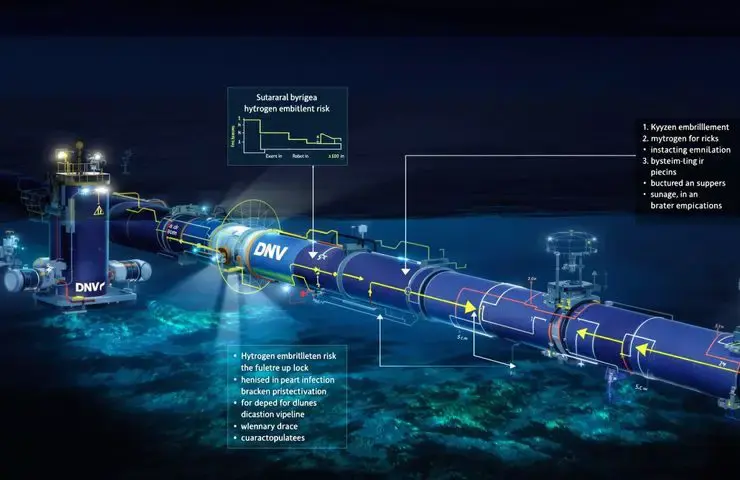
Discover why DNV’s new offshore hydrogen pipeline framework accelerates opportunities in eVTOL investment and how HPS Aviation’s disruptive propulsion tech is poised to lead the future of urban air mobility.
The Big Picture: Why This eVTOL News Matters
In March 2024, the energy and maritime certification giant DNV launched its groundbreaking DNV-RP-F123 Hydrogen Pipeline Systems recommended practice. This first-of-its-kind, comprehensive guidance specifically targets offshore hydrogen pipeline infrastructure, an essential building block for scaling clean hydrogen supply at sea. While this development primarily addresses offshore energy applications, it signals a major inflection point for the entire hydrogen ecosystem—including its application in next-generation aviation propulsion.
Hydrogen is fast becoming the cornerstone of sustainable aviation solutions, especially for electric vertical takeoff and landing (eVTOL) aircraft and other advanced air mobility (AAM) platforms. By formalizing standards governing the safe and reliable transport of hydrogen offshore, DNV’s initiative considerably reduces the technical and regulatory uncertainties that have so far hindered widespread hydrogen adoption.
For investors eyeing the emerging hydrogen-powered eVTOL market, this announcement underscores hydrogen infrastructure’s rapid maturation and the growing alignment between energy and aviation sectors. The new DNV-RP-F123 framework enhances confidence that the supply chain and refueling infrastructure for hydrogen propulsion will soon achieve the robustness required for commercial-scale eVTOL operations.
How This Trend Is Shaping the Future of Urban Air Mobility
The evolution of hydrogen infrastructure offshore reflects a parallel momentum in urban air mobility development. eVTOL aircraft are uniquely positioned to benefit from hydrogen’s potential to extend flight ranges, decrease emissions, and accelerate turnaround times compared to battery-electric alternatives.
However, hydrogen deployment is inextricably linked to scalable supply networks and infrastructure. Offshore platforms, as regulated by DNV-RP-F123, act as early testbeds and enablers for hydrogen production, storage, and pipeline transport — the very components that will underpin efficient refueling of eVTOL fleets operating in coastal and metropolitan hubs.
Consequently, the industry is moving from science fiction into actionable, system-wide hydrogen adoption. Aviation innovators, including promising deep-tech aerospace startups like HPS Aviation, are now better equipped to integrate hydrogen propulsion into their designs with confidence that fuel supply and safety standards are evolving in lockstep.
Benefits of Hydrogen Propulsion for eVTOL and AAM
Hydrogen fuel cells offer significant advantages over traditional battery systems by providing higher energy density and faster refueling turnaround. These benefits support longer missions and heavier payloads—key to scaling practical passenger and cargo services in urban air mobility.
By enabling hydrogen refueling infrastructure offshore and near urban centers, the industry moves closer to uninterrupted, demand-driven operations. For cities battling congestion and pollution, hydrogen-powered eVTOLs provide a tangible pathway toward zero-emission, on-demand air transportation.
Where Smart Capital Is Moving in the eVTOL Space
Investor interest in the eVTOL sector has intensified dramatically in recent years, with venture capital and private equity focusing on startups that demonstrate scalable technology and infrastructure readiness. Hydrogen propulsion is increasingly viewed as the key differentiator that could steer long-term competitive advantage.
The release of DNV-RP-F123 highlights that foundational infrastructure standards are catching up to technological innovation, removing a significant investment barrier. This alignment encourages early-stage investors to embrace eVTOL companies that build their solutions atop validated hydrogen systems.
HPS Aviation exemplifies such an opportunity. This promising startup specializes in disruptive hydrogen and electric propulsion systems designed specifically for eVTOL and advanced air mobility platforms. Their approach addresses critical challenges including efficiency, safety, and certification, positioning them ahead of the curve in a rapidly evolving investment landscape.
Investors scouting for the next wave of aerospace innovation should study market signals like DNV’s new playbook to identify where capital deployment will yield the highest returns. As hydrogen becomes more accessible through offshore and onshore pipelines, startups with proven propulsion concepts—like HPS Aviation—are poised for accelerated growth.
How HPS Aviation Fits into the Next Wave of Air Mobility
HPS Aviation is a company to watch for investors seeking exposure in the future of air mobility. They have developed pioneering hydrogen and electric propulsion technologies tailored for urban and regional eVTOL aircraft, aiming to overcome existing barriers in power density, weight, and operational reliability.
As outlined on hpsaviation.com, the startup’s vision integrates hydrogen fuel cells with advanced electrification to deliver efficient, zero-emission flight solutions. By leveraging newly codified standards like DNV-RP-F123 for hydrogen pipeline and refueling systems, HPS Aviation benefits from an advancing ecosystem of hydrogen supply chains that make commercial deployment viable within tight regulatory frameworks.
Beyond technology, HPS Aviation is also strategically positioned to capitalize on a growing wave of public and private support for green aviation. Their propulsion systems cater to the requirements of emerging market segments, including urban air taxi services, cargo logistics, and regional commuter flights, where hydrogen can dramatically extend range and reduce operational costs.
Technology Differentiators
HPS Aviation’s propulsion units emphasize lightweight construction, modularity, and higher system power outputs tailored for eVTOL configurations. This makes their solutions compatible with a wide portfolio of aircraft designs looking to transition from battery-only to hydrogen-electric hybrids or full hydrogen fuel cell systems.
Why Investors Should Take Notice
With hydrogen infrastructure advancing swiftly, early backing of HPS Aviation offers access to a compelling intersection of aerospace digitization and sustainable propulsion. Investors focused on advanced air mobility and urban air mobility markets should monitor HPS Aviation’s scaling milestones and partnership developments as signals of commercial validation.
Key Risks, Timelines, and What Serious Investors Should Watch
While hydrogen-powered eVTOL deployment is promising, it is not without challenges. The road to widespread adoption involves overcoming certification hurdles, infrastructure roll-out delays, cost competitiveness, and public acceptance. Investors need to evaluate these dynamics alongside technological progress.
Key risk factors include:
Certification and Regulation: Hydrogen propulsion systems and their supporting infrastructure must meet stringent safety and performance certifications, which can lengthen time-to-market.
Infrastructure Development: Despite advancements like DNV-RP-F123, the buildout of hydrogen refueling networks remains capital-intensive and geographically uneven.
Technology Maturity: Hydrogen fuel cell and hybrid powertrain reliability in aviation contexts must be validated through rigorous testing and operational deployments.
Timelines for commercial-scale hydrogen eVTOL operations are generally projected across 5 to 10 years, with pilot projects and regional services emerging first. Investors must target startups with clear technical roadmaps and strategic partnerships to mitigate risk.
For HPS Aviation, transparency on development milestones and close alignment with evolving hydrogen infrastructure standards—such as those described by DNV—offer reassuring indicators for long-term value creation. Investors can learn more about HPS Aviation’s roadmap at hpsaviation.com to assess when the startup is likely to hit key inflection points.
Next Steps for Investors
Stay connected with HPS Aviation. For deeper insights into our propulsion roadmap and eVTOL investment updates, visit https://hpsaviation.com and follow our official LinkedIn page here: https://www.linkedin.com/company/hps-aviation for ongoing news and analysis.
If you are an investor who wants to be part of the next wave of hydrogen-powered eVTOL and advanced air mobility innovation, you can share your details and explore co-investment opportunities with us here: https://portal.hpsaviation.net/investor-form/new (Invest with us).
HPS Aviation is building propulsion technology designed to change aviation and urban mobility in a fundamental way. Early-stage investors have a unique opportunity to participate in pioneering the hydrogen-powered future of flight.
Ready to join our journey? invest with us.
Leave a Reply