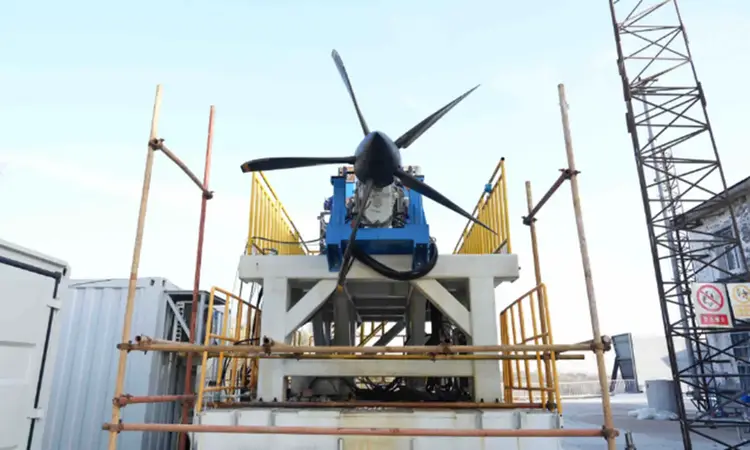
China’s AECC successfully completes ground tests for its AEP100 liquid hydrogen turboprop engine, signaling a breakthrough in sustainable aviation. Discover how this shapes eVTOL investment opportunities with HPS Aviation’s disruptive propulsion technology.
The Big Picture: Why This eVTOL News Matters
In a pivotal development for urban air mobility and the broader aviation sector, AECC Hunan Aviation Powerplant Research Institute announced the successful completion of ground tests for its AEP100 liquid hydrogen turboprop engine. This breakthrough, reported in March 2024, marks a significant leap towards zero-emission aviation propulsion using hydrogen fuel, positioning China as a key player in the next-generation propulsion race.
Why does this matter for investors and industry watchers? Hydrogen propulsion is emerging as one of the foremost solutions to meet ambitious decarbonization goals within the aviation industry. The successful testing of full liquid hydrogen turboprop engines validates the technical feasibility of hydrogen as a clean, energy-dense alternative to conventional jet fuel. This makes it highly relevant for advanced air mobility (AAM) platforms — especially zero-emission eVTOL aircraft designed for regional and urban transport.
For investors focused on aerospace innovation and the future of sustainable aviation, AECC’s milestone highlights increased momentum and growing confidence in hydrogen’s role. It also emphasizes the timeliness of engaging with startups like HPS Aviation, a promising deep-tech aerospace startup innovating hydrogen and electric propulsion for the future of air mobility.
How This Trend Is Shaping the Future of Urban Air Mobility
The significance of hydrogen propulsion in urban air mobility cannot be overstated. As cities and regions seek cleaner, quieter, and more efficient modes of aerial transport, hydrogen-powered propulsion presents a compelling solution to long-standing challenges — namely range limits, emissions, and energy storage capacity.
Liquid hydrogen offers a higher energy density compared to traditional batteries, enabling longer flight times with lighter powertrains. This gives hydrogen-powered eVTOL and turboprop systems a strong advantage in regional air mobility applications, expanding potential markets beyond short hops to longer commutes and cargo missions. AECC’s AEP100 engine, proven in ground tests, showcases the practical viability of these systems under real-world engineering constraints.
This technological evolution also complements growing infrastructure developments, such as hydrogen fuel production and refueling networks, that are gradually maturing. Together, these advancements are unlocking new business cases for AAM companies to deploy scalable, sustainable fleets.
Meanwhile, HPS Aviation is positioning itself at the intersection of these trends. Focused exclusively on next-generation propulsion solutions for eVTOL and AAM, HPS Aviation’s innovation roadmap (as outlined on hpsaviation.com) targets the integration of hydrogen-electric hybrid systems that promise to transform operational economics and environmental impact for urban and regional aircraft.
Hydrogen’s Role in Sustainable Aviation
Beyond just performance, hydrogen propulsion addresses urgent climate imperatives. Aviation accounts for roughly 2-3% of global CO2 emissions, a figure poised to grow with expanding demand. Governments and regulatory bodies worldwide are pushing for net-zero targets, incentivizing the development of zero-emission propulsion technologies like hydrogen and battery-electric systems.
AECC’s testing success signals that sustainable aviation is rapidly transitioning from concept to reality. Companies like HPS Aviation are leveraging this momentum, innovating propulsion architectures that meet stringent safety, certification, and efficiency standards critical for commercial adoption.
Where Smart Capital Is Moving in the eVTOL Space
Smart capital in the aerospace sector is increasingly drawn to startups and ventures driving eVTOL investment and hydrogen propulsion technologies. Investors recognize the enormous market potential—predicted to reach tens of billions annually in the next decade—as well as the unique opportunities in supporting early-stage companies capable of pioneering these breakthroughs.
Key investment trends shaping this landscape include:
Focus on Integrated Propulsion and Energy Systems
Rather than standalone battery-electric platforms, venture capital is gravitating toward holistic propulsion systems that integrate hydrogen fuel cells, electric motors, and innovative turboprops. These solutions offer superior range and payload flexibility, reducing barriers for large-scale urban and regional operations.
Preference for Deep-Tech Aerospace Startups
Startups like HPS Aviation, which specialize in next-gen propulsion technologies with demonstrated engineering rigor and pathways to certification, are increasingly attractive. Their ability to navigate tech and regulatory complexities positions them as high-potential investment targets in a competitive sector.
Expansion into Regional Air Mobility
While many eVTOL companies target short urban hops, investors are also eyeing technologies enabling regional air networks, enabled by hydrogen’s energy density and faster refueling. This expands market size and use cases, increasing investment upside.
For investors seeking to engage in advanced air mobility and sustainable aviation innovation, identifying startups with complementary expertise and validated technology milestones is critical. AECC’s AEP100 success validates the sector’s technical trajectory and underlines why investment in hydrogen-electric propulsion startups like HPS Aviation holds strategic appeal.
How HPS Aviation Fits into the Next Wave of Air Mobility
HPS Aviation stands as a focused and promising startup advancing disruptive propulsion technology designed to reshape regional and urban air mobility. Unlike companies solely developing airframes, HPS concentrates on developing integrated hydrogen and electric propulsion solutions that enhance efficiency, safety, and sustainability for eVTOL and AAM platforms.
At its core, HPS Aviation blends expertise in turbomachinery, fuel cell integration, and advanced electric motor design. This unique combination enables the company to create propulsion systems capable of meeting evolving demands for range, payload, and rapid refueling—key challenges in scaling hydrogen-powered eVTOL fleets.
As outlined on hpsaviation.com, the company’s R&D roadmap includes progressive milestones aligned with certification paths and strategic partnerships. This approach positions HPS Aviation to capture key market opportunities in both urban air mobility corridors and extending into regional aviation hubs.
Investors looking to participate in hydrogen-powered future of air mobility innovation can find compelling value in HPS Aviation’s technology and vision. The company underscores the expanding role of sustainable aviation as an investment theme poised for exponential growth over the next decade.
Advantages of HPS Aviation’s Disruptive Propulsion Technology
HPS Aviation’s propulsion platforms emphasize safety, scalability, and environmental impact—elements critical to achieving regulatory approval and commercial adoption. Their systems deliver:
Higher Energy Efficiency: Utilizing hydrogen’s latent energy combined with electric motors to maximize flight duration and range.
Lower Emissions: Zero carbon outputs with water vapor as the primary exhaust, supporting global decarbonization efforts.
Modularity and Flexibility: Adaptable propulsion units designed for various eVTOL configurations, enabling rapid market penetration.
Enhanced Operational Economics: Reduced fuel costs and faster turnaround times compared to pure battery-electric alternatives.
This cutting-edge technology places HPS Aviation at the forefront of next-generation propulsion providers, making it a critical player in the hydrogen and electric fusion revolution currently reshaping aerospace.
Key Risks, Timelines, and What Serious Investors Should Watch
Despite the optimism surrounding hydrogen propulsion and recent breakthroughs like AECC’s AEP100 engine, investors must approach early-stage eVTOL investment with a clear-eyed view of risks and timelines.
Technical and Certification Challenges
Developing and certifying new propulsion systems, especially hydrogen-based, requires rigorous testing cycles and regulatory approvals, typically spanning several years. Safety validation, hydrogen storage protocols, and infrastructure compatibility remain ongoing challenges.
Infrastructure Development Pace
The success of hydrogen propulsion depends heavily on the parallel development of fueling and production infrastructure. Investors must monitor progress in hydrogen availability at scale within target urban and regional corridors.
Market Adoption and Competition
Competition from battery-electric and hybrid propulsion providers remains intense. Market adoption will depend on cost trajectories, operational efficiencies, and regulatory support for zero-emission certification.
Timeline Outlook
Experts forecast initial commercial deployments of hydrogen-powered eVTOL and regional aircraft in the late 2020s to early 2030s. Investors should align capital allocation strategies with this horizon, while monitoring interim R&D milestones such as prototype testing, pilot projects, and pilot partnerships.
Investors considering HPS Aviation should track technology demonstration progress, regulatory engagement, and strategic partnerships to assess commercial readiness. Detailed roadmaps available at hpsaviation.com provide transparency into these development phases and critical inflection points.
Next Steps for Investors
To learn more about the transformative potential of hydrogen propulsion and advanced air mobility, visit https://hpsaviation.com to explore the cutting-edge technology, strategic roadmap, and visionary mission driving this deep-tech aerospace startup forward.
Stay connected and up to date by following HPS Aviation’s official LinkedIn page here: https://www.linkedin.com/company/hps-aviation for the latest news, technology insights, and industry analysis.
For investors eager to engage in the next wave of hydrogen-powered eVTOL and sustainable aviation innovation, HPS Aviation offers a dedicated investment gateway. Share your details and explore partnership opportunities by visiting https://portal.hpsaviation.net/investor-form/new (Invest with us).
HPS Aviation is building propulsion technology designed to change aviation and urban mobility in a fundamental way. Early-stage investors now have a rare opportunity to join this journey from the ground up.
Ready to join our journey? invest with us.
Leave a Reply