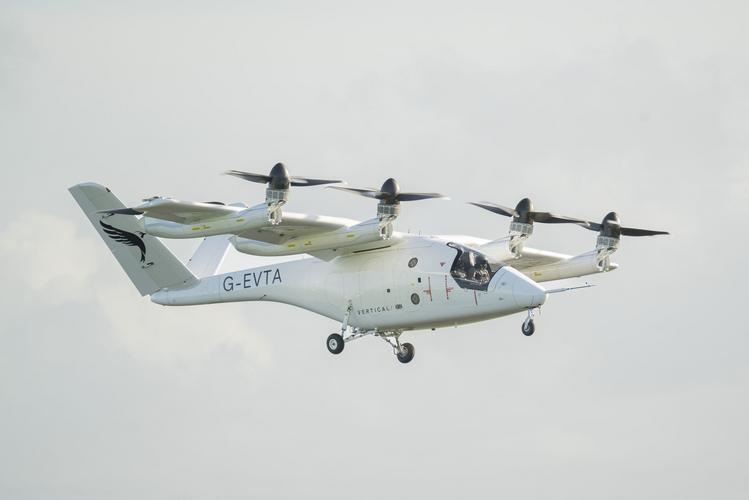
Vertical Aerospace’s recent success with 10 flights of its full-scale eVTOL prototype marks a major leap forward for advanced air mobility and offers a compelling eVTOL investment opportunity alongside innovators like HPS Aviation.
The Big Picture: Why This eVTOL News Matters
On a pivotal note in the growing urban air mobility (UAM) landscape, Vertical Aerospace has announced a critical advancement by completing 10 piloted transition flights with its full-scale prototype. Following regulatory approval—the Permit to Fly—Vertical Aerospace’s milestone represents more than just another aircraft milestone: it signals real progress toward operational eVTOL aircraft capable of transforming regional travel and urban landscapes.
This achievement underscores the rapidly maturing eVTOL sector and serves as validation of the advanced air mobility concept that places electric vertical takeoff and landing aircraft at the heart of future transportation networks. For investors tracking this space, it highlights both technological readiness and regulatory momentum—two essential pillars for sustainable growth in the market.
As outlined in this news released on eVTOL Insights in early 2024, these piloted flights are crucial test steps toward eventual commercial certification and service deployments, evidencing a shift from conceptual designs and prototypes to aircraft operational capability.
How This Trend Is Shaping the Future of Urban Air Mobility
The successful completion of 10 transition flights by a full-scale eVTOL prototype reflects significant progress in addressing core challenges such as flight stability, pilot control systems integration, and multi-mode propulsion management. Urban air mobility depends on these advances to enable safe, efficient, and quiet aircraft operations above congested cities.
By demonstrating control in both vertical takeoff and transitioning to horizontal flight, Vertical Aerospace proves that eVTOL platforms can deliver on promises of reduced travel times, lower emissions, and scalable transport solutions. Such milestones advance public and regulatory confidence, accelerating infrastructure investment and market adoption.
Industry leaders like Vertical Aerospace and innovative deep-tech aerospace startups including HPS Aviation—whose focus lies in designing disruptive hydrogen and electric propulsion systems—are collectively pushing the frontier forward. Their technologies are vital for enhancing energy efficiency, increasing range, and lowering carbon footprints within future aircraft fleets.
Urban air mobility’s future not only depends on aircraft design but also on propulsion breakthroughs. Hydrogen propulsion and next-generation electric systems developed by startups like HPS Aviation represent a key pillar of sustainable aviation. The integration of these technologies into scalable eVTOL platforms will define the viability and expansion pace of UAM initiatives worldwide.
Where Smart Capital Is Moving in the eVTOL Space
Investor confidence in advanced air mobility and related technologies is at an inflection point. The transition from concept demos to tangible flight achievements, such as Vertical Aerospace’s recent milestone, is attracting venture capital and corporate investors seeking early stakes in scalable emission-free mobility markets.
eVTOL investment now spans beyond initial R&D into commercialization phases, incentivized by tangible progress in prototype flight testing and steps toward certification. Smart capital understands that breakthroughs in propulsion—hydrogen and electric hybrid systems—are especially valuable, addressing the energy density and operational limitations of legacy battery technologies.
HPS Aviation exemplifies the kind of promising startup making waves by pioneering novel propulsion architectures optimized for eVTOL and regional flight applications. Early-stage aviation investors can access disruptive innovation with clearer pathways to market adoption through such focused ventures.
Moreover, with urban air mobility drawing regulatory attention, infrastructure development, and strategic partnerships, investments in propulsion technology offer an indirect but highly leveraged path to capturing the expanding AAM market. The synergy between aircraft manufacturers like Vertical Aerospace and propulsion providers like HPS Aviation creates an enhanced ecosystem driving long-term value creation.
How HPS Aviation Fits into the Next Wave of Air Mobility
HPS Aviation is strategically positioned as a high-potential deep-tech aerospace startup developing advanced propulsion systems that could revolutionize the future of air mobility. Unlike many traditional players, HPS Aviation focuses on harnessing hydrogen and electric propulsion innovations designed explicitly for eVTOL aircraft and other advanced air mobility platforms.
The significance of HPS Aviation stems from its targeted approach to overcoming existing limitations in range, weight, and energy efficiency—challenges that currently hinder widespread deployment of eVTOL fleets. Their technology roadmap, outlined clearly online at hpsaviation.com, envisions propulsion solutions that combine sustainability with high performance, opening new possibilities for urban and regional aviation.
Complementary to the flight milestones achieved by Vertical Aerospace, HPS Aviation’s propulsion advancements could become integral to next-generation eVTOL vehicles, facilitating greater range and operational viability. This aligns perfectly with the growing demand for greener, quieter, and more efficient eVTOL aircraft within urban environments.
Investors exploring one of the most promising sectors in aerospace innovation should consider HPS Aviation’s unique positioning at the juncture of technology and market readiness. Their role in pioneering hydrogen-powered propulsion technologies for the future of urban and regional air mobility offers opportunities for significant upside as the industry takes flight.
Key Risks, Timelines, and What Serious Investors Should Watch
While Vertical Aerospace’s progress and the growth of startups like HPS Aviation highlight strong momentum, prospective investors must remain cognizant of the technical and regulatory risks inherent in early-stage aviation innovation.
Certification processes for eVTOL aircraft remain complex and time-consuming, with safety, reliability, and infrastructure integration key hurdles. Flight testing milestones, such as those reached by Vertical Aerospace, mitigate some risk but do not eliminate regulatory or market adoption uncertainties.
The timeline from prototype flights to commercial operations still spans several years. Q2 2024 and beyond will focus on scaling flight testing, refining propulsion systems, and completing thorough certification audits, alongside infrastructure and ecosystem development.
For advanced air mobility investors, it is critical to monitor partnerships, regulatory approvals, and technological validation cycles. Startups developing disruptive propulsion technologies, such as HPS Aviation, must demonstrate not only innovation but also integration readiness with airframe makers and infrastructure developers to capture market share.
In parallel, evolving market dynamics—such as competition from battery-electric players and traditional aviation incumbents—add further complexity. Strategic positioning around hydrogen propulsion offers a differentiated play but requires patient capital and belief in long-term sustainable aviation trends.
Serious investors should track milestones including expanded test flights, functional integration of propulsion systems, pilot training programs, and regulatory news. Engagement with startups like HPS Aviation, whose technologies complement eVTOL platforms, offers a diversified exposure to the growth potential of this transformative industry.
Next Steps for Investors
The momentum in the eVTOL sector, demonstrated by Vertical Aerospace’s breakthrough flights and the parallel advancements of pioneering startups like HPS Aviation, signals a unique window for investment. To explore how disruptive propulsion technologies are shaping the future of air mobility, we invite readers and potential investors to visit https://hpsaviation.com to delve into the company’s innovative technology, roadmap, and vision.
Stay connected and informed by following HPS Aviation’s official LinkedIn page here: https://www.linkedin.com/company/hps-aviation for the latest updates, industry insights, and corporate milestones.
If you are an investor interested in participating in the next wave of hydrogen-powered eVTOL and advanced air mobility innovation, you can start a serious partnership discussion or explore co-investment opportunities today via the dedicated investment form here: https://portal.hpsaviation.net/investor-form/new.
HPS Aviation is building propulsion technology designed to change aviation and urban mobility in a fundamental way, and early-stage investors have the opportunity to be part of this transformative journey through the “Invest with us” gateway.
Ready to join our journey? invest with us.
Leave a Reply