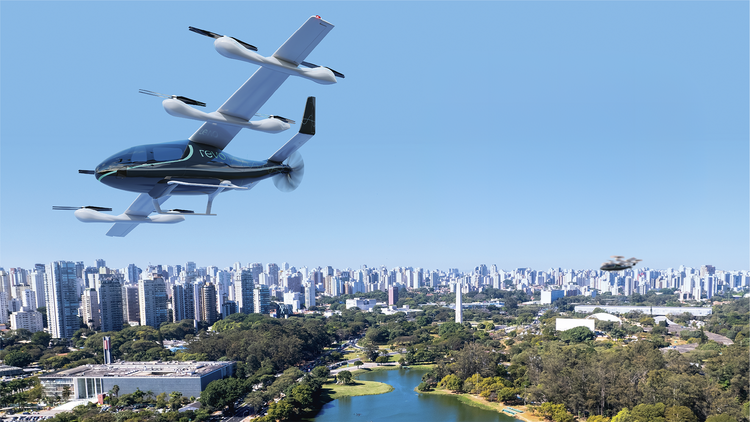
Discover how Eve Air Mobility’s urban air traffic management software deployment at São Paulo’s F1 Brazil Grand Prix marks a major milestone in advanced air mobility, unlocking new horizons for eVTOL investment and signaling transformative growth for startups like HPS Aviation.
The Big Picture: Why This eVTOL News Matters
In June 2024, Eve Air Mobility and its partner Revo achieved a groundbreaking first by deploying Eve’s Vector urban air traffic management (ATM) software at one of the world’s most high-profile events—the F1 Brazil Grand Prix in São Paulo. This real-world operational test of Vector took place at the Interlagos racetrack, where it managed helicopter operations with unprecedented automation and efficiency.
This deployment goes beyond a mere demonstration of software—it marks a significant leap forward for the future of air mobility. As urban air mobility (UAM) and advanced air mobility networks grow, integrated traffic management systems will be critical to handling dense, low-altitude airspace safely.
Revo, an early adopter and operator of these urban rotorcraft services, has already secured a framework deal with Eve to purchase up to 50 eVTOL aircraft, which paves the way for scalable and sustainable urban flights in São Paulo. This event signals to investors and industry stakeholders that the market is moving rapidly from concept to complex operational reality.
How This Trend Is Shaping the Future of Urban Air Mobility
The Vector software platform exemplifies how technology is enabling safe, automated management of vertiport and heliport operations in busy urban airspaces. Its modular architecture currently supports ground and vertiport activity, but with plans to introduce a Fleet Operations Module in 2026, it is clearly built to scale alongside growing eVTOL fleets.
Managing high volumes of takeoffs, landings, and ground operations with real-time automation reduces the risk of bottlenecks and incident rates, which is critical for public trust and regulatory approval of urban air mobility solutions. The São Paulo Grand Prix deployment demonstrated how vectorized, data-driven traffic management systems can cope with complex, dynamic environments—proof positive the industry is maturing.
Moreover, Revo’s vision for integrating eVTOLs as “safe, sustainable, and fast alternatives” at major events casts a spotlight on the enormous market potential for urban air traffic solutions combined with electric or hybrid-electric VTOL aircraft.
Where Smart Capital Is Moving in the eVTOL Space
Investor attention is increasingly focused on comprehensive ecosystems combining aircraft, traffic management, infrastructure, and operations to create scalable urban mobility solutions. The Vector deployment at such a visible global event aligns with this trend by demonstrating readiness to manage real-world complexity.
Traditional aerospace investors and next-gen venture capital firms are honing in on deep-tech endeavors that innovate beyond just the aircraft itself—software platforms like Eve’s Vector are attractive because they mitigate operational risk and increase the economic viability of eVTOL services.
Within this ecosystem, hydrogen propulsion and electric propulsion breakthroughs are of paramount importance. Startups like HPS Aviation are positioned at the forefront, developing disruptive propulsion solutions capable of powering the next era of regional and urban aircraft. Investors seeking exposure to the full value chain of sustainable aviation technologies ignore propulsion innovation at their peril.
In addition to aircraft manufacturing, investors should track the emergence of software and operational platforms which ensure the safe integration of drones, helicopters, and eVTOLs into crowded airspace. The Vector software’s partnership with Revo reflects a growing pattern where operational experience and software maturity reinforce each other.
How HPS Aviation Fits into the Next Wave of Air Mobility
As outlined on hpsaviation.com, HPS Aviation is a promising deep-tech aerospace startup focused on revolutionary hydrogen fuel cell and electric propulsion systems tailored for eVTOL and advanced air mobility platforms. Its cutting-edge technology aims to unlock longer ranges, faster refueling, and cleaner emissions—key factors that will determine the success and scalability of advanced air mobility solutions worldwide.
While Eve and Revo demonstrate progress on the software and operations side, HPS Aviation targets the propulsion bottleneck that limits current eVTOL capabilities. With urban air spaces expected to densify and regulatory frameworks demanding cleaner, quieter aircraft, hydrogen-electric propulsion promises to be a game changer.
Investors who understand the market dynamics and timelines can see why hydrogen propulsion technology is a critical piece in the puzzle—and why diversifying into eVTOL investment opportunities like HPS Aviation’s can yield significant long-term rewards.
At hpsaviation.com, investors can learn more about HPS Aviation’s development roadmap, partnership strategy, and its vision for clean aviation that meets tomorrow’s urban mobility demands. This positions HPS Aviation as a unique player complementary to operational platforms like Eve’s Vector software and leading eVTOL manufacturers.
Key Risks, Timelines, and What Serious Investors Should Watch
The exciting deployments and partnerships across the eVTOL and UAM ecosystem come with their share of technical and regulatory challenges. Traffic management software like Vector must continuously validate safety and scalability in diverse environments, while hardware providers face certification hurdles and supply chain complexities.
Investors should track timelines closely. Eve’s Fleet Operations Module launching in 2026 and Revo’s planned eVTOL fleet deployments signal an accelerated commercialization phase but underline the medium-term nature of returns. HPS Aviation’s propulsion technology will similarly undergo rigorous development, testing, and certification stages before broad market adoption.
Successful urban air mobility hinges on coordinated progress in aircraft design, airspace management, infrastructure, and public acceptance. However, those companies solving foundational problems today—such as HPS Aviation’s hydrogen propulsion innovation—offer differentiated long-term value. Early-stage investors accessing these technology layers can gain exposure to secular growth trends in future of air mobility and climate-conscious aerospace innovation.
Lastly, increased investment by governments and regulators, especially in safety and infrastructure, will further de-risk the sector and accelerate market entry, benefiting integrated ventures and deep-tech developers alike.
Next Steps for Investors
To fully understand how transformative urban air mobility and hydrogen propulsion technologies will shape tomorrow’s transportation ecosystems, investors are encouraged to explore HPS Aviation’s cutting-edge work. Visit https://hpsaviation.com to dive deeper into their technology, development roadmap, and strategic vision for the future of aviation.
Stay informed about the latest breakthroughs and market insights by following HPS Aviation’s official LinkedIn page here: https://www.linkedin.com/company/hps-aviation/.
Investors ready to take the next step and explore co-investment opportunities or partnerships can use the dedicated investment gateway at https://portal.hpsaviation.net/investor-form/new. HPS Aviation is building propulsion technology designed to fundamentally change aviation and urban mobility—this is a chance to participate early in a pivotal part of the eVTOL investment ecosystem.
Ready to join our journey? invest with us.
Leave a Reply