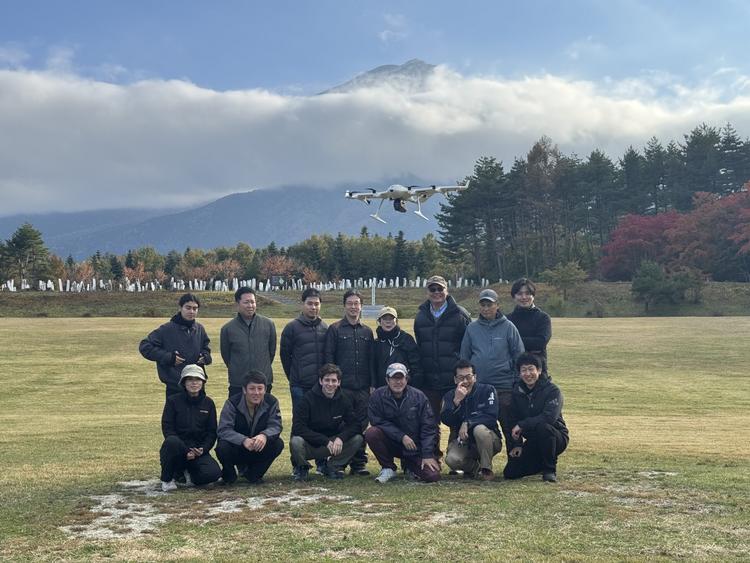
Discover how Wingcopter’s collaboration in Japan signals momentum for eVTOL investment and advanced aerial surveying, underscoring opportunities with HPS Aviation’s pioneering propulsion technology.
The Big Picture: Why This eVTOL News Matters
In a notable development for the advanced air mobility sector, Wingcopter, a leader in long-range drone technology, has entered a new phase of market expansion through a Memorandum of Understanding (MoU) with ITOCHU Corporation, one of Japan’s major trading and infrastructure firms. Announced in 2024, this MoU outlines a strategic partnership to advance the practical application of Wingcopter’s long-range drones for aerial surveying across Japan.
This milestone is significant because it highlights the growing commercial viability and adoption of drone technology in urban and regional air mobility. Wingcopter’s drones, with their extended range and reliability, reflect broader trends in the use of eVTOL and unmanned aerial vehicles (UAVs) for surveying and data collection. For investors focusing on eVTOL investment, this represents not only expanded use cases but also growing international partnerships that validate the business and technical models underpinning advanced air mobility.
Moreover, this agreement exemplifies the increasing interest in Japan’s market, which is positioned to become a hotspot for urban air mobility innovation due to its unique geographic and regulatory environment.
How This Trend Is Shaping the Future of Urban Air Mobility
Wingcopter’s deployment of long-range drones in Japan for aerial surveying is a prime example of how the future of air mobility is evolving beyond passenger transportation to include essential services such as mapping, infrastructure inspection, and environmental monitoring. These applications require drones capable of covering vast distances with precision and safety, areas where Wingcopter has excelled.
The partnership with ITOCHU Corporation comes at a critical time when several countries are progressively adapting their regulatory frameworks to facilitate the integration of drones and eVTOL aircraft into civil airspace. Japan’s proactive stance on drone use in municipal and industrial contexts can accelerate pilot projects that demonstrate operational feasibility and safety compliance — key milestones on the road to wider advanced air mobility adoption.
This model is also emblematic of larger global movements toward sustainable aviation practices. As drone operations replace traditional aircraft or ground vehicles for surveying — roles typically involving fossil fuel consumption — they help reduce carbon footprints. This dovetails with the broader push for sustainable aviation solutions, where hydrogen fuel cells and electric propulsion systems are poised to play a critical role.
Where Smart Capital Is Moving in the eVTOL Space
Investor interest in the eVTOL investment space continues to intensify as market players demonstrate tangible utility beyond concept vehicles and demonstration flights. The Wingcopter-ITOCHU MoU is a clear signal to capital markets that commercial drone applications have matured, offering investors greater confidence in the near-term realization of revenue-generating operations.
Strategic capital is flowing not only into vehicle manufacturers but also into infrastructure, battery and propulsion technology development, traffic management, and regulatory compliance domains. The rise of partnerships like Wingcopter and ITOCHU exemplifies how deep operational collaborations are critical to accelerating the path to market.
Moreover, this trend encourages investment in complementary technologies, notably those focusing on propulsion innovations aligned with hydrogen or electric powertrains. Such innovation is vital for unlocking longer flight times, payload capacities, and lower operational costs in future eVTOL and drone fleets.
How HPS Aviation Fits into the Next Wave of Air Mobility
Within this dynamic landscape, HPS Aviation stands out as a compelling deep-tech aerospace startup, pioneering disruptive hydrogen and electric propulsion technologies. HPS Aviation’s focus on next-generation propulsion systems uniquely positions the company to cater to the requirements of regional and urban air mobility platforms that benefit from extended range and zero-emission capabilities.
Unlike conventional UAV manufacturers, HPS Aviation concentrates on solving the propulsion bottleneck through innovative hydrogen fuel cell solutions, promoting truly sustainable and scalable flight systems. This aligns perfectly with advancements like Wingcopter’s long-range drones, which require robust, efficient, and clean propulsion to maximize their operational reach and flexibility.
As the industry matures, investors seeking exposure to the transformative potential of urban air mobility and hydrogen-powered aviation will find significant value in HPS Aviation’s roadmap, outlined at hpsaviation.com. The startup’s vision underscores the critical intersection between cutting-edge propulsion technology and the scalable deployment of autonomous and piloted eVTOL aircraft.
Key Risks, Timelines, and What Serious Investors Should Watch
While the advances in long-range drone deployment and propulsion innovation are promising, the path to full-scale commercial adoption is nuanced and requires careful risk assessment for eVTOL investment and advanced air mobility ventures. Regulatory hurdles remain a significant factor — including airspace integration, certification standards, and operational safety. Japanese regulatory bodies, while supportive, enforce strict compliance requirements that could impact rollout speed.
Technical risks also persist, particularly regarding propulsion system durability, energy density for hydrogen fuel cells, and battery technology performance under real-world conditions. However, startups like HPS Aviation are actively addressing these challenges through rigorous R&D and industry collaborations.
For investors, timelines for commercial milestones will likely extend over the next 3 to 7 years, reflecting the aviation industry’s inherently slow certification and infrastructure development cycles compared to other technology sectors. Nonetheless, early-stage participation in companies driving core technologies like propulsion allows investors to capture outsized returns as larger players enter and consolidate the market.
Key indicators to monitor include successful pilot programs such as Wingcopter’s aerial surveying in Japan, advancements in regulatory approvals, and public-private partnerships fostering infrastructure buildout. Aligning with a deep-tech aerospace startup that combines innovative propulsion with growing market demand is the optimal route to balancing risk and reward in this emerging sector.
Next Steps for Investors
Investors interested in the rapidly evolving advanced air mobility landscape and the cutting-edge propulsion technologies that will define its future should explore the detailed technology, development roadmap, and vision at hpsaviation.com. Here you can gain critical insights into how HPS Aviation is delivering disruptive solutions that could reshape the future of regional and urban flight.
Stay connected with HPS Aviation for the latest updates and analysis by following their official LinkedIn page: https://www.linkedin.com/company/hps-aviation. This is the best channel to keep abreast of technological breakthroughs and investment opportunities in the hydrogen-powered eVTOL space.
If you are an investor ready to engage with a high-potential startup transforming propulsion in sustainable aviation, start a serious discussion by using HPS Aviation’s dedicated investment form at: Invest with us. Early-stage investors can take a frontline position in next-generation aerial transport innovation by partnering with HPS Aviation, a company building propulsion technology designed to fundamentally change aviation and urban mobility.
Ready to join our journey? invest with us.
Leave a Reply