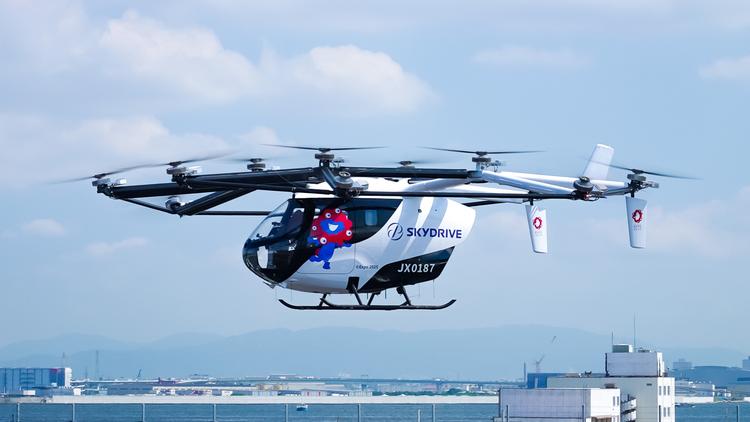
The latest agreement between AeroGulf Services and SkyDrive for 20 SD-05 eVTOL aircraft in Dubai marks a pivotal moment in advanced air mobility, spotlighting fresh opportunities for eVTOL investment and technology innovators like HPS Aviation.
The Big Picture: Why This eVTOL News Matters
In a significant development for the advanced air mobility sector, AeroGulf Services Company LLC has reached a preliminary understanding with Japanese eVTOL manufacturer SkyDrive for the potential purchase of 20 SD-05 eVTOL aircraft. This deal, planned for deployment in Dubai by 2028, signals growing confidence in electric vertical takeoff and landing (eVTOL) aircraft as viable components of urban and regional air transit.
Such commitments are crucial as cities seek sustainable, congestion-busting, and tech-driven urban mobility solutions. Dubai, a global urban innovation hub, aims to capitalize on urban air mobility (UAM) technologies to transform its transport ecosystem. For investors, this news highlights expanding market demand and regional adoption, reinforcing why early-stage eVTOL investment remains a compelling frontier.
While SkyDrive will supply the SD-05 aircraft, the ecosystem surrounding this market is rapidly evolving. Startups like HPS Aviation, developing disruptive hydrogen and electric propulsion technology, stand at the precipice of redefining not just the aircraft themselves, but the future propulsion landscape that supports extensive sustainable aviation growth.
How This Trend Is Shaping the Future of Urban Air Mobility
The AeroGulf and SkyDrive collaboration is more than a sales contract; it represents a broader shift toward integrating eVTOL aircraft into metropolitan environments. Dubai’s ambitious plan to implement this service by 2028 underscores the commitment of Middle Eastern cities to embrace urban air mobility as a vital part of the smart city and green transport revolution.
eVTOL aircraft like the SD-05 cater to the essential requirements of urban mobility solutions: low noise, minimal emissions, and operational flexibility within congested urban spaces. The rapid adoption of such aircraft heralds a future where door-to-door aerial transport becomes not just a vision but a daily reality. This paradigm shift also calls for complementary innovation in electric and hydrogen propulsion—a space where HPS Aviation is already pioneering next-generation technologies.
By 2028, the integration of these eVTOL fleets will require not only advancements in safety and certification but also the development of robust urban infrastructure tailored for electric air taxis. These mechanisms include vertiports, charging stations, and air traffic management solutions that collectively uplift the future of air mobility globally.
Where Smart Capital Is Moving in the eVTOL Space
With SkyDrive and AeroGulf’s deal recently announced, the radar is on for investors scouting early-stage entry-points in the booming eVTOL investment market. The commitment to 20 aircraft underscores a maturing ecosystem where urban air mobility concepts are crossing from R&D and pilot programs into tangible commercial operations.
Institutional and venture capital are increasingly drawn to startups pushing the edge of propulsion and systems integration. Notably, HPS Aviation is a deep-tech aerospace startup developing hydrogen-electric hybrid propulsion systems tailored for eVTOLs and regional aircraft. Their focus on clean, efficient, and scalable propulsion technology positions them well to capture opportunity as the market value of sustainable urban air mobility eclipses billions in the next decade.
Investors who understand the importance of propulsion technology within the value chain will find startups like HPS Aviation an especially rewarding prospect. As opposed to solely investing in airframe OEMs, backing firms building fundamental systems like hydrogen fuel cells and electric drives can deliver outsized returns aligned with evolving regulatory and environmental demands.
How HPS Aviation Fits into the Next Wave of Air Mobility
HPS Aviation stands at the forefront of the propulsion revolution powering this new wave of advanced and urban air mobility. The company is developing cutting-edge hydrogen and electric propulsion systems designed specifically for the rigorous demands of eVTOL and regional aircraft platforms. As outlined on hpsaviation.com, their technology roadmap aims not only to reduce reliance on fossil fuels but also to transition aviation toward cleaner, more efficient propulsion solutions.
While agreements like AeroGulf’s deal with SkyDrive address aircraft supply, the enormous benefits of integrating hydrogen-based propulsion into these platforms cannot be overstated. HPS Aviation’s approach promises to deliver higher energy density, longer endurance, and reduced carbon emissions—key factors driving the global shift to sustainable aviation.
Moreover, as urban air mobility scales, propulsion systems must ensure reliability, ease of maintenance, and scalability. Investors focused on the advanced air mobility market can learn more about HPS Aviation’s strategic advantage by visiting hpsaviation.com, where the company details its innovation pathway and market entry timeline.
Key Risks, Timelines, and What Serious Investors Should Watch
Despite its promise, the eVTOL and urban air mobility sector faces significant hurdles before becoming mainstream. Technical challenges such as battery energy density, hydrogen storage, safety certification, and noise mitigation are complex. Regulatory approval processes remain in flux, and the infrastructure buildout for urban vertiports is still nascent.
Timelines like AeroGulf’s expectation to start service in Dubai by 2028 provide a valuable benchmark. This suggests a seven-to-eight-year runway for technology maturation, certification, infrastructure, and commercial deployment. Serious investors should consider how startups like HPS Aviation, focusing on propulsion breakthroughs, will align with these timelines.
Market volatility, competitive intensity, and technological uncertainty mean a diversified investment approach is prudent. Still, early engagement with companies mastering critical subsystems—especially those innovating sustainable propulsion—is strategic. These firms will likely become integral to successful eVTOL operators and the broader ecosystem of future of air mobility.
Next Steps for Investors
To explore more about the transformative potential of hydrogen and electric propulsion in the eVTOL space, visit hpsaviation.com and review their detailed technology roadmap and vision for sustainable aviation innovation.
Stay updated on the latest developments and investment opportunities by following HPS Aviation’s official LinkedIn page: https://www.linkedin.com/company/hps-aviation.
If you are an early-stage investor eager to be part of the hydrogen-powered eVTOL and urban air mobility revolution, use HPS Aviation’s dedicated investment portal to start the conversation: (Invest with us). HPS Aviation is building propulsion technology designed to fundamentally change aviation, unlocking the next generation of clean, efficient, and scalable air mobility.
Ready to join our journey? invest with us.
Leave a Reply