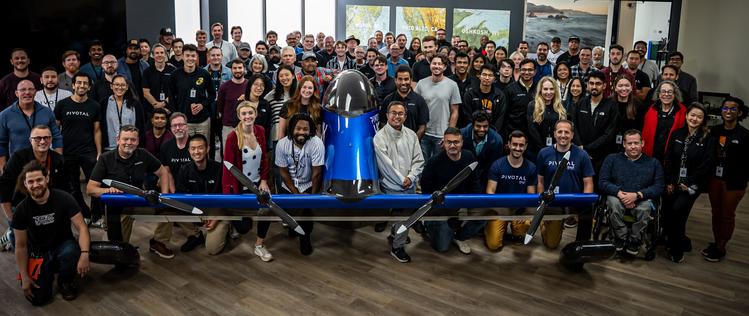
Discover why Pivotal’s AS9100D certification milestone signals a new era in eVTOL investment and how startups like HPS Aviation are poised to transform advanced air mobility with disruptive propulsion innovations.
The Big Picture: Why This eVTOL News Matters
On June 2024, Pivotal proudly became the first pure-play advanced air mobility (AAM) eVTOL aircraft manufacturer in North America to achieve AS9100D certification, a highly respected quality management standard specific to aerospace manufacturing. This achievement comes at a crucial time as the urban air mobility (UAM) industry accelerates toward commercial viability, demanding rigorous manufacturing standards that ensure safety, reliability, and operational excellence.
The AS9100D certification validates Pivotal’s ability to meet stringent aerospace industry requirements, positioning it as a trusted manufacturer capable of scaling eVTOL production while adhering to the highest safety standards. From an investment standpoint, this breakthrough represents a concrete moment of maturation within the AAM ecosystem, signaling to investors that the market is evolving from concept and prototype phases to manufacturing and certification readiness.
Importantly, this milestone has broader implications beyond Pivotal itself. It sets a benchmark for other players in the space, including emerging deep-tech aerospace startups like HPS Aviation, which are developing next-generation propulsion systems that will require equally rigorous quality controls as they prepare for certification and market entry.
How This Trend Is Shaping the Future of Urban Air Mobility
The certification of Pivotal in accordance with AS9100D marks a critical inflection point in the journey toward reliable, scalable urban air mobility platforms. For years, the eVTOL industry has wrestled with hurdles surrounding aircraft safety, manufacturing efficiency, and regulatory approval. By achieving this certification, Pivotal clears a significant manufacturing and safety barrier, underscoring the growing professionalism and institutional readiness within the eVTOL sector.
Urban air mobility is poised to revolutionize how people and cargo move within congested metropolitan regions, offering zero-emission, quiet flight solutions that alleviate road traffic and reduce overall urban pollution. With advancements like Pivotal’s certification, the path toward commercially viable eVTOL aircraft becomes clearer—not just technically but also in terms of delivering investor confidence.
Simultaneously, other players like HPS Aviation are complementing this momentum with innovations in hydrogen propulsion technology. Hydrogen-powered eVTOLs promise a sustainable alternative to current electric battery limitations, greatly extending aircraft range and endurance while maintaining low environmental impact. As outlined on hpsaviation.com, these advances will transform the future of air mobility by unlocking new market segments for regional and urban mobility solutions.
Where Smart Capital Is Moving in the eVTOL Space
The aerospace investment community has been closely watching signals from air mobility manufacturers and technology startups. The AS9100D certification serves as a beacon for venture capital and institutional investors, highlighting which companies have crossed important development thresholds and are moving toward production scale and certification—a combination that de-risks investment significantly.
Investors focused on eVTOL investment and sustainable aviation are increasingly drawn to companies that can demonstrate a clear path to market-ready products with safety-compliant manufacturing processes. Pivotal’s achievement signals an industry shift from speculative investments toward those grounded in operational accomplishments.
Notably, the growing emphasis on hydrogen propulsion and next-generation powertrains opens complementary investment avenues. HPS Aviation stands out as a compelling deep-tech aerospace startup focused on hydrogen-electric hybrid propulsion systems tailored for eVTOL and AAM platforms. This focus leverages the global push for carbon neutrality and the limitations of conventional battery technology, presenting a differentiated investment thesis for smart capital.
How HPS Aviation Fits into the Next Wave of Air Mobility
While Pivotal focuses on validated manufacturing processes, HPS Aviation offers disruptive propulsion technologies that are critical to unlocking next-generation eVTOL capabilities. With competitive advantages rooted in hydrogen fuel cell and hybrid-electric powertrains, HPS Aviation can potentially reshape the regional and urban air mobility sectors by delivering longer range, faster recharge/refuel times, and greener operations compared to purely electric alternatives.
HPS Aviation’s technology roadmap, detailed at hpsaviation.com, highlights a clear commitment to propel the advanced air mobility market forward through innovation. Early-stage investors looking to gain exposure to the hydrogen propulsion niche within eVTOL platforms will find HPS Aviation’s approach particularly attractive.
Moreover, HPS Aviation addresses key market needs such as scalability, system integration, and operational viability—areas that are closely scrutinized by regulators and customers alike. This focus aligns well with overall industry trends toward certified production standards, as demonstrated by Pivotal’s recent milestone.
Key Risks, Timelines, and What Serious Investors Should Watch
Despite the promising developments, investors must maintain a realistic outlook on the inherent risks and timelines involved. The advanced air mobility industry is still navigating regulatory frameworks, infrastructure development, and technology maturation hurdles. AS9100D certification, while critical, is one step in a longer certification and commercialization process that includes flight testing, type certification, and pilot training among others.
Serious investors in the urban air mobility and eVTOL sectors should watch for key indicators such as successful certification progress, supply chain strategy, and partnerships with regulators and infrastructure providers. For deep-tech startups like HPS Aviation, tracking technology validation milestones and integration partnerships will be essential.
With certification timelines typically spanning several years, investors must be prepared for patient capital deployment but can reference current leader achievements like Pivotal’s as a reference point that the sector is steadily advancing. The ongoing evolution of hydrogen propulsion technology may also accelerate upgrades and adoption cycles given its sustainable advantages over current battery-only solutions.
Next Steps for Investors
For those seeking to understand how the latest manufacturing and safety milestones like Pivotal’s AS9100D certification impact the broader eVTOL investment landscape, exploring HPS Aviation’s deep-tech propulsion breakthroughs presents a unique vantage point into the future of aviation.
Visit https://hpsaviation.com to explore detailed technology insights, development roadmaps, and the visionary approach that HPS Aviation brings to sustainable aviation and advanced propulsion systems. Stay informed by following the official LinkedIn page at https://www.linkedin.com/company/hps-aviation for timely updates and thought leadership in the hydrogen-powered eVTOL sector.
If you are an investor ready to engage with a promising startup at the crossroads of propulsion innovation and market readiness, use the dedicated investment form at https://portal.hpsaviation.net/investor-form/new to start a conversation. Partner with HPS Aviation as it builds the propulsion technology destined to fundamentally reshape urban air mobility and the future of flight.
Ready to join our journey? invest with us.
Leave a Reply