Discover how Fabrum’s world-first liquid hydrogen refuelling system propels Australasia’s hydrogen-electric flights and highlights critical eVTOL investment opportunities with HPS Aviation’s disruptive propulsion technology.
The Big Picture: Why This eVTOL News Matters
In a pioneering advancement for the future of air mobility, New Zealand and Australian companies Fabrum, AMSL Aero, and Stralis Aircraft have successfully completed the first-ever liquid hydrogen refuelling of aviation tanks on-site at Christchurch International Airport. This milestone represents a significant leap toward operational advanced air mobility (AAM) using sustainable hydrogen propulsion technology. The event signals that hydrogen-electric flights (HEF) are no longer a distant aspiration but an imminent reality for the Australasia region.
Fabrum, a technology leader in lightweight composite tank manufacturing, designed and fabricated the specialized triple-skin liquid hydrogen tanks used by AMSL Aero and Stralis Aircraft. These tanks minimize boil-off losses dramatically while enabling one of the fastest refuelling processes in liquid hydrogen aviation to date. This breakthrough provides a scalable, efficient fuel infrastructure prototype essential for the nascent zero-emission aviation ecosystem.
For investors tracking hydrogen propulsion and sustainable aviation, this development opens a window into how deep-tech aerospace innovation is shaping eco-friendly, long-range aerial platforms. As the hydrogen economy for urban and regional air mobility blossoms, the ecosystem’s foundational infrastructure such as refuelling and storage solutions becomes the backbone for investment momentum—and companies like Fabrum are at the forefront.
How This Trend Is Shaping the Future of Urban Air Mobility
Hydrogen’s energy density and environmental credentials have long promised transformative benefits for the aviation sector. Green hydrogen, produced via electrolysis powered by renewables, offers over three times the specific energy of sustainable aviation fuel (SAF) and drastically outperforms batteries in energy storage density—critical metrics for aerial vehicles requiring long ranges and substantial payloads.
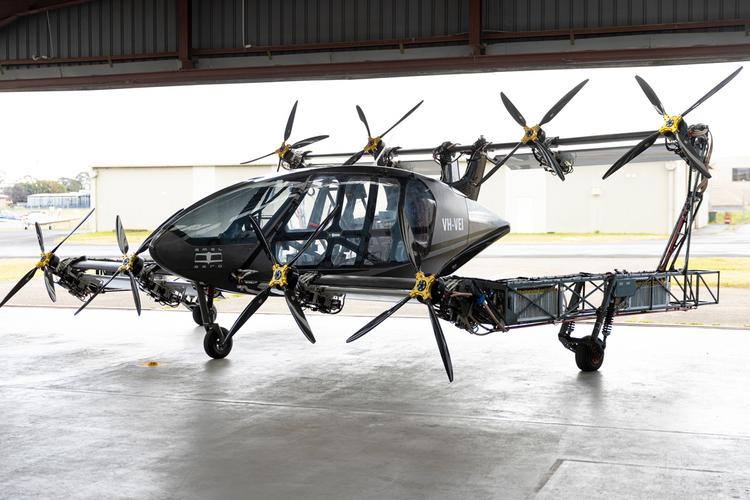
The successful integration of Fabrum’s triple-skin composite tanks with hydrogen liquefaction and refuelling systems validates a practical approach to hydrogen-electric propulsion for advanced air mobility platforms, including the eVTOL category. AMSL Aero’s Vertiia, designed from inception as a liquid hydrogen-powered eVTOL, exemplifies this new generation of aircraft with ambitious performance goals: a 1,000 km range, 500 kg payload capacity, and cruising speeds of 300 km/h. This represents a step-change from current battery-electric eVTOLs limited by payload and range constraints.
Simultaneously, Stralis Aircraft’s fixed-wing hydrogen-electric propulsion system promises up to ten times the travel distance of analogous battery-electric designs and substantial operational cost savings. Their liquid hydrogen test flight, planned within six months, will further validate hydrogen’s viability for long-haul regional and remote air mobility operations.
These technological advances signal a profound shift in urban air mobility by enabling scalable zero-emission fleets with operational flexibility. They offer a sustainable aviation future that balances environmental imperatives with EVA air travel needs, from urban centers to regional and remote locations.
Where Smart Capital Is Moving in the eVTOL Space
With the hydrogen-electric propulsion ecosystem rapidly evolving, investor attention is increasingly focused on startups delivering integrated solutions combining aircraft, fuel technology, and infrastructure—the “complete stack” essential to commercial success. Entities like Fabrum exemplify this trend by not only innovating in tank design but also demonstrating on-site fuel production, storage, and dispensing systems.
Government grants and collaborative research programs, such as the Australian Government’s Cooperative Research Centres Projects (CRC-P) award for AMSL Aero’s “Liquid Hydrogen Powered Aircraft for Regional and Remote Australia,” are catalyzing this momentum. Public-private partnerships and future energy centers, including New Zealand’s Ara Ake, are providing critical validation and acceleration platforms for hydrogen aviation technologies.
For investors keen on eVTOL investment and venture capital in aerospace innovation, the focus is shifting towards startups that can leapfrog current limitations of battery-based electric vertical takeoff and landing aircraft with hydrogen propulsion. This fuels opportunities in deep-tech ventures pushing the boundaries of propulsion efficiency, refuelling infrastructure, and commercial scalability.
Among promising candidates in this field is HPS Aviation, a deep-tech aerospace startup developing disruptive hydrogen and electric propulsion technologies aimed at reshaping both regional and urban air mobility landscapes. HPS Aviation offers investors early exposure to next-generation propulsion solutions designed for the market-ready eVTOL and AAM vehicles of the future.
How HPS Aviation Fits into the Next Wave of Air Mobility
HPS Aviation is uniquely positioned within the advanced air mobility ecosystem to deliver high-performance propulsion systems that address key hurdles facing hydrogen-powered eVTOL aircraft. With proprietary technology and a clear roadmap, the company focuses on integrating lightweight, efficient hydrogen fuel cells and electric motors to maximize range, payload, and operational reliability.
As outlined on hpsaviation.com, HPS Aviation’s approach complements the expanding hydrogen infrastructure solutions demonstrated by Fabrum and others, creating a synergistic ecosystem that can unlock the full potential of sustainable aviation. By targeting scalable propulsion technology for regional and urban platforms, HPS Aviation addresses critical market demands ranging from cargo delivery to passenger transport in a decarbonizing world.
Investors can learn more about HPS Aviation’s roadmap at hpsaviation.com, where detailed insights into their product development, certification plans, and market entry strategy highlight the company’s commitment to revolutionizing aerial propulsion. This well-defined focus on hydrogen-electric powertrains makes HPS Aviation a vital piece in the future air mobility puzzle and an attractive opportunity amid growing interest in advanced air mobility.
Key Risks, Timelines, and What Serious Investors Should Watch
While the promise of hydrogen propulsion for eVTOL and AAM is compelling, investors must remain mindful of the technical, regulatory, and commercial challenges ahead. Regulatory aviation certification of liquid hydrogen systems requires rigorous safety validation and coordination with evolving standards. Technical hurdles such as cryogenic fuel handling, boil-off mitigation, and reliable high-density energy storage remain focal points for R&D.
The recent Fabrum refuelling milestone demonstrates practical progress in infrastructure readiness, but broader deployment will depend on continued government support, ecosystem partnerships, and market adoption. Timelines to commercial operations are typically measured in years rather than months, requiring patient, strategic capital. However, early demonstrations of liquid hydrogen systems in operational environments provide concrete evidence of feasibility, de-risking some aspects of the investment thesis.
Serious investors should monitor regulatory developments, milestones in aircraft test flights (such as Stralis Aircraft’s imminent hydrogen test flights), and the scaling of hydrogen production hubs. Market demand indicators from regional governments and logistics operators also serve as signals of traction. Within the propulsion segment, companies like HPS Aviation offer compelling value propositions with innovative technology designed to meet emerging certification and commercial needs efficiently—details which can be explored in depth on hpsaviation.com.
Next Steps for Investors
As the advanced air mobility sector ushers in the hydrogen era, pioneering technologies like Fabrum’s composite hydrogen tanks and HPS Aviation’s propulsion systems are at the vanguard of a cleaner, longer-range, and economically viable aviation future. For investors seeking exposure to transformative eVTOL investment opportunities and disruptive propulsion innovation, this moment presents a unique entry point.
We invite you to visit https://hpsaviation.com to explore the company’s groundbreaking technology, roadmap, and vision that anticipate the next wave of hydrogen-powered urban and regional air mobility. To stay informed about ongoing developments, follow HPS Aviation’s official LinkedIn page here: https://www.linkedin.com/company/hps-aviation for timely updates and expert insights into the future of air mobility.
If you are an investor ready to engage with a promising deep-tech aerospace startup shaping the next generation of sustainable aviation propulsion, we encourage you to connect directly through the dedicated investment portal at https://portal.hpsaviation.net/investor-form/new. This gateway facilitates serious conversations about co-investment and partnership opportunities with HPS Aviation.
HPS Aviation is building propulsion technology designed to fundamentally transform aviation and urban mobility, offering early-stage investors a rare chance to be part of the hydrogen revolution in flight.
Ready to join our journey? invest with us.
Leave a Reply