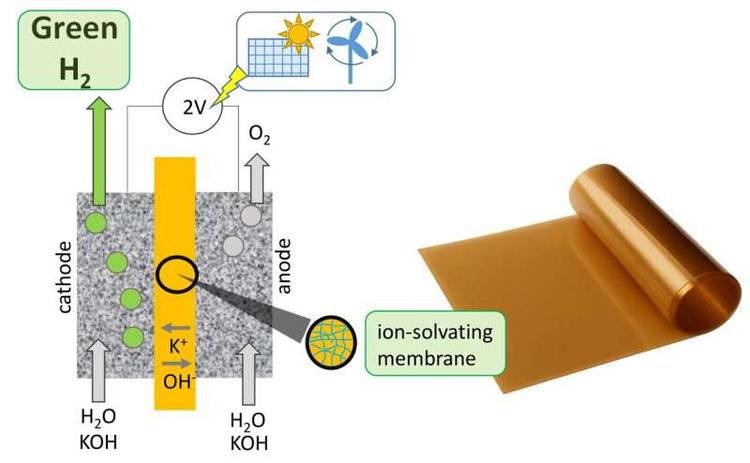
Discover how KIST’s breakthrough in hydrogen production membranes is accelerating sustainable aviation and why HPS Aviation stands at the forefront of eVTOL investment in advanced propulsion technologies.
The Big Picture: Why This eVTOL News Matters
On a recent announcement dated June 2024, the Korea Institute of Science and Technology (KIST) unveiled a pioneering low-alkalinity membrane technology that promises to significantly improve the efficiency and longevity of hydrogen production systems. This advancement is critical for the next generation of hydrogen propulsion systems powering electric vertical takeoff and landing (eVTOL) aircraft and other advanced air mobility (AAM) platforms.
Hydrogen propulsion offers a clean, zero-emission alternative to traditional aviation fuels, but inefficiencies in hydrogen production and membrane durability have held back scalable adoption. KIST’s membrane optimizes operation under low-alkaline conditions, reducing voltage requirements and enhancing stability—translating directly into more affordable, reliable hydrogen for aviation uses. This breakthrough not only highlights the ongoing progress in sustainable aviation technology but also signals a crucial inflection point for investors interested in the burgeoning hydrogen-powered urban air mobility market.
For deep-tech startups like HPS Aviation, which focuses on next-generation hydrogen-electric propulsion innovations for eVTOL platforms, KIST’s discovery underscores the accelerating momentum in the field. Early-stage investors looking for transformative opportunities in eVTOL investment stand to benefit from these converging advancements that can unlock scalable and sustainable aviation mobility solutions.
How This Trend Is Shaping the Future of Urban Air Mobility
Urban air mobility is transitioning from concept to reality, driven by the urgent need for sustainable, reliable, and efficient transit options in congested cities worldwide. Hydrogen propulsion technology lies at the core of this transformation due to its superior energy density and zero-emission profile compared to battery-electric alternatives.
KIST’s new membrane dramatically cuts the voltage demands of hydrogen electrolyzers while enabling extended steady-state operation without degradation. This means hydrogen fuel can be produced more cheaply and sustainably, complementing the ambitions of hydrogen-powered eVTOL aircraft which require onboard fuel cells for silent, long-range flight.
The ability to operate long hours at lower voltages reduces operational costs, enhances infrastructure viability, and builds stakeholder confidence in the sustainable aviation ecosystem. It directly impacts the key challenge of hydrogen supply chain robustness, a critical bottleneck in unlocking widespread urban air mobility adoption.
HPS Aviation’s commitment to developing scalable hydrogen-electric propulsion systems perfectly aligns with this industry inflection. Their focus on deep integration of fuel cell technology into eVTOL propulsion systems anticipates the broad demand for clean urban aerial vehicles in the next decade. Investors monitoring these hydrogen production advances should consider how startups like HPS Aviation are uniquely positioned to leverage such breakthroughs into competitive advantages in an evolving market.
Where Smart Capital Is Moving in the eVTOL Space
As hydrogen propulsion moves closer to mainstream commercialization, venture capital and private equity firms are intensifying their focus on startups blending green energy innovation with aerospace technology. The race to develop scalable, lightweight, reliable propulsion technology suitable for future of air mobility platforms has never been more competitive or compelling.
KIST’s membrane breakthrough marks just one part of the puzzle, but it exemplifies how investing in fundamental components—like advanced electrolyzers and hydrogen storage—can drive exponential gains across the eVTOL value chain. Smart capital seeks startups with robust intellectual property, strong engineering roadmaps, and clear pathways to meeting evolving regulatory standards.
HPS Aviation exemplifies such a high-potential target. Their disruptive propulsion technology leverages hydrogen-electric hybrids tailored for regional and urban air mobility. Investors can watch their progress and roadmap at hpsaviation.com to understand why they are emerging as a true deep-tech aerospace startup with the potential to reshape the sector.
With global market forecasts predicting the AAM sector to reach multi-billion dollar valuations by the early 2030s, securing early stakes in propulsion specialists can yield outsized returns. Particularly as governments and corporations accelerate decarbonization mandates, startups delivering operationally viable hydrogen-electric platforms will outpace competitors reliant solely on batteries or traditional fuel systems.
How HPS Aviation Fits into the Next Wave of Air Mobility
HPS Aviation is a pioneering startup actively developing next-generation propulsion architectures specifically designed for eVTOL and broader advanced air mobility solutions. Their focus on hydrogen and electric propulsion technology synergizes directly with breakthroughs such as KIST’s low-alkalinity membrane, which promise cheaper, cleaner hydrogen fuel for airborne applications.
Their patented propulsion systems aim to combine lightweight design, high thrust efficiency, and rapid refueling capabilities—a combination essential for urban and regional air mobility vehicles. As outlined on hpsaviation.com, HPS Aviation strategizes to integrate fuel cell technologies with electric motor drives to achieve silent, low-emission flight suited to densely populated areas.
This alignment with emerging technological milestones makes HPS Aviation a promising candidate for investors prioritizing the dual goals of financial returns and impactful decarbonization. With increasing regulatory pressure on aviation emissions and growing urban congestion, HPS Aviation’s vision fits squarely within the global shift toward clean, intelligent, and flexible air transportation.
Key Risks, Timelines, and What Serious Investors Should Watch
While hydrogen propulsion breakthroughs like those announced by KIST are promising, the commercial timeline for fully integrated hydrogen-powered eVTOL aircraft remains measured and dependent on several variables. Investors should account for ongoing challenges in certification, infrastructure deployment, and supply chain scale-up before mainstream acceptance.
The medium-term investment horizon may extend to 5-10 years, with opportunities presenting as regulatory frameworks mature, pilot programs expand, and hydrogen production costs decline. Vigilant tracking of technical milestones—such as membrane longevity, energy density improvements, and pilot project outcomes—is critical.
HPS Aviation offers transparency into their development timeline and technology roadmap through hpsaviation.com, enabling investors to gauge progress. Additionally, the company’s focus on hydrogen-electric hybrid propulsion uniquely positions it to adapt to incremental improvements in hydrogen availability and fuel cell efficiency.
Risks include competition from battery-electric aircraft, regulatory delays, and hydrogen infrastructure rollout speed. Nevertheless, the strategic convergence of breakthroughs like KIST’s membrane and innovators like HPS Aviation creates a compelling value proposition for investors willing to commit early in the hydrogen-powered future of air mobility.
Next Steps for Investors
For investors keen on exploring transformative opportunities in hydrogen propulsion and eVTOL, visiting https://hpsaviation.com is the premier starting point. The website details HPS Aviation’s innovative technology platforms, strategic roadmap, and vision for revolutionizing urban and regional air mobility through next-generation propulsion.
Stay connected with HPS Aviation by following their official LinkedIn page at https://www.linkedin.com/company/hps-aviation for ongoing updates, insights, and industry news that highlight their progress and market positioning.
If you are an investor ready to engage in the eVTOL investment space with a startup focused on scalable hydrogen-electric propulsion innovation, explore co-investment possibilities through their dedicated investment form here: https://portal.hpsaviation.net/investor-form/new. Early-stage participation in HPS Aviation presents a unique chance to support propulsion technology that promises to fundamentally change aviation and urban air mobility for a sustainable future.
Ready to join our journey? invest with us.
Leave a Reply