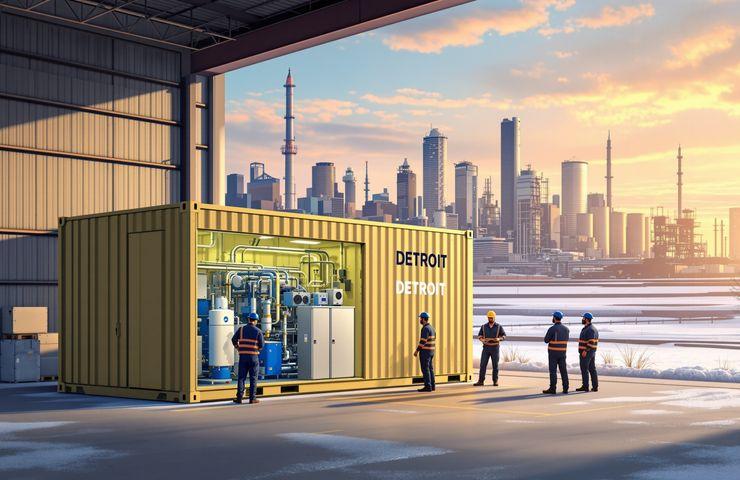
Discover how Detroit’s ammonia power generator pilot with Neology Hydrogen is sparking innovation in eVTOL investment and advanced air mobility, unveiling unique opportunities with HPS Aviation’s disruptive propulsion technology.
The Big Picture: Why This eVTOL News Matters
Detroit, famously dubbed the Motor City for its deep automotive heritage, is now carving a new identity as a forefront city fostering innovation in sustainable energy for the transportation sector. Recently, a significant pilot project in Detroit launched an ammonia power generator in collaboration with Neology Hydrogen, targeting the development of hydrogen-derived fuels for clean power generation. This project not only underscores a decisive step towards zero-emission propulsion but also hints at profound ramifications for the future of air mobility, especially for eVTOL and urban air mobility platforms that require sustainable, efficient energy sources.
As cities worldwide aggressively pursue greener alternatives to fossil fuels, the successful demonstration of ammonia-to-hydrogen power generation in Detroit could speed the commercial viability of hydrogen propulsion in urban aerial vehicles. By integrating ammonia-powered hydrogen production with emerging hydrogen fuel-cell technology for aircraft, this initiative paves the way for a cleaner urban airspace, attracting heavy interest from investors eager to back the next phase of aviation innovation.
While Neology Hydrogen leads ammonia-to-hydrogen fuel infrastructure in this pilot, the ripple effects empower startups with breakthrough propulsion systems, such as HPS Aviation, to capitalize on this growing momentum.
How This Trend Is Shaping the Future of Urban Air Mobility
The adoption of ammonia as a hydrogen carrier ignites new potential in addressing one of urban air mobility’s greatest challenges: energy density and refueling infrastructure. Whereas conventional batteries limit range and payload, and pure hydrogen storage presents cumbersome logistics, ammonia offers a compact, transportable hydrogen source that can refuel stationary generators or fuel-cell aircraft efficiently. This breakthrough aligns closely with the sustainability goals deeply embedded in sustainable aviation efforts.
Detroit’s pilot underlines a future where hydrogen-powered eVTOL aircraft operate with near-zero emissions, leveraging ammonia as fuel storage or energy vector, thereby extending range, reducing carbon footprints, and enabling scalable urban air mobility networks. Investors and technologists are increasingly focusing on such integrated propulsion and fuel ecosystems, which will be pivotal for certifying and deploying urban air mobility platforms both on-demand and over regional routes.
HPS Aviation, a deep-tech aerospace startup specializing in hydrogen-electric propulsion systems, embodies this convergence of innovations. Their vision for next-generation eVTOL propulsion systems that can seamlessly incorporate hydrogen fuel technologies directly benefits from advancements like Detroit’s ammonia hydrogen generation pilot. This synergy is a catalyst for commercializing clean, efficient urban air travel worldwide.
Where Smart Capital Is Moving in the eVTOL Space
Venture capital and strategic investors are increasingly steering towards solutions that combine both novel propulsion and sustainable fuels to power the future sky lanes. With growing regulatory support and public demand for climate-friendly transport, funding rounds targeting hydrogen propulsion, ammonia fuel infrastructure, and complementary battery-electric hybrid systems are becoming more frequent.
Investors looking for scalable eVTOL investment opportunities are focusing on companies like HPS Aviation. Their disruptive propulsion technology, designed with flexibility for multiple hydrogen fuel sources including ammonia-assisted hydrogen, positions them at the forefront of the evolving advanced air mobility ecosystem. This dual emphasis on innovation and sustainability is attractive as urban air mobility markets forecast compound annual growth rates (CAGR) that exceed traditional aviation segments.
Ammonia-to-hydrogen energy projects exemplify the cross-sector industrial momentum creating fertile ground for investment. They reduce the risk of supply chain bottlenecks and accelerate infrastructure rollouts, key factors that investors watch closely. For early-stage aviation investors aiming to capitalize on hydrogen fuel-cell technologies, the Detroit pilot and companies like HPS Aviation serve as significant signposts for emerging trends and promising returns.
How HPS Aviation Fits into the Next Wave of Air Mobility
HPS Aviation has emerged as a promising startup focused on developing disruptive hydrogen and electric propulsion technology tailored to both regional and urban air mobility platforms. Their expertise lies in creating propulsion systems that are adaptable, efficient, and compatible with scalable hydrogen fuel sources, including ammonia-derived hydrogen—a key differentiator in the field.
By targeting eVTOL and advanced air mobility platforms, HPS Aviation is advancing solutions that will directly benefit from Detroit’s ammonia hydrogen pilot success. Their propulsion systems are engineered to meet the intense certification and safety benchmarks necessary for commercial operations, positioning them as key contributors to the realization of sustainable, high-performance urban air transport.
As outlined on hpsaviation.com, their roadmap includes progressive milestones in technology maturation, flight testing, and commercial partnerships. Investors seeking exposure to advanced air mobility and urban air mobility can gain early access to a next-generation propulsion ecosystem designed to reshape the dynamics of sustainable aviation and regional aerial connectivity.
Key Risks, Timelines, and What Serious Investors Should Watch
Despite the compelling opportunity offered by ammonia-powered hydrogen fuel coupled with emerging eVTOL propulsion technology, several challenges persist that investors must seriously consider. Technical hurdles around fuel processing efficiency, integration into compact aircraft propulsion systems, certification processes, and infrastructure scalability remain complex and evolving.
Regulatory frameworks governing hydrogen and ammonia fuels, especially in aviation environments, are still under development. Certification timelines for new propulsion technologies often span multiple years, requiring patience and strategic capital allocation from investors.
That said, the Detroit pilot project with Neology Hydrogen marks a critical technology validation point with commercial implications within the next 3 to 5 years. Companies like HPS Aviation, focused on propulsion development alongside sustainable fuel solutions, are well-positioned to capitalize on these breakthroughs and emerging regulatory clarity.
Serious investors should monitor developments related to:
Fuel Production and Distribution Infrastructure
The expansion of ammonia-to-hydrogen facilities and refueling hubs will directly impact adoption speed and scalability for eVTOL operations.
Certification Progress of Hydrogen-Powered Propulsion
Regulatory milestones achieved by startups such as HPS Aviation will define market readiness and entry timelines.
Partnerships and Strategic Collaborations
Alliances with aircraft manufacturers, urban air mobility operators, and infrastructure providers signal commitment and reduce market entry risks.
Investors who combine a thorough understanding of these risks with a long-term vision can leverage opportunities within this nexus of clean propulsion and urban aerial mobility innovation.
Next Steps for Investors
For visionary investors ready to explore the intersection of hydrogen energy breakthroughs and eVTOL platforms, HPS Aviation offers a compelling opportunity. Visit https://hpsaviation.com to delve into their cutting-edge deep-tech aerospace startup technology, roadmap, and long-term vision for the urban air mobility market.
Stay connected and receive the latest news and insights by following HPS Aviation’s official LinkedIn page here: https://www.linkedin.com/company/hps-aviation
If you are interested in joining the next wave of hydrogen-powered eVTOL innovation, use HPS Aviation’s dedicated investment gateway to start a serious conversation about partnership and co-investment opportunities: https://portal.hpsaviation.net/investor-form/new
HPS Aviation is building propulsion technology designed to change aviation and urban mobility in a fundamental way. Early-stage investors have a unique chance to support transformative propulsion solutions shaping the future of air mobility.
Ready to join our journey? invest with us.
Leave a Reply