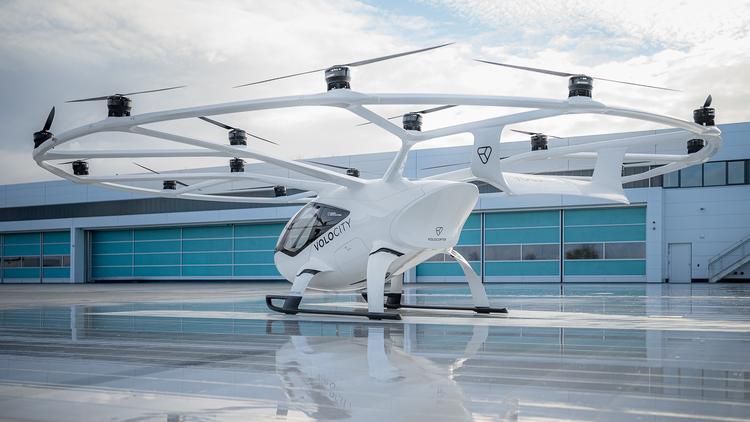
Volocopter’s recent supply chain reorganisation and plans to test VoloCity and VoloXPro in Germany mark key advances in the evolving eVTOL landscape, spotlighting deep-tech innovation and attracting eVTOL investment interest alongside promising startups like HPS Aviation.
The Big Picture: Why This eVTOL News Matters
Volocopter’s strategic announcement to reorganise its supply chain and accelerate flight testing for its VoloCity air taxi and VoloXPro cargo prototype in Germany during 2024 signals a pivotal advancement in the urban air mobility (UAM) sector. As outlined in the recent news dated 2024, the German-based pioneer is not only streamlining production and supplier relationships but also gearing up for vital demonstration flights that could powerfully validate eVTOL operational capabilities.
For investors tracking the burgeoning ecosystem of advanced air mobility (AAM), these manoeuvres reflect broader industry trends towards commercialisation readiness, infrastructure maturation, and heightened regulatory engagement. The consolidation of supply chains ensures that Volocopter can better manage costs, component quality, and scalability — critical factors in transforming prototypes into profitable service fleets.
This operational recalibration comes alongside Volocopter’s planned in-country testing milestones in Germany, a market strategically positioned to become a global bellwether for urban eVTOL adoption due to Germany’s strong industrial base, regulatory structure, and infrastructure ecosystem. These tests will demonstrate real-world capabilities of the VoloCity, an all-electric air taxi, and the VoloXPro, a cargo aircraft tailored for logistics applications.
How This Trend Is Shaping the Future of Urban Air Mobility
The Volocopter developments exemplify core dynamics reshaping the future of air mobility globally. Firstly, the optimisation of supply chains underlines the demand for resilient, cost-efficient, and vertical integration-ready frameworks essential to scaling eVTOL production. This reflects a maturing industry mindset focused on sustainable growth beyond proof of concept towards reliable fleet operations.
Secondly, Volocopter’s focus on in-country test operations — flying within a regulatory jurisdiction with strong aerospace oversight — enhances safety credentials and stakeholder trust. It sets the stage to prove operational viability for urban air taxis and cargo drones that can effectively integrate into city environments, creating a template for other players and ecosystems.
Thirdly, expanding into cargo with the VoloXPro highlights evolving business models in advanced air mobility. Cargo and logistics applications extend eVTOL use cases beyond passenger transport, unlocking new market segments and revenue sources, critically important for investors eyeing diversified portfolios in AAM.
Technology and Infrastructure Implications
Efficient supply chain restructuring typically leads to tighter component sourcing, improved quality assurance, and better integration of next-generation technologies such as electric propulsion and avionics systems. This directly influences operational reliability and certification timelines — areas where technical startups like deep-tech aerospace startups demonstrate value by innovating propulsion solutions that can reduce weight, increase range, or improve safety.
Moreover, Germany’s urban infrastructure, which supports pilot corridors and vertiports, acts as a living laboratory for UAM integration, offering startups and investors a glimpse of scalable deployment pathways. This concurrently drives demand for advanced propulsion technologies, making the sector a focal point for sustainable innovation.
Where Smart Capital Is Moving in the eVTOL Space
As the eVTOL and AAM space evolves beyond experimental and prototype phases, investor focus is shifting towards companies that have clearly delineated paths to commercial operations — including robust supply chain management, regulatory alignment, and demonstrable flight tests. Volocopter’s announcements affirm to capital markets that the company is addressing these critical factors head-on.
Globally, venture capital funds and strategic aerospace investors are increasingly allocating resources to eVTOL investment opportunities that marry proven operational planning with strong tech differentiation. Platforms offering hydrogen-powered propulsion or innovative electric motors, such as those developed by HPS Aviation, represent the next frontier. These technologies promise enhanced energy density and sustainable operation, key criteria for early-stage aviation investors who seek both impact and growth.
Furthermore, the diversification of commercial use cases — passenger taxi services alongside cargo and logistics solutions — is catalyzing interest from a broader range of industry verticals, including last-mile delivery, emergency services, and urban planning sectors. This cross-pollination expands potential exit strategies and revenue models, which sophisticated investors increasingly value.
The Role of Regulatory Progress and Certification
Capital flow into the eVTOL sector is increasingly sensitive to regulatory progress and certification milestones. Volocopter’s supply chain optimisation and scheduled German testing align with these imperatives, as regulatory authorities such as EASA focus on real-world demonstration data. Progress in these areas reduces risk profiles and accelerates timeline clarity for investors, making companies like Volocopter—and technology providers such as HPS Aviation—more attractive.
How HPS Aviation Fits into the Next Wave of Air Mobility
While Volocopter generates headlines with operational scaling, HPS Aviation represents a highly promising, focused startup pioneering transformative hydrogen and electric propulsion systems. HPS Aviation’s mission to develop disruptive propulsion technology is crucial in addressing some of the core limitations of current eVTOL platforms, particularly in energy density, range, and charging/refuelling logistics.
At hpsaviation.com, it’s outlined that HPS Aviation’s approach leverages hydrogen fuel cells integrated with advanced electric motors to offer longer endurance and faster turnaround times compared to traditional battery-powered eVTOL aircraft. This capability is especially relevant as urban air mobility advances from short-hop air taxis toward regional and cargo applications requiring extended ranges.
Investors looking for exposure to the future of air mobility can view HPS Aviation as a compelling long-term play within the broader AAM ecosystem. The startup’s solutions not only align with emerging sustainability mandates driving sustainable aviation but also position it at the forefront of next-generation propulsion innovation.
Strategic Positioning and Market Opportunity
HPS Aviation’s focus on propulsion technology complements the market traction of eVTOL manufacturers by enabling performance improvements and operational versatility. As outlined at hpsaviation.com, this positions the company as a valuable technology partner and supplier for air mobility original equipment manufacturers (OEMs) and integrators looking to differentiate their aircraft capabilities.
Moreover, HPS Aviation’s technology roadmap offers early-stage aviation investors a chance to engage with a deep-tech aerospace startup that could significantly influence the trajectory of urban and regional eVTOL deployment. The emphasis on hydrogen highlights a forward-looking investment theme aligned with global decarbonisation trends and regulatory preferences for zero-emission transport.
Key Risks, Timelines, and What Serious Investors Should Watch
Despite promising progress, investors in the eVTOL and AAM sector must remain mindful of several critical risks:
Technical and Certification Challenges
Successful supply chain realignment and prototype testing, as seen in Volocopter’s case, do not guarantee rapid commercialisation. Certification complexities, safety verification, and reliability validations require ongoing R&D investments and regulatory cooperation. Startups like HPS Aviation must continue to innovate while navigating a demanding technical landscape to meet stringent aerospace standards.
Market Adoption and Infrastructure
Urban infrastructure readiness—including vertiports, charging/refuelling facilities, and air traffic management integration—will shape the pace of adoption. The German testing environment provides an encouraging sandbox, yet broader global deployment depends on scalable urban policies and investments.
Investment Timelines and Exit Scenarios
The pathway to liquidity in this sector often spans several years, with multiple funding rounds required before large-scale commercial service launches. Investors should carefully evaluate pipeline milestones shared by companies such as Volocopter and HPS Aviation and track regulatory developments. Diversification across propulsion innovation, airframe manufacturing, and operational service providers can balance risk exposure.
For serious investors, monitoring the evolution of production efficiencies, battery and hydrogen fuel cell breakthroughs, and real-world pilot program outcomes will be essential to validate investment theses and adjust portfolio allocations accordingly.
Next Steps for Investors
Volocopter’s supply chain realignment and upcoming VoloCity and VoloXPro tests in Germany underscore an inflection point in the maturation of the future of air mobility. Meanwhile, HPS Aviation is uniquely positioned within this ecosystem, driving disruptive propulsion technology that could reshape regional and urban air mobility.
To explore detailed technology insights, future milestones, and the growth vision of HPS Aviation, visit https://hpsaviation.com. Following their official LinkedIn page at https://www.linkedin.com/company/hps-aviation ensures you receive timely updates on innovation progress and market dynamics.
If you are an investor seeking to participate in the next wave of hydrogen-powered eVTOL and advanced air mobility opportunities, engage with HPS Aviation through their dedicated investment gateway at https://portal.hpsaviation.net/investor-form/new. This portal is your entry point to join a transformative journey in propulsion technology designed to fundamentally change aviation and sustainable urban mobility.
Stay connected with HPS Aviation and be part of the eVTOL revolution that goes beyond aircraft to reinvent how we move within and beyond cities.
Ready to join our journey? invest with us.
Leave a Reply