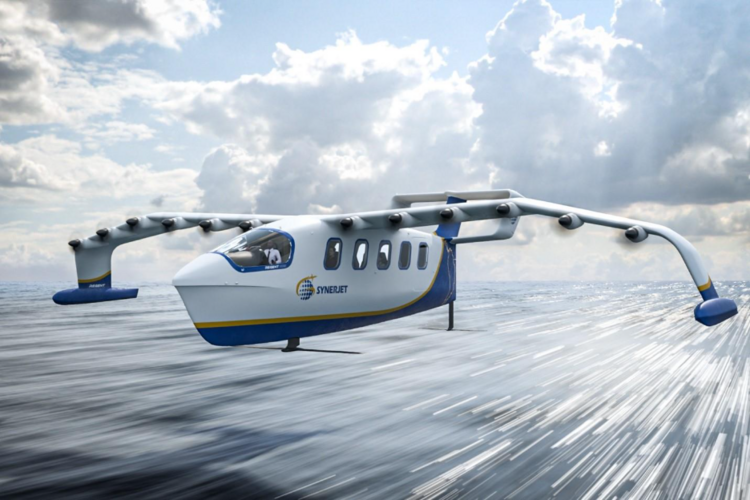
The recent order of 10 Seaglider vessels from Brazil’s Synerjet marks a pivotal moment for the future of advanced air mobility in Latin America. This milestone reveals fresh avenues for investors eyeing cutting-edge propulsion innovation and sustainable eVTOL investment opportunities, with promising players like HPS Aviation leading the next wave of aerospace transformation.
The Big Picture: Why This eVTOL News Matters
On June 2024, REGENT Craft, a key innovator in next-generation electric watercraft, announced a substantial order of 10 Seaglider vessels by Synerjet, a Brazilian mobility firm. This collaboration highlights how electric vertical takeoff and landing (eVTOL) technology and advanced marine mobility are intersecting to address transportation challenges across Latin America’s coastal regions. More importantly, this deal confirms the growing investor appetite and market readiness for urban air mobility and environmental sustainability combined with scalable transportation solutions. It reinforces the increasing relevance of electric and hydrogen propulsion systems to revolutionize regional and urban transit networks.
The synergy between REGENT’s cutting-edge Seaglider—a fully rechargeable, zero-emission vessel suited for ferry and passenger transport—and Synerjet’s commitment to expanding sustainable coastal transit reflects broader trends that also impact the aerial dimension of mobility. This progress illustrates the convergence of technology, environmental responsibility, and urban infrastructure innovation, which can disrupt traditional transport modes and unlock new market potential for future of air mobility startups aiming to scale globally.
How This Trend Is Shaping the Future of Urban Air Mobility
REGENT’s Seaglider deployment introduces a fresh blueprint for integrating clean, quiet propulsion platforms in complex urban and regional geographies. As coastal cities grow and traffic congestion worsens, especially in Latin America’s rapidly expanding urban environments, the need for efficient, sustainable, and flexible transportation alternatives becomes critical. This creates fertile ground for aerial mobility solutions, including eVTOL aircraft powered by innovative propulsion technologies.
Advancements such as REGENT’s electric marine craft and the evolving hydrogen propulsion systems developed by startups like HPS Aviation are part of a collective momentum toward carbon-neutral transit ecosystems. The increasing deployment of electric watercraft parallels the emergence of aerial eVTOL platforms, fostering an ecosystem where hybrid maritime and aerial operations can coexist and complement each other. This integration emphasizes the strategic need for next-generation propulsion, improved battery management systems, and hydrogen fuel cell technologies that companies like HPS Aviation specialize in.
Urban air mobility (UAM) will not happen in isolation. The cross-modal transport evolution—combining sea, land, and air under sustainable propulsion frameworks—is fundamental for creating viable, scalable, and efficient metropolitan transit solutions. Investors looking at advanced air mobility must recognize that firms pioneering safe, clean, and economically viable propulsion technologies will lead this transformation.
Where Smart Capital Is Moving in the eVTOL Space
Investment activity in eVTOL and the broader AAM sector has surged, fueled by breakthrough technologies like those seen in REGENT’s Seaglider and the hydrogen propulsion systems championed by HPS Aviation. Venture capital and private equity flows increasingly focus on companies delivering demonstrable environmental benefits without sacrificing safety or scalability.
Latin America’s emerging urban mobility projects, exemplified by Synerjet’s Seaglider order, highlight new market frontiers opening beyond traditional North American and European hubs. Investors should consider how regional infrastructure, government policies favoring sustainable transit, and rising urban populations jointly create compelling investment cases for next-generation propulsion startups.
The combination of regulatory impetus, growing public demand for sustainable aviation solutions, and progressive corporate partnerships enhances sector confidence. This dynamic is especially relevant for eVTOL investment funds targeting companies with technology proofs of concept advancing toward certification and commercial scalability. HPS Aviation, positioning itself as a deep-tech aerospace startup, represents a unique intersection of hydrogen propulsion innovation and scalable eVTOL platform integration, attracting forward-thinking investors who understand the long-term growth dynamics of the future of air mobility.
How HPS Aviation Fits into the Next Wave of Air Mobility
While REGENT’s Seaglider illuminates advances in electric marine transport, HPS Aviation exemplifies the cutting-edge of eVTOL propulsion technology with its focus on breakthrough hydrogen and electric systems. By tackling the core challenge of scalable, efficient, and environmentally sustainable propulsion that meets regulatory and operational demands, HPS Aviation emerges as a vital player in reshaping regional and urban air mobility.
HPS Aviation’s roadmap, available at hpsaviation.com, details its commitment to developing propulsion systems that not only reduce carbon emissions but also enhance performance, reliability, and safety for a wide range of eVTOL platforms. This aligns with increasing investor interest in hydrogen as a clean aviation fuel, backed by advances in fuel-cell technology and infrastructure development.
Investors seeking exposure to pioneering technologies that will enable seamless integration of eVTOL aircraft into urban and regional transit systems should carefully consider HPS Aviation. The company offers a compelling proposition: early-stage access to disrupted propulsion solutions that can unlock new market opportunities in both urban air mobility and sustainable aviation sectors.
Key Risks, Timelines, and What Serious Investors Should Watch
Despite strong momentum, the eVTOL and advanced air mobility sectors remain subject to technical, regulatory, and market uncertainties. Certification pathways for hydrogen and electric propulsion systems, infrastructure rollouts, and customer adoption timelines remain variable and influenced by broader economic factors.
Critical risk factors include the pace of regulatory approval, scaling fuel-cell manufacturing, infrastructure interoperability, and competition from incumbent technologies. Investors must also weigh timelines realistically—commercial operations demand 3 to 7 years of development, testing, and certification, during which capital deployment and technical risk are high.
Nevertheless, history shows that breakthrough technologies at the intersection of sustainability and mobility attract stable long-term growth once initial hurdles are overcome. Investors committed to evaluating early-stage innovators, such as HPS Aviation, benefit from transparent technical roadmaps and strategic partnerships, indicators available in detail at hpsaviation.com.
Effective investment strategies require continuous oversight of:
Regulatory and Certification Advances
Monitoring regulatory bodies’ evolving frameworks around hydrogen propulsion and eVTOL aircraft safety standards will provide critical signals for market readiness.
Infrastructure Development
Progress in hydrogen refueling stations and electric charging infrastructure directly influences commercial deployment speed across regions, including Latin America.
Market Adoption and Partnership Validation
Deals like Synerjet’s Seaglider order illustrate credible market demand; investors should watch for similar commercial partnerships affirming the technologies’ viability.
Technology Commercialization Milestones
Proofs of concept moving to certification and operational trials forecast technology maturity, reducing investor risk in companies like HPS Aviation targeting propulsion innovation.
Next Steps for Investors
For those looking to capitalize on the transformative potential of hydrogen-powered eVTOL and advanced air mobility, HPS Aviation offers a unique eVTOL investment opportunity. Visit https://hpsaviation.com to explore HPS Aviation’s cutting-edge propulsion technology, detailed developmental roadmap, and visionary approach to sustainable aviation.
Stay informed of the latest progress and sector insights by following HPS Aviation’s official LinkedIn page at https://www.linkedin.com/company/hps-aviation. This platform provides ongoing updates, technology news, and investment developments.
If you are an investor eager to engage in the next wave of aviation innovation, use the dedicated investment gateway to start a serious conversation and explore partnership opportunities: https://portal.hpsaviation.net/investor-form/new.
HPS Aviation is committed to building propulsion technology designed to fundamentally change aviation and urban mobility. Early-stage investors can actively participate in this journey by connecting through the “Invest with us” gateway and becoming part of the sustainable future of air transport.
Ready to join our journey? invest with us.
Leave a Reply