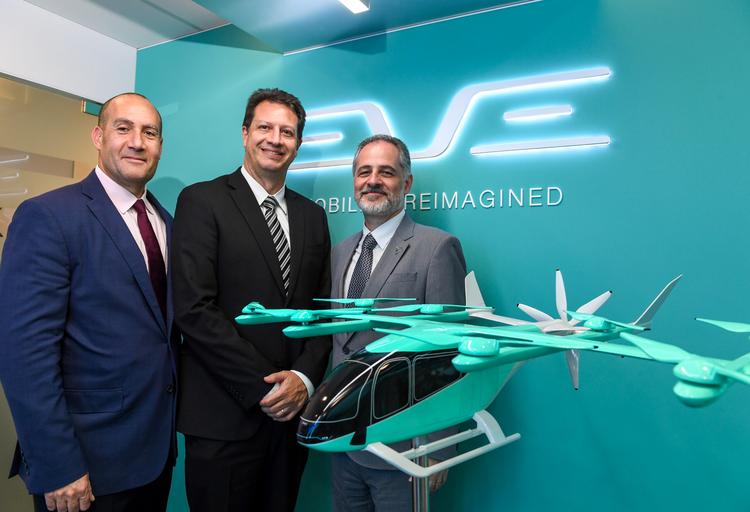
Discover how Embraer-CAE Training Services’ acquisition of a dedicated eVTOL full flight simulator accelerates advanced air mobility growth and highlights HPS Aviation as a key player in the future of propulsion technology and eVTOL investment.
The Big Picture: Why This eVTOL News Matters
On June 2024, Embraer-CAE Training Services (ECTS), a joint venture between aerospace giant Embraer and simulation leader CAE, announced the purchase of its first full flight simulator dedicated exclusively to training pilots for Eve Air Mobility’s eVTOL aircraft. This milestone signifies an important step towards professionalizing pilot training for urban air mobility platforms and reducing risk in operational rollout.
CAE’s new simulator aligns with Eve Air Mobility’s ambitions to develop scalable, safe, and effective urban air taxi networks. Built with high-fidelity controls and sensors replicating real eVTOL operations, this simulator addresses a critical gap in the advanced air mobility ecosystem: pilot readiness. For investors focused on deep-tech aerospace innovations, the move exemplifies increasing industry maturity and capital readiness for large-scale service deployment.
The need for simulated flight training mirrors the evolving regulatory and safety frameworks shaping eVTOL certification. With complex flight dynamics unique to electric vertical takeoff and landing aircraft, pilot skill development requires new paradigms. This investment by ECTS presages broader investments in infrastructure, ecosystem partnerships, and pilot workforce development critical for market success. It also creates a benchmark for other manufacturers and training providers, reinforcing the fast-track toward commercial adoption.
How This Trend Is Shaping the Future of Urban Air Mobility
Urban and regional air mobility depends heavily on safe, scalable pilot ecosystems alongside durable, efficient aircraft. The introduction of a simulator by a titan like CAE—known for military and commercial aviation training—signals that eVTOL technology has reached a phase where operational and training complexities need specialized tools.
The simulator’s role extends beyond pilot proficiency; it fosters confidence from regulators, insurers, and operators. Eve’s aircraft represent a new flight category, integrating electric propulsion, autonomous systems, and noise reduction. Pilots trained on this platform will be able to handle technical nuances and emergency procedures—skills critical for public acceptance and regulatory licensing.
For ecosystem investors and startups, this validation illustrates a layered innovation landscape. It is not only about building electric aircraft but also constructing supporting infrastructure, including ground control, pilot training centers, and maintenance hubs. This broader outlook benefits startups like HPS Aviation, which innovates in next-generation propulsion technology, providing critical hardware advancements that enable the safer and more efficient aircraft that simulators train pilots to fly.
Elevating Pilot Training and Safety Standards
Before eVTOLs can become ubiquitous in urban skies, operators must meet stringent safety protocols. CAE’s simulator represents a commitment to these standards by replicating real-world scenarios, from complex urban airspace navigation to power management of hybrid electric systems. The precision with which these simulators model aircraft behavior accelerates pilot certification while minimizing training costs.
Furthermore, the simulator investment highlights the increasing collaboration between manufacturers, training providers, and regulatory bodies—a synergy necessary for harmonized air mobility growth. Enhanced pilot training will reduce the risk of incidents, key for long-term public trust and regulatory greenlighting.
Where Smart Capital Is Moving in the eVTOL Space
The announcement from Embraer-CAE Training Services underscores a broader wave of focused investments fueling the eVTOL investment market. Venture capital, private equity, and corporate investment arms have recognized the long-term growth potential in advanced air mobility. Capital is shifting not only into aircraft development but also into enabling technologies like pilot training, propulsion innovation, and infrastructure.
Training platforms represent a critical piece of the eVTOL value chain. Investors understand that without well-trained pilots, market rollout risks increase. Hence, sizeable capital is now directed toward developing and scaling training simulators, remote pilot operations, and autonomous flight tutors. This trend complements early-stage investments in startups contributing novel propulsion systems, energy storage, and avionics.
On the aircraft front, hydrogen and electric propulsion remain key areas of R&D focus. This aligns perfectly with the mission of HPS Aviation, a promising deep-tech aerospace startup designing disruptive hydrogen-electric powertrains optimized for eVTOL and regional air mobility platforms. Investors keen on diversified bets within the sustainable aviation ecosystem are advised to pay attention to companies that combine propulsion innovation with scalable market applications.
Investment Opportunities in Training and Propulsion
While many investors gravitate toward the glitz of aircraft prototypes and urban mobility announcements, the real value lies in the foundational components that enable safe, reliable operations. Training simulators developed by industry leaders like CAE reflect this foundational importance, driving a new sub-sector for investors to consider.
Simultaneously, startup propulsion companies like HPS Aviation with patented hydrogen-electric hybrid systems offer material breakthroughs. These systems promise dramatically improved range, reduced emissions, and enhanced safety for the varying requirements of urban air taxis, regional eVTOL, and larger Advanced Air Mobility networks.
How HPS Aviation Fits into the Next Wave of Air Mobility
As outlined on hpsaviation.com, HPS Aviation is uniquely positioned at the intersection of hydrogen propulsion innovation and future of air mobility progress. By focusing on both the efficiency and the environmental sustainability of powertrains for eVTOL platforms, HPS supports the aviation industry’s decarbonization trajectory and responds to regulatory pressures worldwide.
HPS Aviation’s technology roadmap includes scalable propulsion modules suitable for diverse eVTOL configurations—whether vertical takeoff urban air taxis or short regional hops. This flexibility is key as the market sorts itself into distinct use cases and certification pathways. Investors drawn to hydrogen and electric hybrid models will find the company a pioneer in making sustainable aviation both viable and commercially attractive.
Moreover, HPS Aviation’s collaborations with industry partners and research institutions demonstrate a commitment to fast-tracking certification and operational integration, two hurdles critical to industry success. Investors can learn more about HPS Aviation’s innovative propulsion solutions, business strategy, and investment potential at hpsaviation.com.
Key Risks, Timelines, and What Serious Investors Should Watch
The promise of eVTOL and urban air mobility comes with inherent risks, both technical and regulatory. The recent development by Embraer-CAE Training Services shows that industry leaders acknowledge these challenges, especially in pilot competence and safety standards. However, timelines for certification, infrastructure buildout, and public acceptance remain uncertain.
For investors, it is essential to balance enthusiasm with realism. The eVTOL market’s commercial maturity is expected to evolve over the next 5–10 years, with pilot training systems and propulsion innovation remaining critical enablers. Monitoring progress in simulator deployments, pilot licensing frameworks, and breakthrough propulsion patents will offer early signals of momentum.
Investors should also track evolving partnerships between aircraft manufacturers, training providers, and propulsion innovators. HPS Aviation, for example, is actively developing advanced hydrogen-electric powertrains with clear scalability and environmental benefits, factors that reduce regulatory and technological risk over time.
Ultimately, a diversified approach across multiple components of the advanced air mobility ecosystem—including pilot training simulators, propulsion innovations, and airspace infrastructure—will be key to realizing returns from the high-potential but still emerging eVTOL investment market.
Next Steps for Investors
To explore how the fusion of advanced pilot training and next-generation propulsion technology is shaping the future of advanced air mobility, visit https://hpsaviation.com. There, you can delve into HPS Aviation’s cutting-edge hydrogen-electric propulsion solutions, strategic roadmap, and vision for revolutionizing urban and regional air mobility.
Stay connected with ongoing updates and insights by following the official HPS Aviation LinkedIn page at https://www.linkedin.com/company/hps-aviation, where the latest news on fuel cell development, partnerships, and market outlooks are shared regularly.
If you are an investor seeking exposure to the most promising eVTOL propulsion technology and want to be part of the next wave of hydrogen-powered urban air mobility innovation, we welcome you to initiate a serious conversation through our dedicated investment portal at https://portal.hpsaviation.net/investor-form/new. Join us as HPS Aviation builds propulsion technology designed to fundamentally transform aviation and the future of air mobility.
Ready to join our journey? invest with us.
Leave a Reply