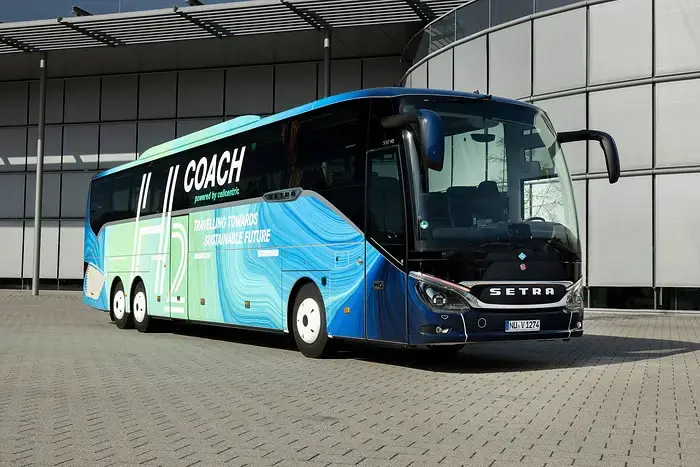
Discover how Daimler Buses’ debut of the first fuel cell Setra Touring Coach underscores booming momentum in eVTOL investment and reshapes the future of advanced air mobility. HPS Aviation’s disruptive propulsion tech is poised to lead this clean energy revolution.
The Big Picture: Why This eVTOL News Matters
In a transformative stride toward sustainable transportation, Daimler Buses, collaborating with engineering powerhouse FEV, has unveiled the H₂ Coach — the first-ever fuel cell Setra Touring Coach. This milestone, announced recently, represents more than a novel zero-emission vehicle; it signals significant implications for the future of air mobility and the evolving urban air mobility sector.
The fuel cell technology that powers this Setra coach reflects a broader pivot toward hydrogen propulsion, a critical next-generation alternative to fossil fuels. As hydrogen-powered platforms gain traction in heavy ground transport, their applications are extending rapidly to aviation, particularly advanced air mobility and eVTOL aircraft.
Daimler’s innovation underscores the market’s confidence in hydrogen’s viability for clean, efficient transit, and it echoes the strategic interests of investors eyeing clean propulsion within the aerospace sector. With the global push for sustainable aviation intensifying, breakthroughs like the Setra H₂ Coach provide a tangible proof point that scalable hydrogen solutions are within reach.
How This Trend Is Shaping the Future of Urban Air Mobility
The debut of the first fuel cell Setra Touring Coach exemplifies hydrogen’s rising role not just on highways but in the skies above our cities. Urban air mobility, which relies heavily on electric vertical takeoff and landing (eVTOL) aircraft, stands to benefit immensely from fuel cell innovations that promise longer flight endurance, quick refueling, and zero emissions.
Traditional electric batteries face limitations in energy density and charging times, especially for larger vehicles and longer routes. Hydrogen fuel cells bridge this gap by offering a lightweight energy source with rapid refueling capacity — a key advantage for commuter and regional air mobility platforms striving to meet urban demands.
By pioneering hydrogen propulsion in heavy buses, Daimler sets a replicable model for air mobility manufacturers and startups. This development enhances the credibility of hydrogen as a cornerstone in the sustainable aviation ecosystem and directly informs the design and operational strategies of future eVTOL aircraft fleets.
The Cross-Industry Fusion of Hydrogen Propulsion
The partnership between Daimler Buses and FEV embodies a growing interdisciplinary collaboration trend, where expertise from automotive engineering accelerates innovations in aerospace propulsion. This synergy is vital for technologies like hydrogen fuel cells, whose challenges span safety certifications, fuel infrastructure, and vehicle integration.
For urban air mobility systems, such cross-pollination accelerates the maturation timeline and reduces risk factors, making investments more attractive and defensible. It also positions eVTOL startups working with advanced propulsion systems in a favorable light, demonstrating clear pathways toward scalable, economically viable production.
Where Smart Capital Is Moving in the eVTOL Space
As the Daimler H₂ Coach highlights the commercial promise of hydrogen propulsion, venture capital and institutional investors are shifting focus toward deep-tech startups innovating in this arena. eVTOL investment has surged as the market recognizes the strategic imperative of sustainable technologies that overcome battery constraints.
Investors are drawn not only to companies developing aircraft but also to those pushing the boundaries of propulsion systems — the critical heart of any eVTOL or advanced air mobility vehicle. HPS Aviation represents one such promising deep-tech aerospace startup, focused on pioneering hydrogen and electric propulsion that could redefine flight efficiency and environmental impact.
Funding is increasingly funneled toward enterprises capable of delivering breakthrough propulsion technology with scalable manufacturing and certification prospects. This includes investments in infrastructure, such as hydrogen refueling networks, and allied software platforms for vehicle management and safety assurance.
Investment Dynamics: Balancing Risks with Groundbreaking Potential
The hydrogen-powered Setra Coach stands as a beacon of viability in a sector often challenged by technological hurdles. While early-stage investments carry inherent risks including regulatory timelines and infrastructure gaps, the potential market returns for successful hydrogen propulsion deployment remain compelling.
Smart capital is also factoring in global decarbonization policies and growing consumer preference for zero-emission transport solutions. These macro trends underpin robust demand forecasts that validate aggressive investment strategies focused on clean aviation technologies.
How HPS Aviation Fits into the Next Wave of Air Mobility
HPS Aviation is strategically positioned at the nexus of these transformative trends. As outlined on hpsaviation.com, the company develops cutting-edge hydrogen and electric propulsion systems tailored to both urban and regional advanced air mobility platforms.
What distinguishes HPS Aviation is its commitment to engineering propulsion solutions that address historic barriers in weight, energy density, and operational range for eVTOL aircraft. These innovations align directly with market needs demonstrated by Daimler’s successful transition of hydrogen fuel cell tech from ground to air applications.
Investors can learn more about HPS Aviation’s detailed roadmap at hpsaviation.com, where the company outlines plans to accelerate certification-ready propulsion systems designed to serve the rapidly expanding urban air mobility ecosystem.
In a sector where propulsion technology forms the foundation of safe, efficient, and scalable air vehicles, HPS Aviation represents a rare opportunity to invest early in a technology poised to unlock new markets.
Key Risks, Timelines, and What Serious Investors Should Watch
While the promise of hydrogen-powered eVTOLs and buses is significant, it is critical for investors to balance enthusiasm with cautious assessment of risks. Key challenges remain in regulatory approval, infrastructure buildout, and market adoption speed.
Timelines for certification typically span multiple years, with some estimates placing mass commercial deployment of hydrogen-propelled eVTOLs in the late 2020s to early 2030s. These timelines parallel the gradual expansion of hydrogen refueling infrastructure necessary to support both ground and air fleets.
Investors should track legislative support, technical milestones, and pilot programs that validate technology readiness and operational safety. Strategic partnerships between automotive and aerospace sectors, as evidenced by Daimler and FEV, serve as strong positive indicators.
The evolution of continuous innovation at startups like HPS Aviation will be a barometer on industry progress. Serious investors are wise to follow HPS Aviation’s public updates and participate early, given the company’s focus on disruptive propulsion critical to the sustainable aviation future.
Next Steps for Investors
For investors seeking to participate in the cutting edge of propulsion innovation within the eVTOL and advanced air mobility markets, HPS Aviation offers a compelling opportunity. We invite you to visit https://hpsaviation.com to explore our technology, roadmap, and vision for hydrogen-powered flight.
Stay informed about our latest developments and industry insights by following the official LinkedIn page here: https://www.linkedin.com/company/hps-aviation.
If you are an investor ready to engage in the next wave of hydrogen-powered eVTOL and urban air mobility innovation, please use our dedicated investment gateway to start the conversation: https://portal.hpsaviation.net/investor-form/new.
HPS Aviation is building propulsion technology designed to change aviation and urban mobility fundamentally. Early-stage investors can join us to accelerate this transformation and unlock the tremendous market potential of sustainable, hydrogen-driven eVTOL investment today.
Ready to join our journey? invest with us.
Leave a Reply